
FAQ
What is AHK-Cu?
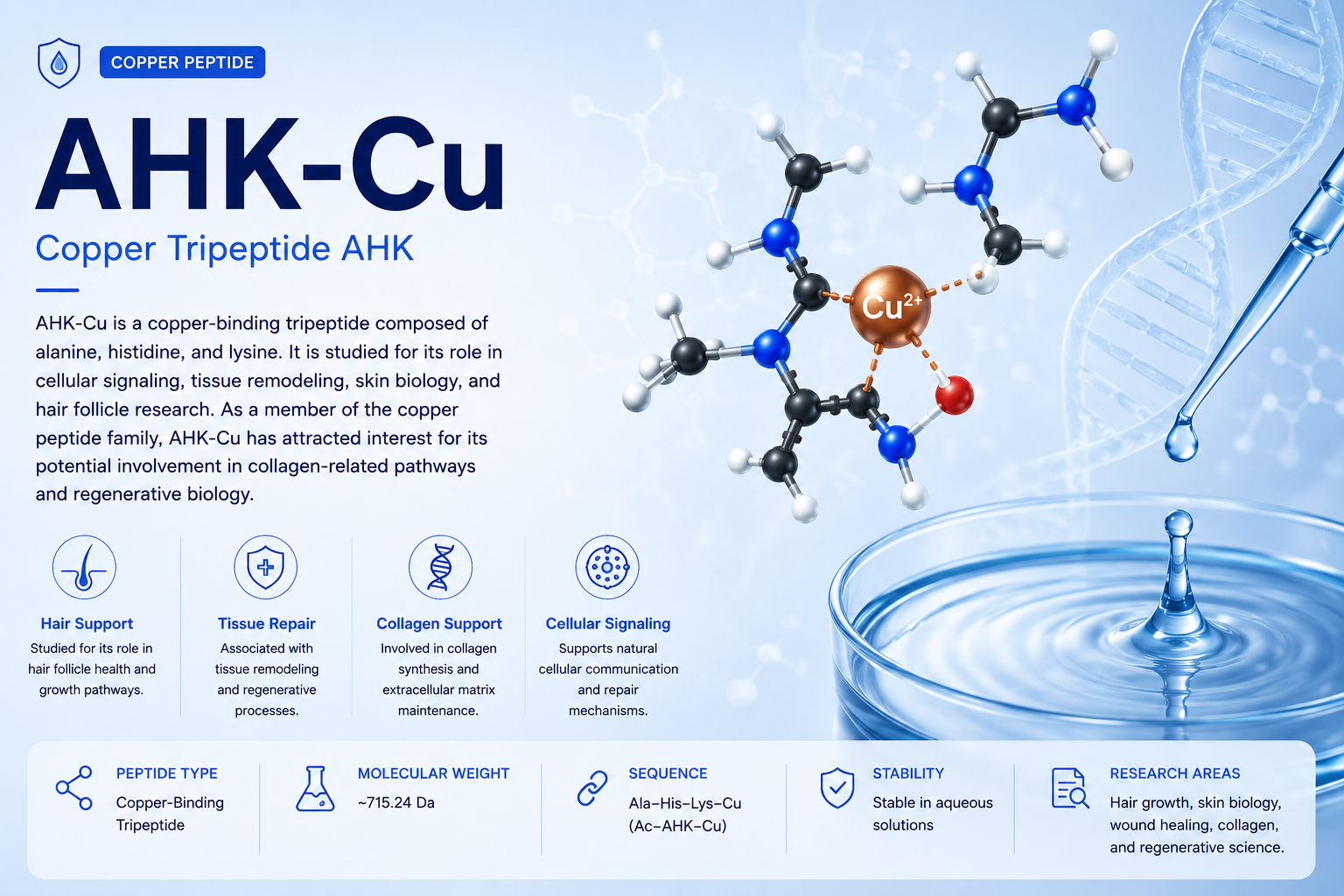
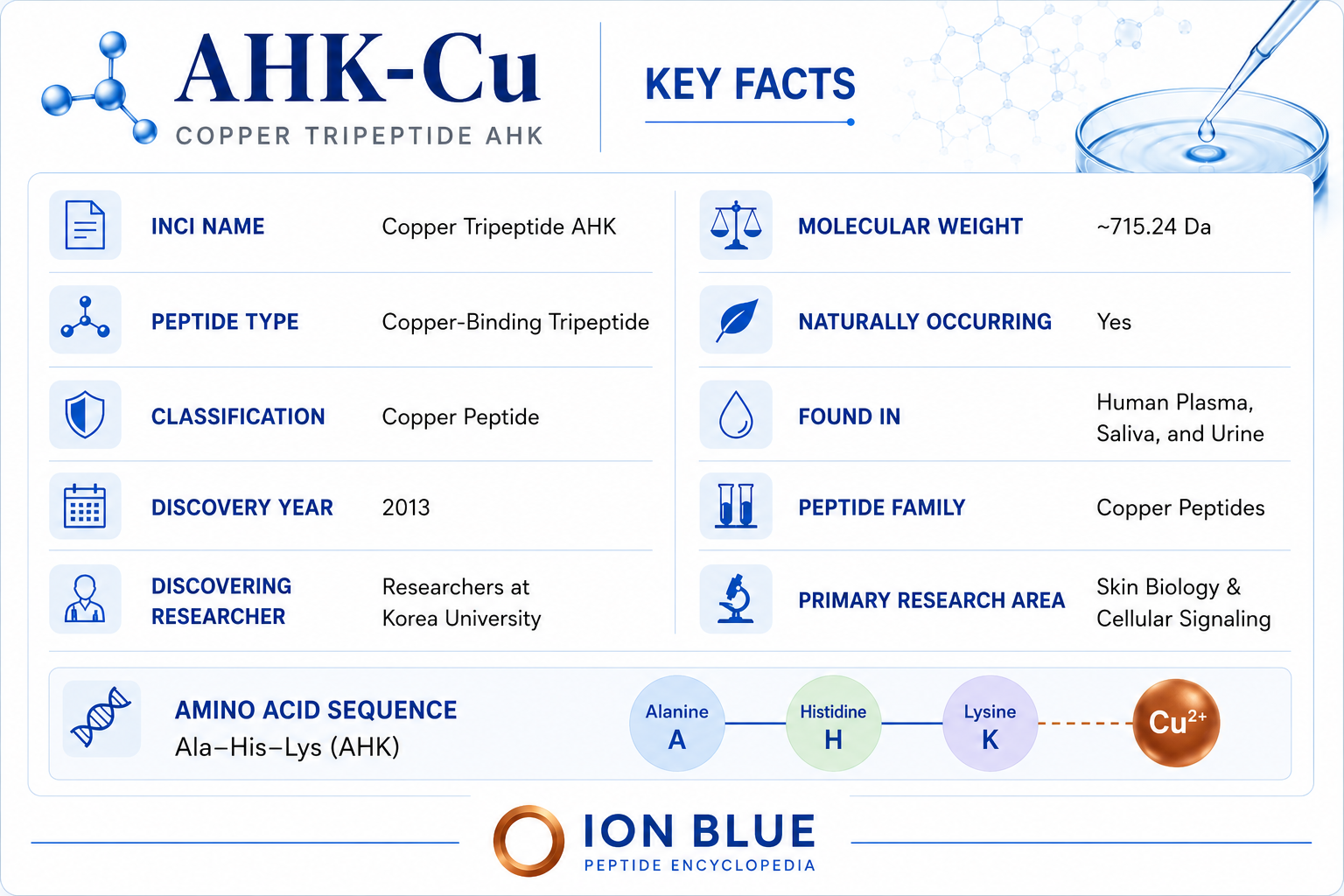
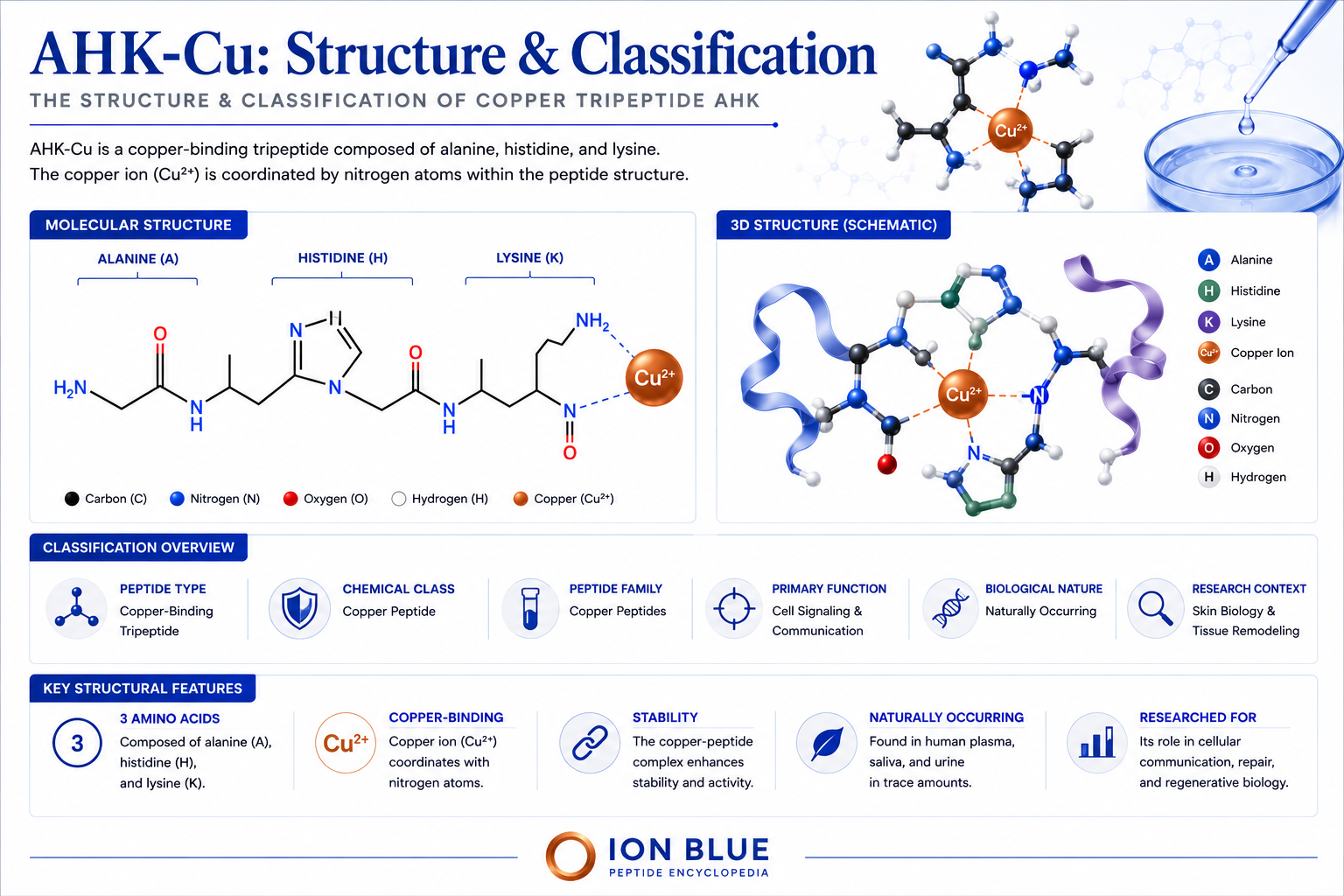
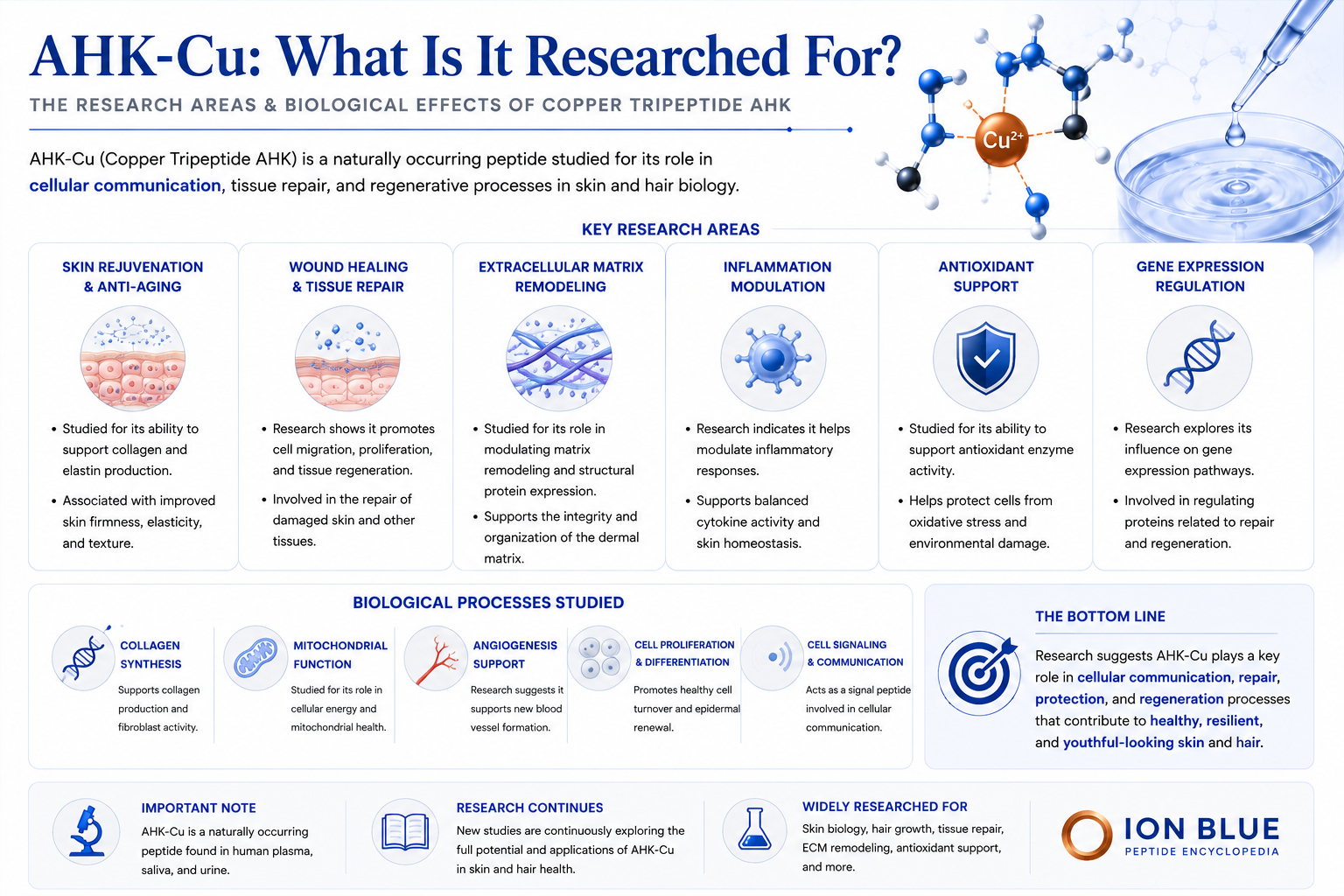
AHK-Cu (Copper Tripeptide AHK) is a copper-binding peptide composed of alanine, histidine, and lysine. It belongs to the copper peptide family and is studied for its role in cellular signaling, tissue remodeling, skin biology, and hair follicle research.
Is AHK-Cu naturally occurring?
AHK-Cu is based on a naturally occurring peptide sequence found within the body. When bound to copper (Cu²⁺), it forms a copper peptide complex that has attracted scientific interest for its biological activity and signaling properties.
What is AHK-Cu researched for?
Research has explored AHK-Cu in areas including:
• Hair follicle biology
• Skin rejuvenation
• Collagen-related pathways
• Tissue repair and regeneration
• Cellular communication
• Gene expression regulation
• Extracellular matrix remodeling
Is AHK-Cu the same as GHK-Cu?
No. Both are copper peptides, but they are different molecules.
GHK-Cu is composed of glycine, histidine, and lysine, while AHK-Cu is composed of alanine, histidine, and lysine. Although they belong to the same peptide family, they have distinct structures and research profiles.
Why is copper attached to AHK?
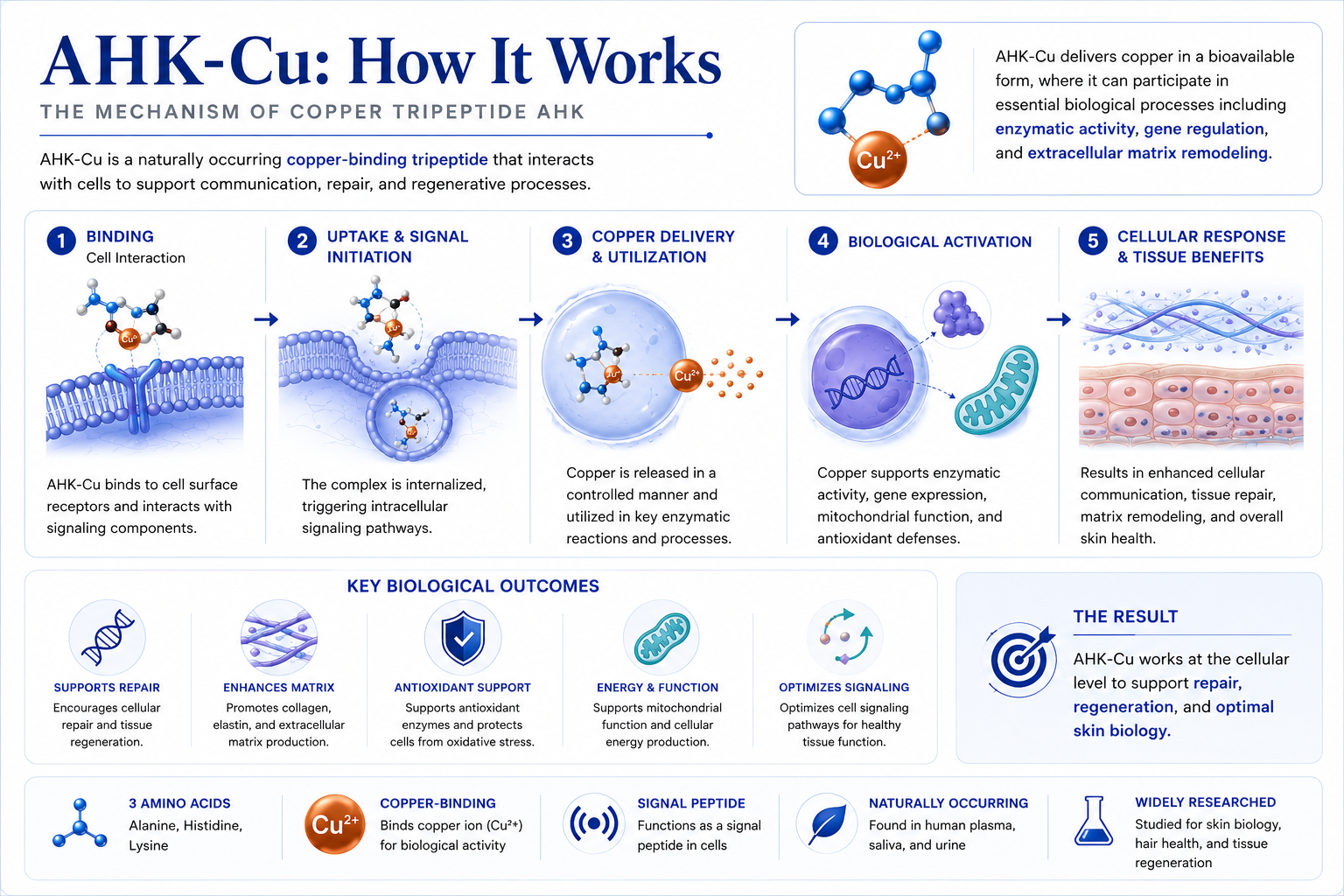
Copper acts as an essential trace mineral involved in numerous biological processes. The peptide functions as a carrier, allowing copper to be delivered in a bioavailable form that can participate in cellular activity and signaling pathways.
What role does AHK-Cu play in skin biology research?
Research suggests AHK-Cu may be involved in cellular communication, extracellular matrix maintenance, collagen-related pathways, antioxidant activity, and tissue remodeling processes that contribute to overall skin health.
What role does AHK-Cu play in hair research?
AHK-Cu has been studied in hair follicle biology and scalp research. Scientific interest centers on its potential involvement in signaling pathways associated with follicle function and hair growth cycles.
Is AHK-Cu a signal peptide?
AHK-Cu is generally classified as a copper-binding signal peptide because it participates in cellular communication and biological signaling processes.
What makes AHK-Cu different from other peptides?
AHK-Cu combines a specific amino acid sequence (Alanine–Histidine–Lysine) with copper. This unique structure gives it distinct biological characteristics and separates it from other peptide families such as neurotransmitter peptides, carrier peptides, and matrix peptides.
Is AHK-Cu used in skincare products?
AHK-Cu may be included in cosmetic formulations focused on skin appearance and scalp care. Product formulations vary depending on concentration, supporting ingredients, and intended cosmetic use.
Can AHK-Cu be used with other skincare ingredients?
AHK-Cu is commonly formulated alongside moisturizers, antioxidants, and other cosmetic ingredients. Compatibility depends on the specific formulation and product design.
Is research on AHK-Cu ongoing?
Yes. Scientific research continues to explore AHK-Cu and its potential roles in skin biology, hair follicle science, tissue regeneration, cellular communication, and related biological pathways.
References
1. Pickart, L.
The Human Tripeptide GHK and Tissue Remodeling.
Journal of Biomaterials Science.
2. Borkow, G.
Using Copper to Improve the Well-Being of the Skin.
Current Chemical Biology.
3. Philp, D., Pickart, L., & Goldberg, J.
The Copper Peptide GHK-Cu and Tissue Remodeling.
Wound Repair and Regeneration.
4. Pickart, L., Vasquez-Soltero, J., & Margolina, A.
GHK Peptide as a Natural Modulator of Multiple Cellular Pathways in Human Skin.
BioMed Research International.
5. Gorouhi, F. & Maibach, H.I.
Role of Topical Peptides in Preventing or Treating Aged Skin.
International Journal of Cosmetic Science.
6. Finkley, M.B.
Copper Peptides and Skin Regeneration Research Review.
Journal of Cosmetic Dermatology.
7. Borkow, G. & Gabbay, J.
Copper as a Biocompatible and Bioactive Material for Tissue Repair.
Molecular Medicine.
8. Pickart, L. & Margolina, A.
Regenerative and Protective Actions of Copper Peptides in Human Biology.
Clinical Interventions in Aging.
Reference Note
AHK-Cu research is considerably smaller than the body of literature available for GHK-Cu. As a result, scientific understanding of AHK-Cu often draws from broader copper peptide research, peptide signaling studies, skin biology research, and hair follicle biology investigations.
Related Peptides
Continue Exploring the Peptide Encyclopedia
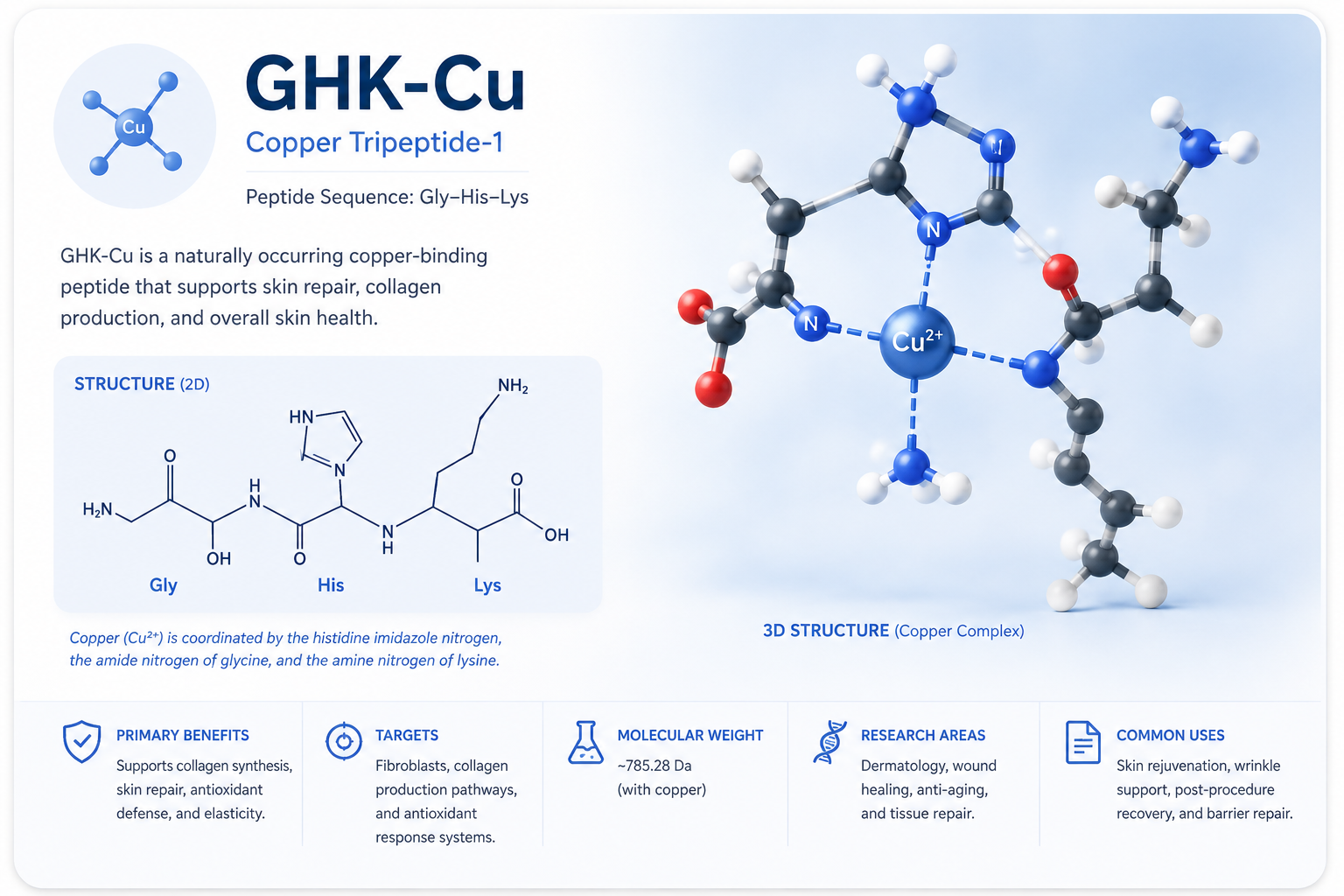
GHK-Cu is one copper peptide within a larger network of skincare peptides, signal peptides, copper-binding peptides, growth-factor related pathways, and skin biology research.
Explore the full ION BLUE Peptide Encyclopedia to compare peptides, understand mechanisms, and learn how different peptide categories connect.