
The Dermis: Your Skin's Structural Layer, Explained
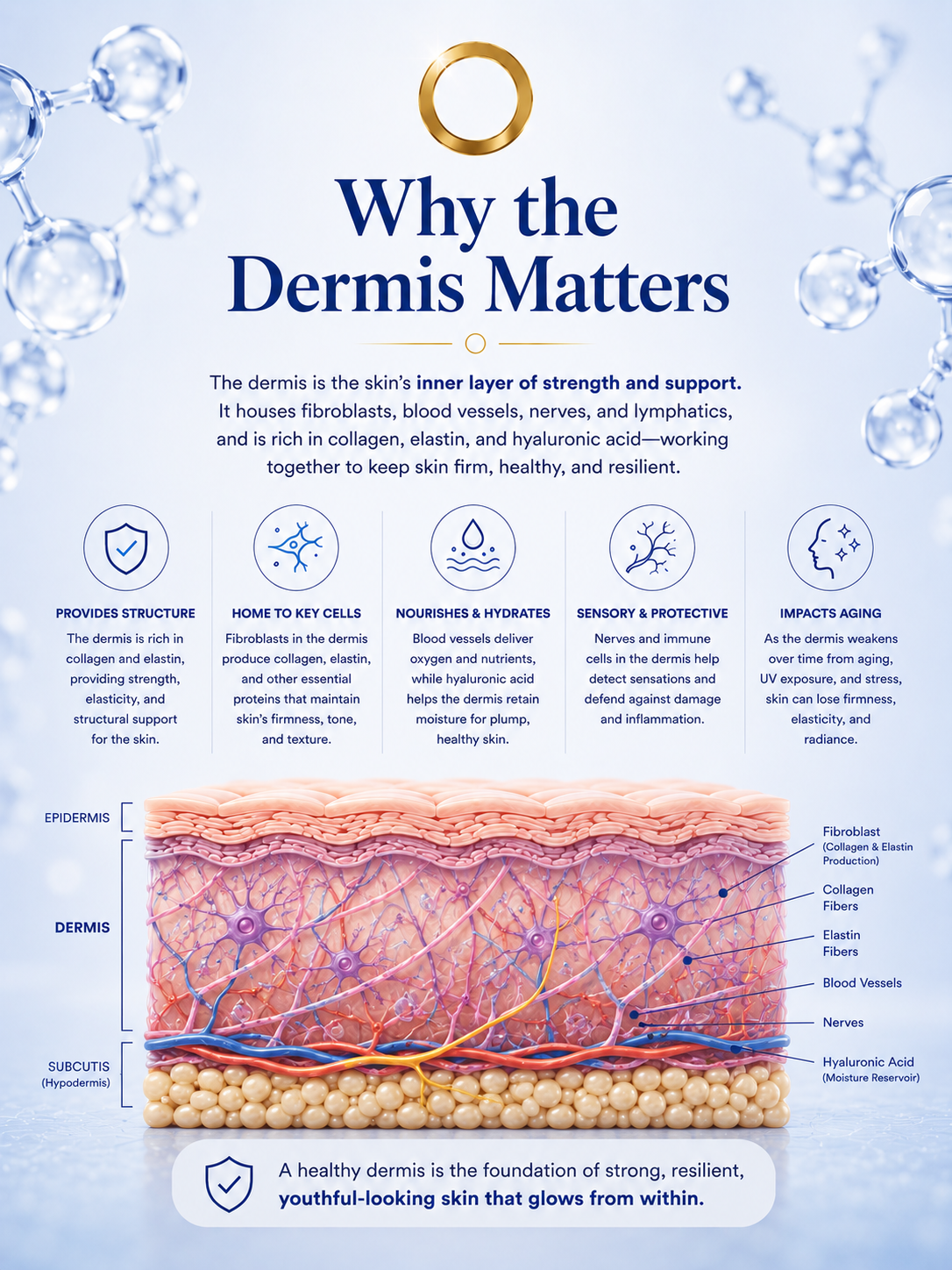
The short version: the dermis is the thick, living layer just beneath the surface of your skin. It's where the real structural work happens — it holds your collagen, elastin, fibroblasts, blood vessels, and nerves. If the surface layer is the paint, the dermis is the wall. Most of what we think of as "firm, youthful skin" is really about the health of the dermis, and it's the layer peptide science is most interested in.
Where the dermis sits
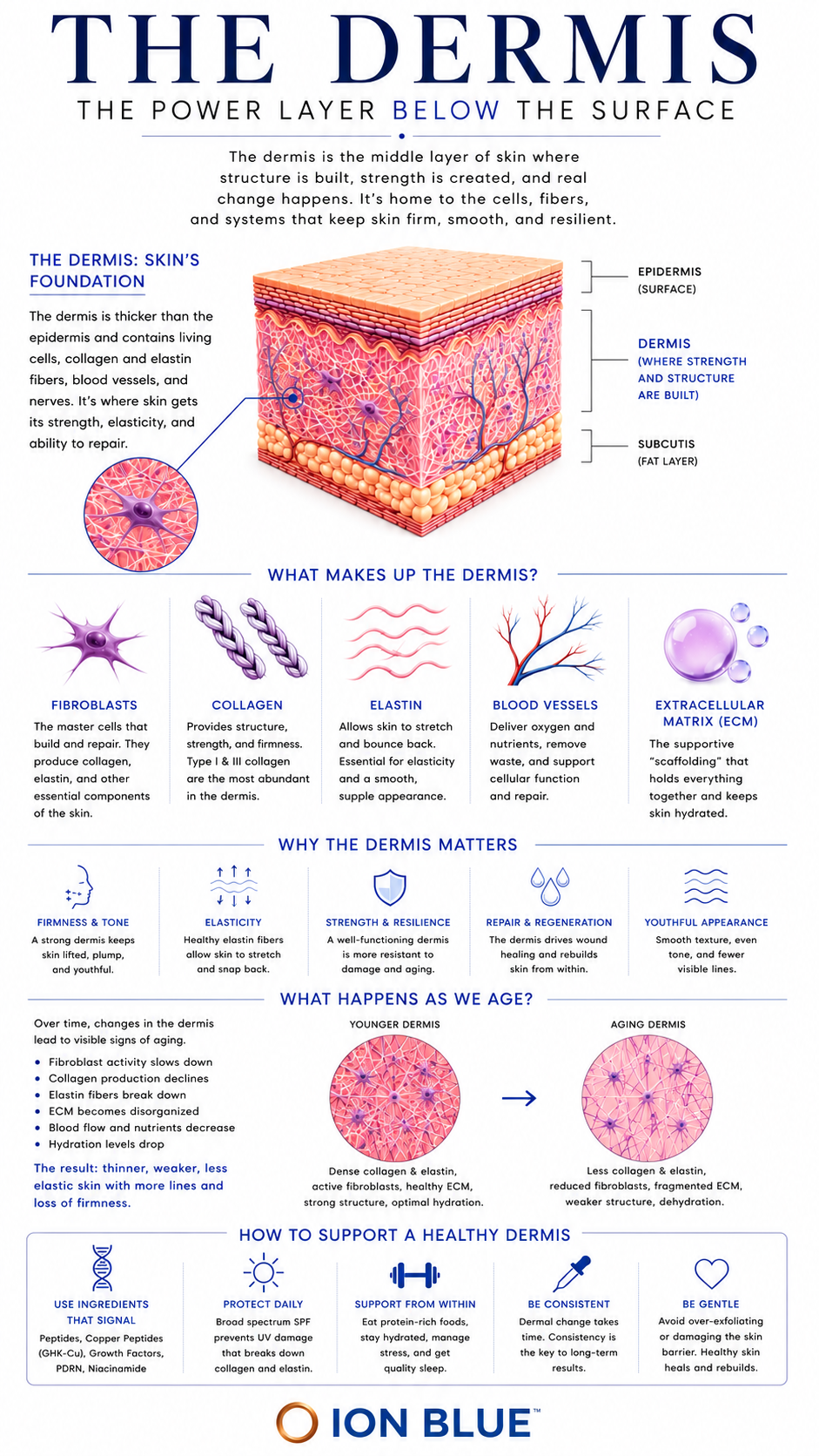
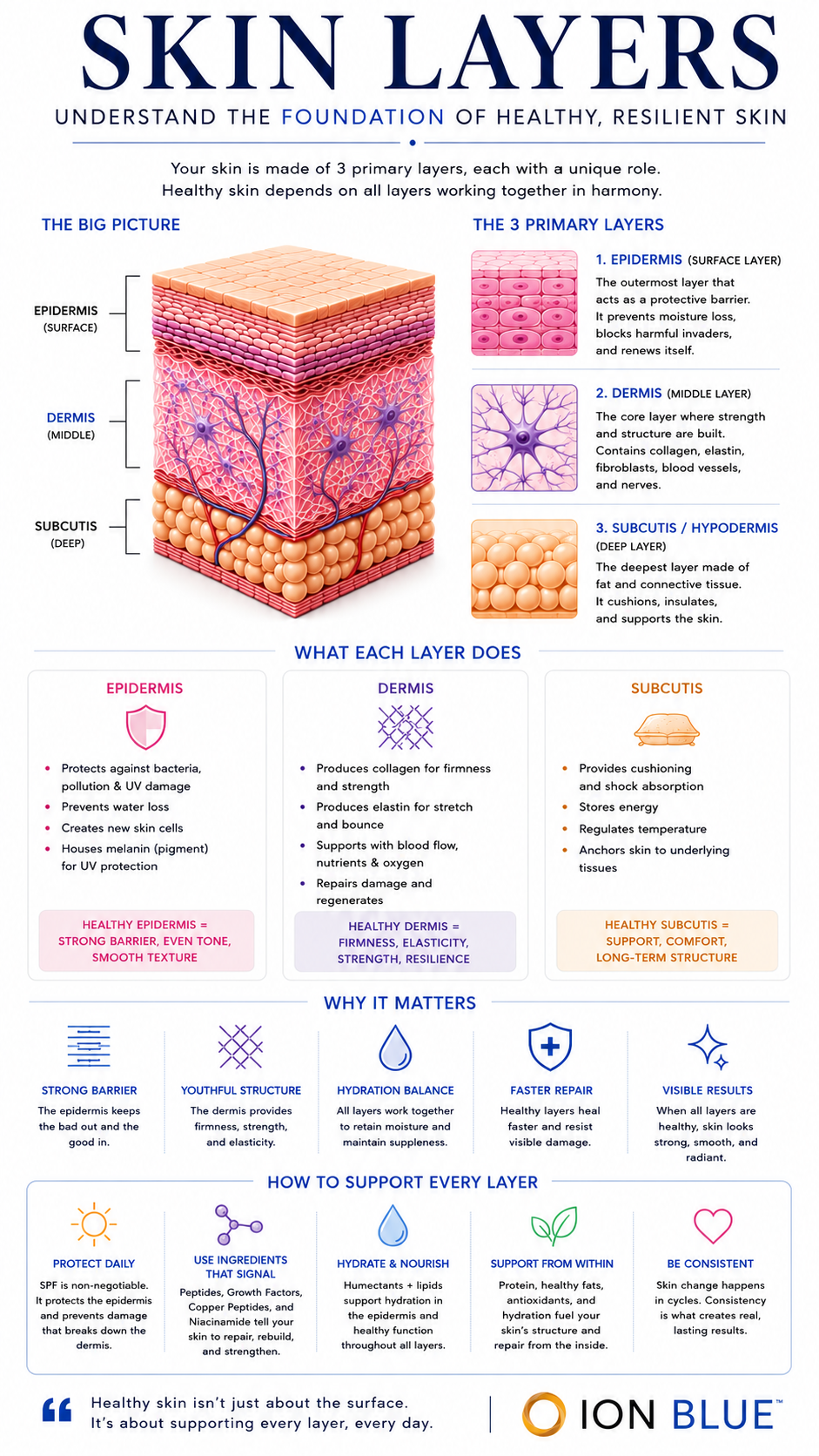
Your skin has three main layers: the epidermis (the thin outer barrier you can see and touch), the dermis (the thick living layer below it), and the subcutaneous fat beneath that. The dermis is the middle, load-bearing layer. For the full map, see skin layers explained.
What's inside the dermis?
The dermis is a busy place. It contains:
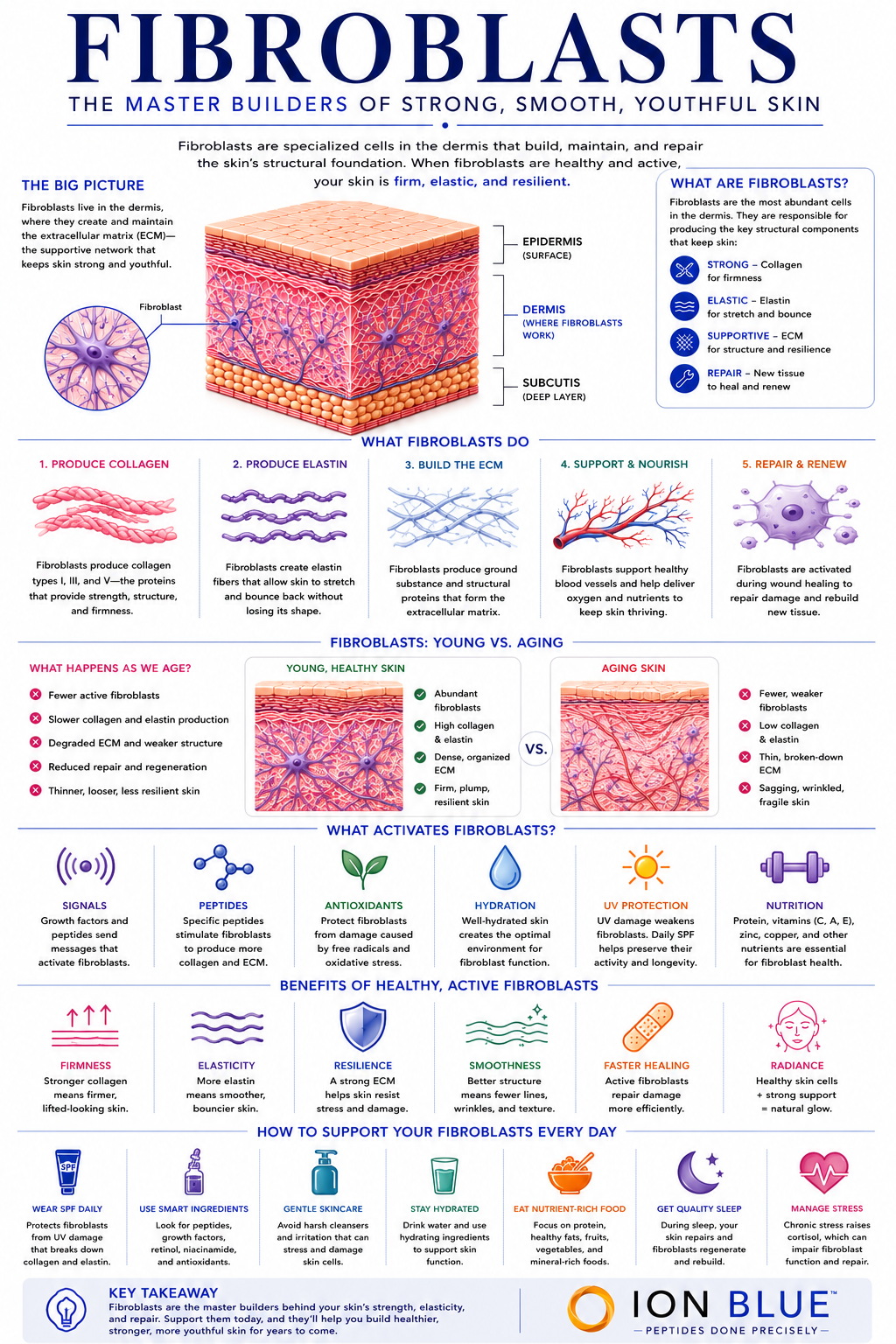
- Fibroblasts — the cells that build and maintain the structure.
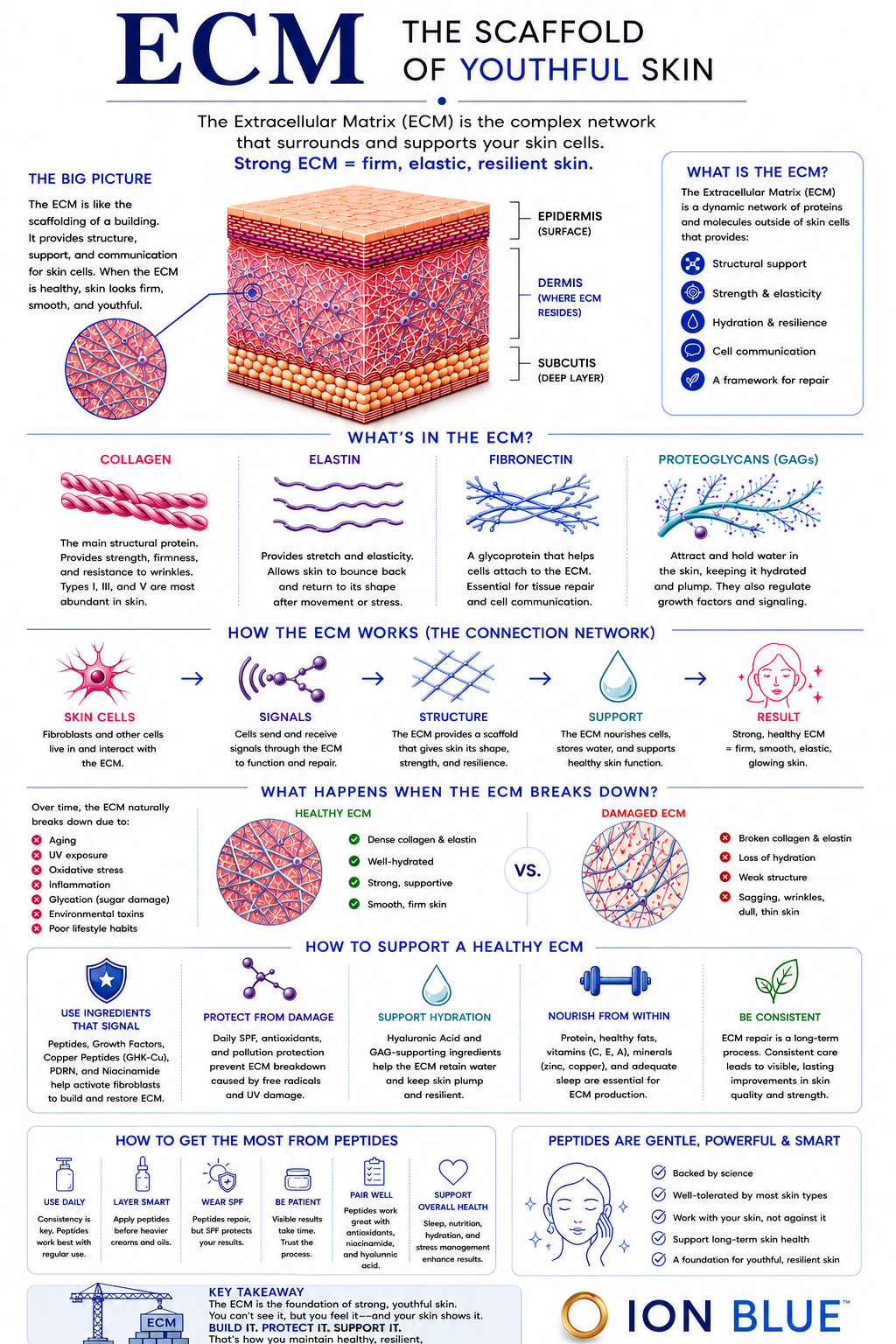
- The extracellular matrix — collagen, elastin, and water-binding molecules that form the scaffold.
- Blood vessels — which nourish the skin and help regulate temperature.
- Nerve endings — for touch, pressure, temperature, and pain.
- Hair follicles, sweat glands, and oil glands.
In other words, the dermis is where skin's structure, nourishment, and sensation all live together.
What does the dermis do?
The dermis gives skin its strength, firmness, and elasticity, supplies it with nutrients through its blood vessels, and houses the machinery for touch and temperature regulation. When people talk about skin looking "firm" or "plump," they're mostly describing a healthy, well-structured dermis.
The dermis and aging
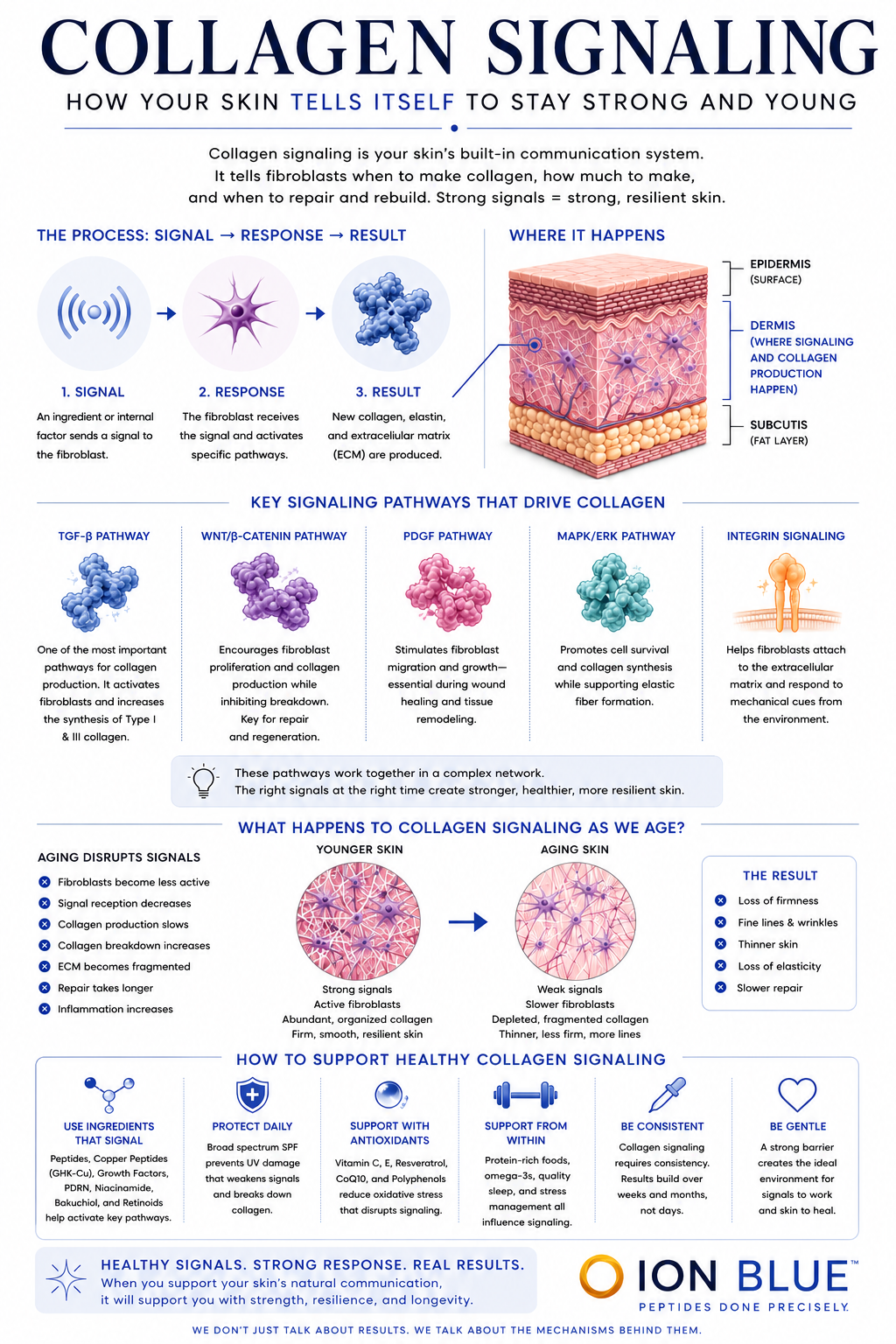
As skin ages, the dermis gradually thins, its collagen and elastin decline, and its matrix is renewed more slowly — a process pushed along by sun exposure and oxidative stress. A thinner, less-supported dermis is a major reason skin looks less firm and more lined over time. This is why so much of skincare science focuses, one way or another, on supporting the dermis.
The dermis and GHK-Cu — with an honest note on delivery
Copper peptides like GHK-Cu are studied for their effects on dermal components — stimulating collagen and matrix production and supporting fibroblast activity in laboratory research.1,2 That's the appeal: the dermis is exactly where you'd want a supportive ingredient to act.
But here's an honest point the hype usually skips: for a topical ingredient to influence the dermis, it first has to get past the epidermis — and how well any given peptide penetrates depends heavily on the molecule and the formulation. This is a real, active area of formulation science (and part of why delivery approaches are worth taking seriously). We flag it because it's true, and because pretending every serum sails effortlessly into the dermis would be exactly the kind of overclaiming we built this brand against. For the honest efficacy picture, see Do Copper Peptides Actually Work?
Where ION BLUE fits
The dermis is the reason GHK-Cu is interesting and the reason we stay honest about what a topical serum can and can't be claimed to do. We make a GHK-Cu serum at a disclosed 0.10%, described in terms of how skin looks, with the research linked on our Scientific References page. Start with What Is GHK-Cu? for the primer.
Frequently asked questions
What is the dermis?
It's the thick living layer of skin beneath the surface (the epidermis), where collagen, elastin, fibroblasts, blood vessels, and nerves live. It provides skin's structure and firmness.
Why does the dermis matter for aging?
As the dermis thins and its collagen and elastin decline with age, skin looks less firm and more lined. Most visible aging traces back to changes in the dermis.
Can a topical serum reach the dermis?
It depends on the ingredient and the formulation. Getting a topical active past the outer layer to the dermis is a real challenge and an active area of formulation science — which is why honest brands don't assume it and don't overpromise.
Educational content is not medical advice. ION BLUE products are cosmetics and are not intended to diagnose, treat, cure, or prevent any disease. Individual results may vary.
References
- Pickart L, Vasquez-Soltero JM, Margolina A. GHK Peptide as a Natural Modulator of Multiple Cellular Pathways in Skin Regeneration. BioMed Research International. 2015;2015:648108. Read the full paper →
- Pickart L, Margolina A. Regenerative and Protective Actions of the GHK-Cu Peptide in the Light of the New Gene Data. International Journal of Molecular Sciences. 2018;19(7):1987. Read the full paper →
CONTINUE EXPLORING SKIN BIOLOGY
DOWNLOAD DERMIS PDF
"This page explains wound-healing biology for education. ION BLUE products are cosmetics — they are not intended to treat, heal, or manage wounds or any medical condition."