
The Extracellular Matrix (ECM): Your Skin's Support Scaffold
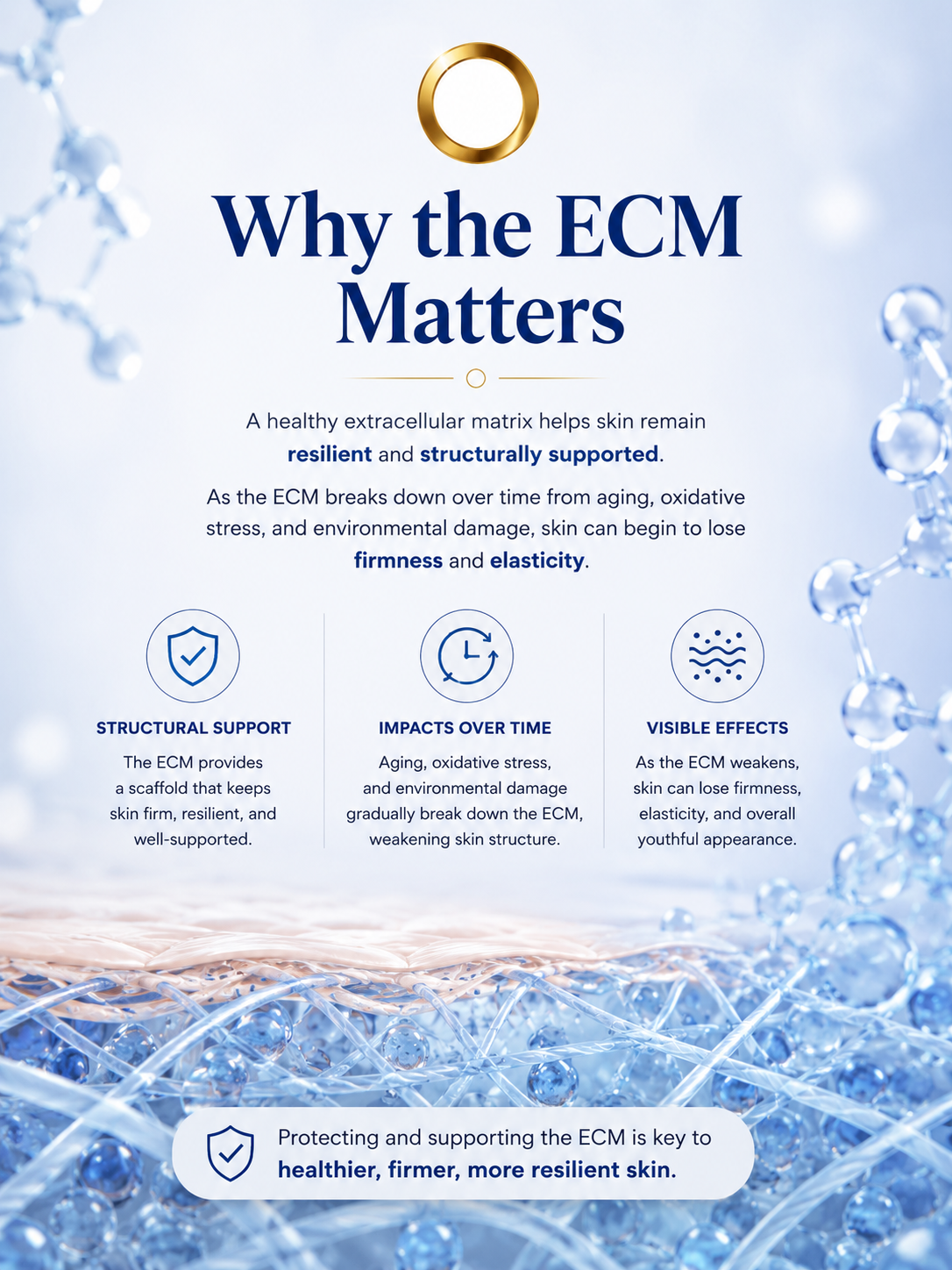
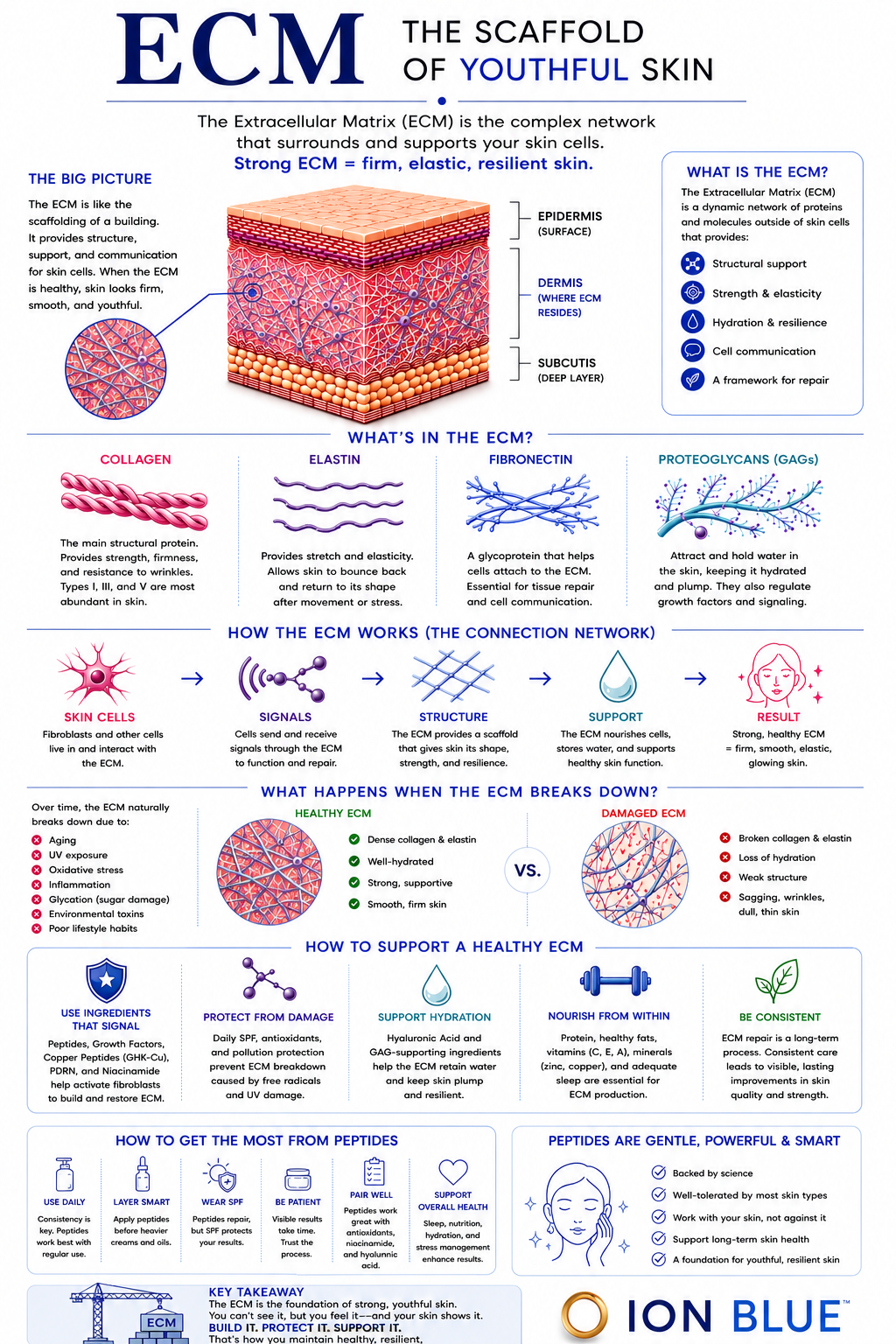
The short version: the extracellular matrix, or ECM, is the scaffolding that holds your skin together — a mesh of proteins and molecules that sits between your cells and gives skin its firmness, stretch, and cushioning. Collagen and elastin are its most famous parts. When the ECM is well-built and well-maintained, skin looks firm and resilient; as it breaks down and renews more slowly with age, skin looks less so. It's also the structure that copper peptides like GHK-Cu are studied to interact with.
What is the extracellular matrix?
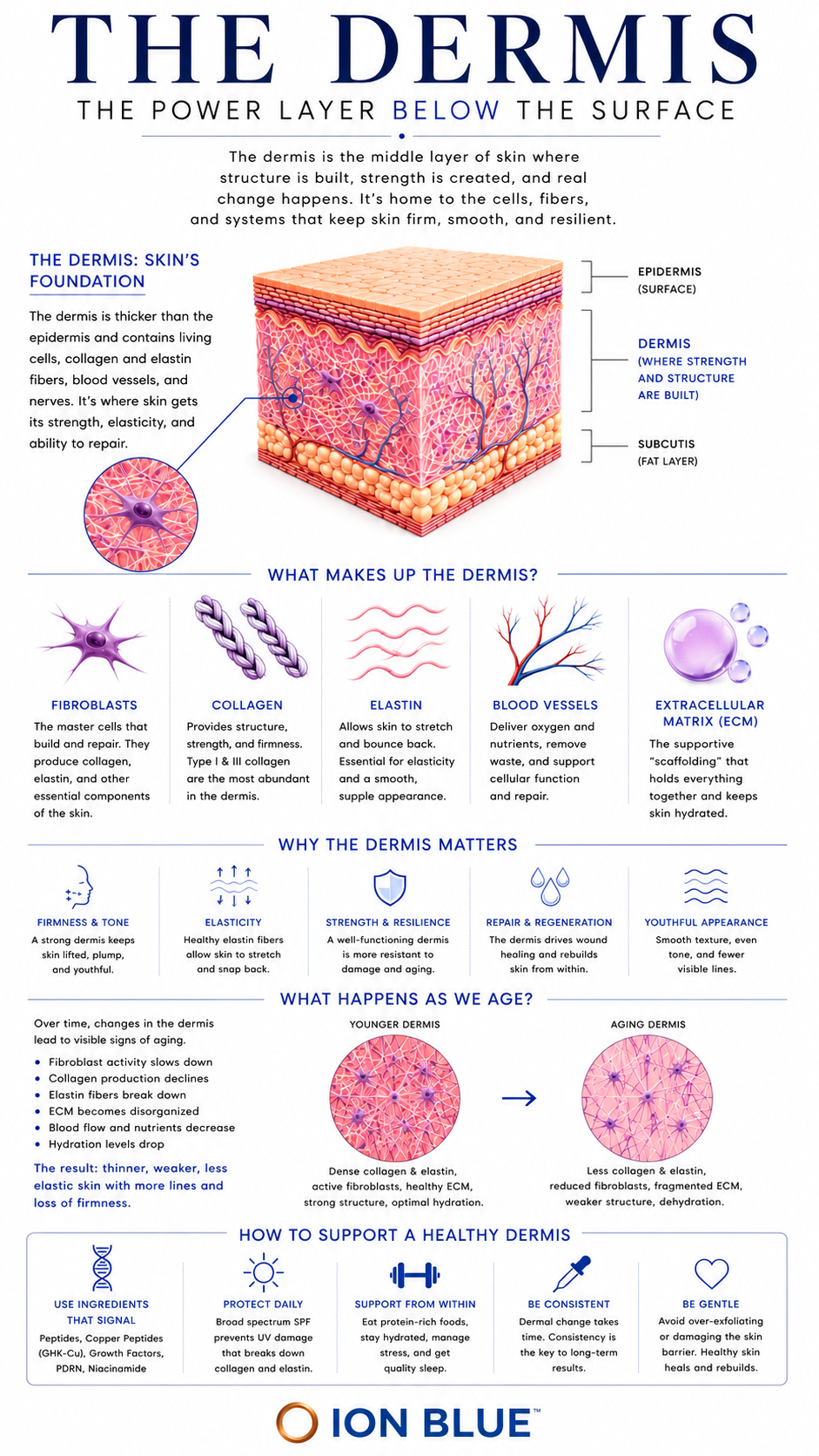
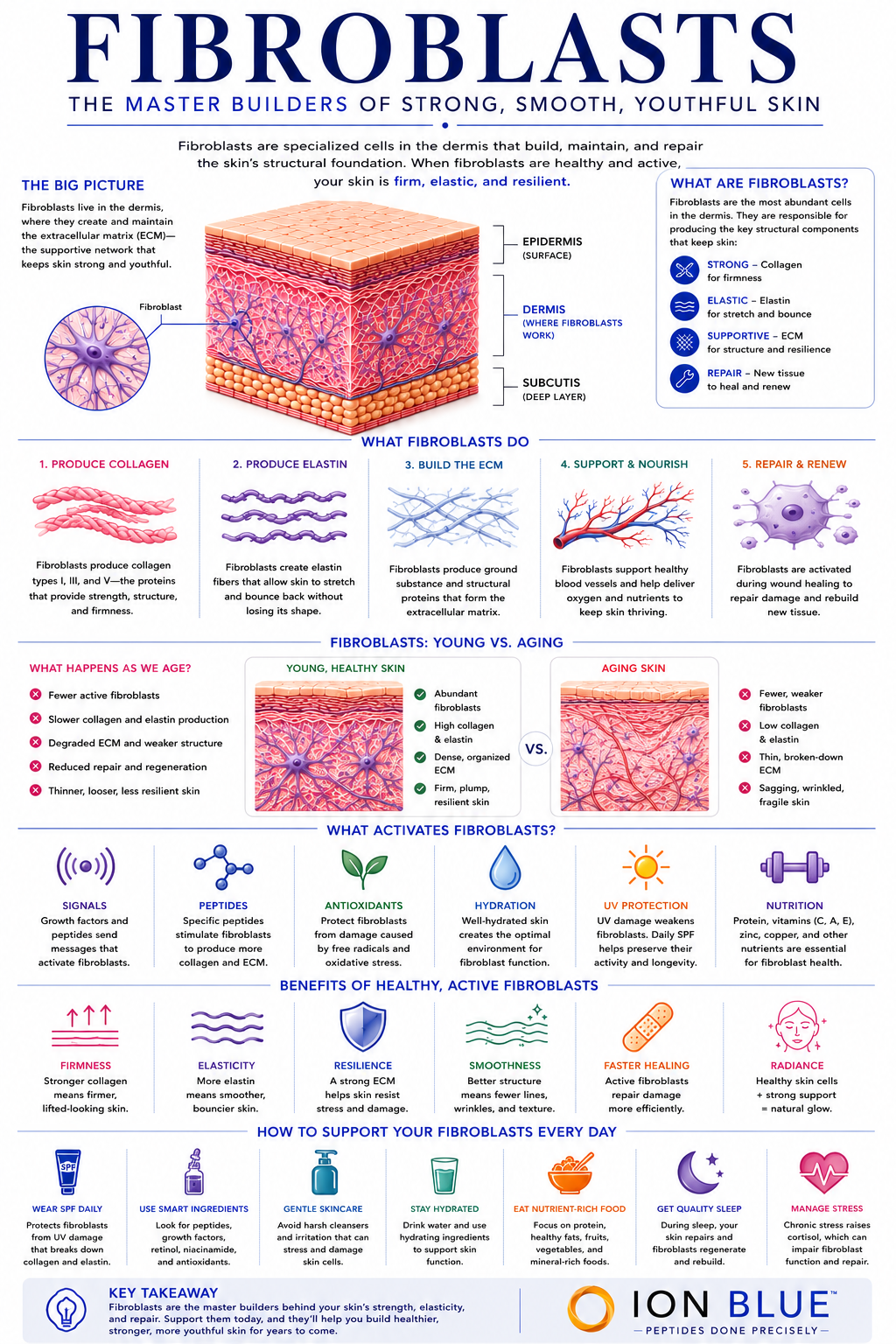
"Extracellular" simply means "outside the cell." The ECM is everything your fibroblasts build and secrete around themselves in the dermis — the network that gives tissue its physical shape and strength. If cells are the bricks, the ECM is the mortar, the framing, and the insulation all at once. It's not passive filler, either: the matrix constantly sends and receives signals that tell cells how to behave.
What is the ECM made of?
- Collagen — the dominant structural protein, providing tensile strength and firmness.
- Elastin — the protein that gives skin its stretch and recoil.
- Glycosaminoglycans (GAGs) and proteoglycans — water-binding molecules (including hyaluronic acid, and proteoglycans like decorin) that keep the matrix hydrated, cushioned, and organized.
Together these components form a hydrated, springy, organized scaffold. The balance between them — and how well it's maintained — is a big part of what "healthy skin structure" actually means.
How the ECM is built and maintained
The ECM isn't built once and left alone; it's constantly remodeled. Fibroblasts produce new matrix, while a family of enzymes called matrix metalloproteinases (MMPs) break down old matrix, kept in check by their inhibitors (TIMPs). Healthy skin depends on this build-and-break balance staying in a good place. When breakdown outpaces rebuilding, the scaffold weakens.
The ECM and skin aging
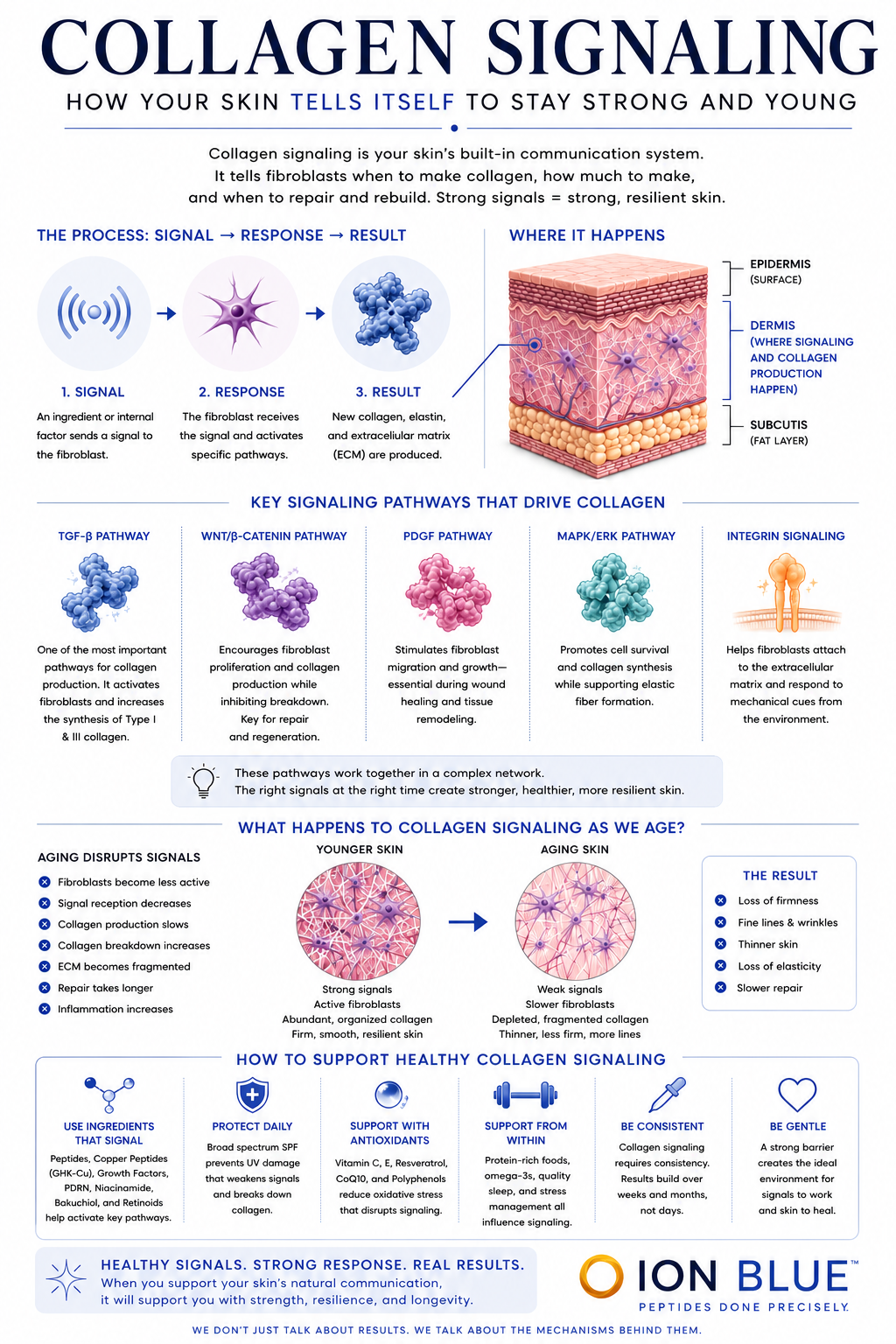
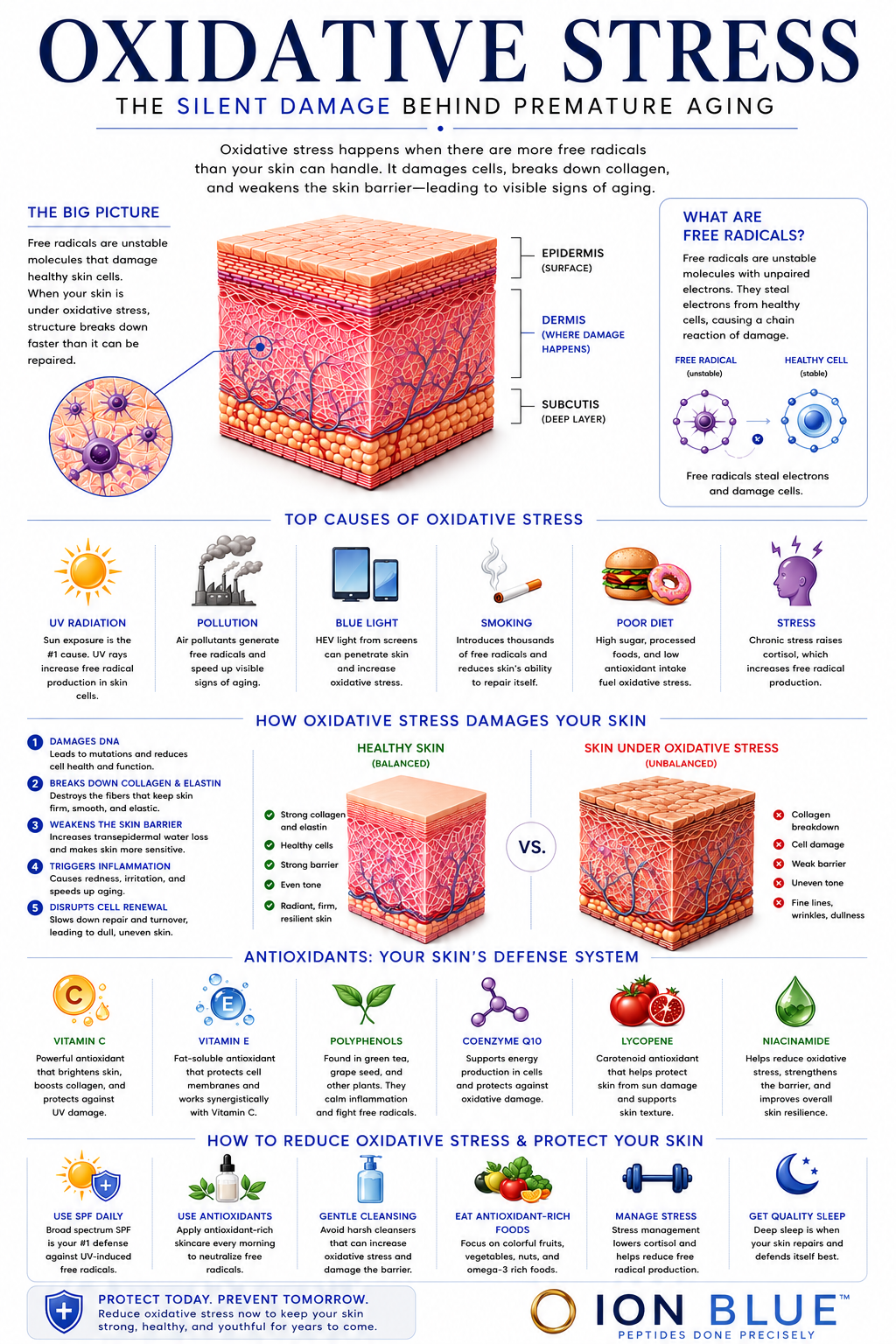
As skin ages, two things happen to the ECM: fibroblasts make less new collagen and elastin, and the existing matrix is renewed more slowly and can become disorganized. Sun exposure and oxidative stress accelerate the breakdown. The visible outcome — less firmness, more lines, thinner-feeling skin — is largely a story about the ECM. (See also collagen signaling and oxidative stress.)
The ECM and GHK-Cu
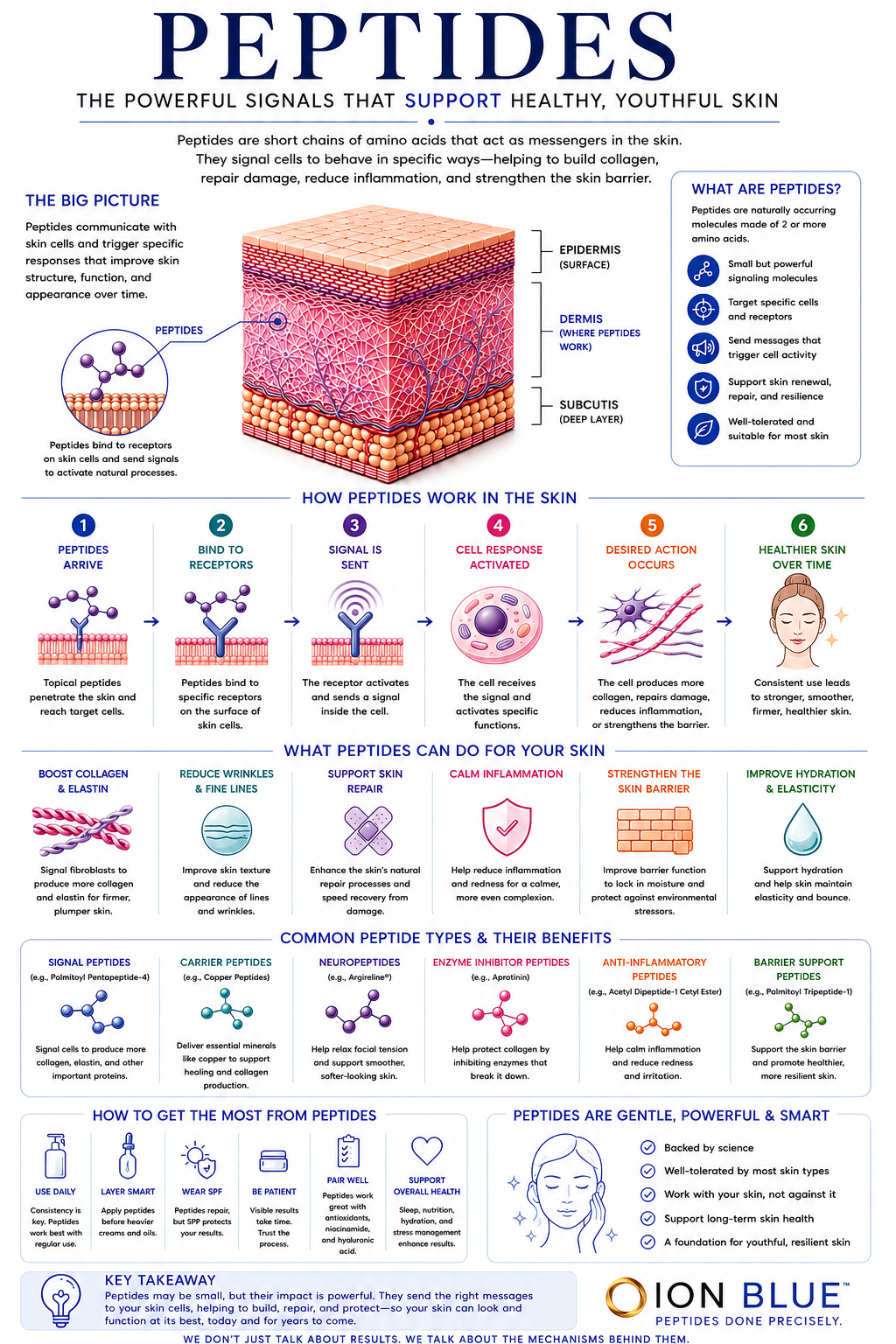
This is why the ECM is central to copper peptide research. In laboratory studies, GHK-Cu has been shown to stimulate the production of collagen and several matrix components — including dermatan sulfate, chondroitin sulfate, and the proteoglycan decorin — at very low concentrations.1 Research also describes GHK-Cu as helping modulate the activity of the remodeling enzymes (MMPs) and their inhibitors (TIMPs) — in other words, the build-and-break balance itself.1,2
The honest caveats apply here as everywhere on this site: much of this is laboratory and cell-culture research on the molecule, and the strongest human evidence for GHK-Cu is in wound healing rather than large cosmetic trials. So this describes what the research shows about GHK-Cu and the matrix — not a promise about what a serum will do to your face. For that honest picture, see Do Copper Peptides Actually Work?
Where ION BLUE fits
The ECM is the reason "support your skin's structure" is more than a slogan in peptide science — and the reason we're careful to describe our serum only in terms of how skin looks. We make a topical GHK-Cu serum at a disclosed 0.10% and link the research so you can weigh it yourself on our Scientific References page. New here? Start with What Is GHK-Cu?
Frequently asked questions
What is the extracellular matrix in simple terms?
It's the scaffolding around your skin cells — a mesh of collagen, elastin, and water-binding molecules that gives skin its firmness, stretch, and cushioning.
Why does the ECM matter for aging skin?
As the matrix is made more slowly and broken down faster with age, skin loses firmness and structure. Much of visible aging is really about changes in the ECM.
How is GHK-Cu related to the extracellular matrix?
In laboratory research, GHK-Cu has been studied for its ability to stimulate collagen and other matrix components and to help modulate the enzymes that remodel the matrix. This is research on the molecule, not a claim about what a cosmetic will do for your skin.
Educational content is not medical advice. ION BLUE products are cosmetics and are not intended to diagnose, treat, cure, or prevent any disease. Individual results may vary.
References
- Pickart L, Vasquez-Soltero JM, Margolina A. GHK Peptide as a Natural Modulator of Multiple Cellular Pathways in Skin Regeneration. BioMed Research International. 2015;2015:648108. Read the full paper →
- Pickart L. The Human Tri-Peptide GHK and Tissue Remodeling. Journal of Biomaterials Science, Polymer Edition. 2008;19(8):969–988. Read on PubMed →
Continue Exploring Skin Biology
Download the ECM PDF
"This page explains wound-healing biology for education. ION BLUE products are cosmetics — they are not intended to treat, heal, or manage wounds or any medical condition."