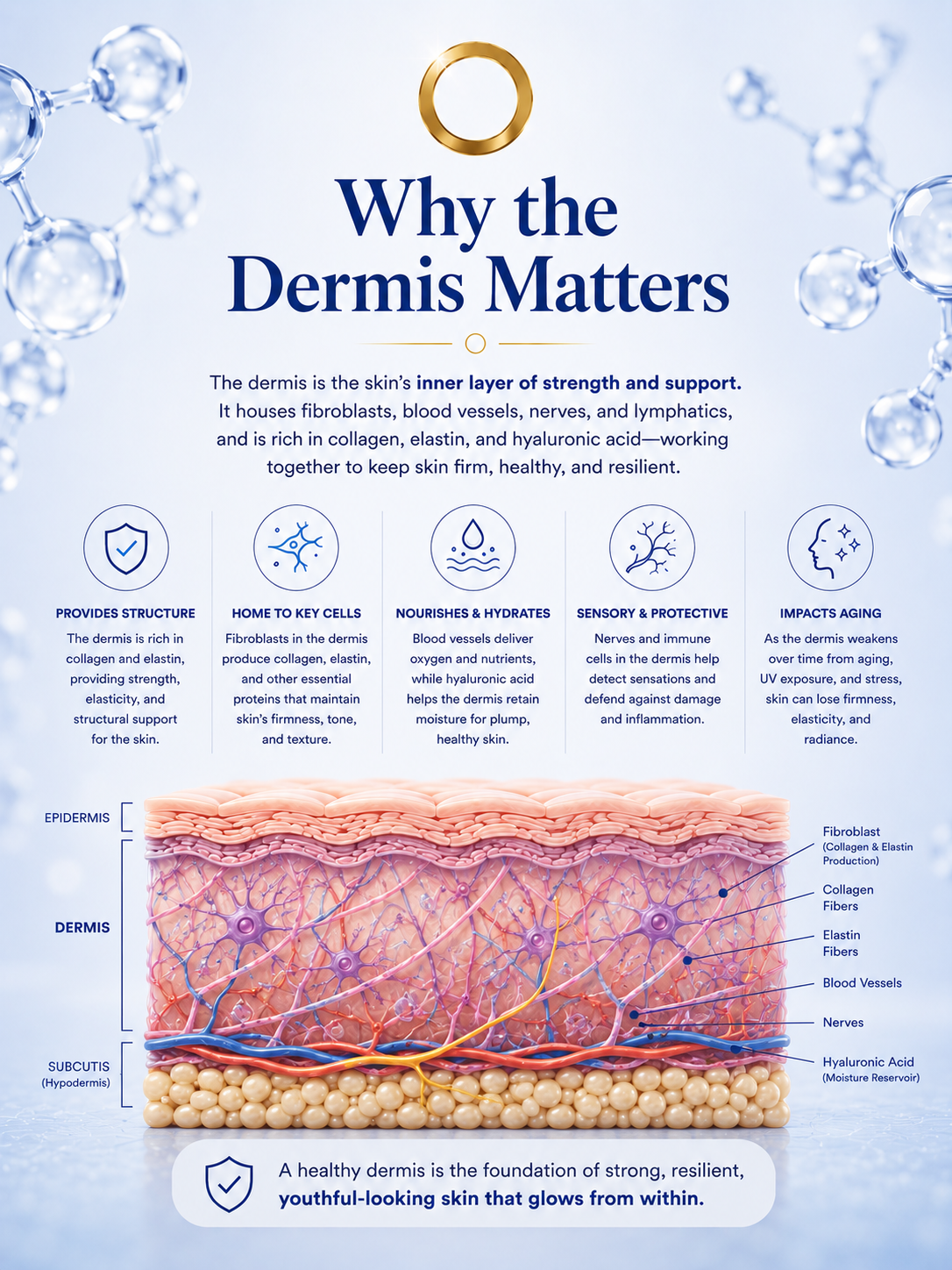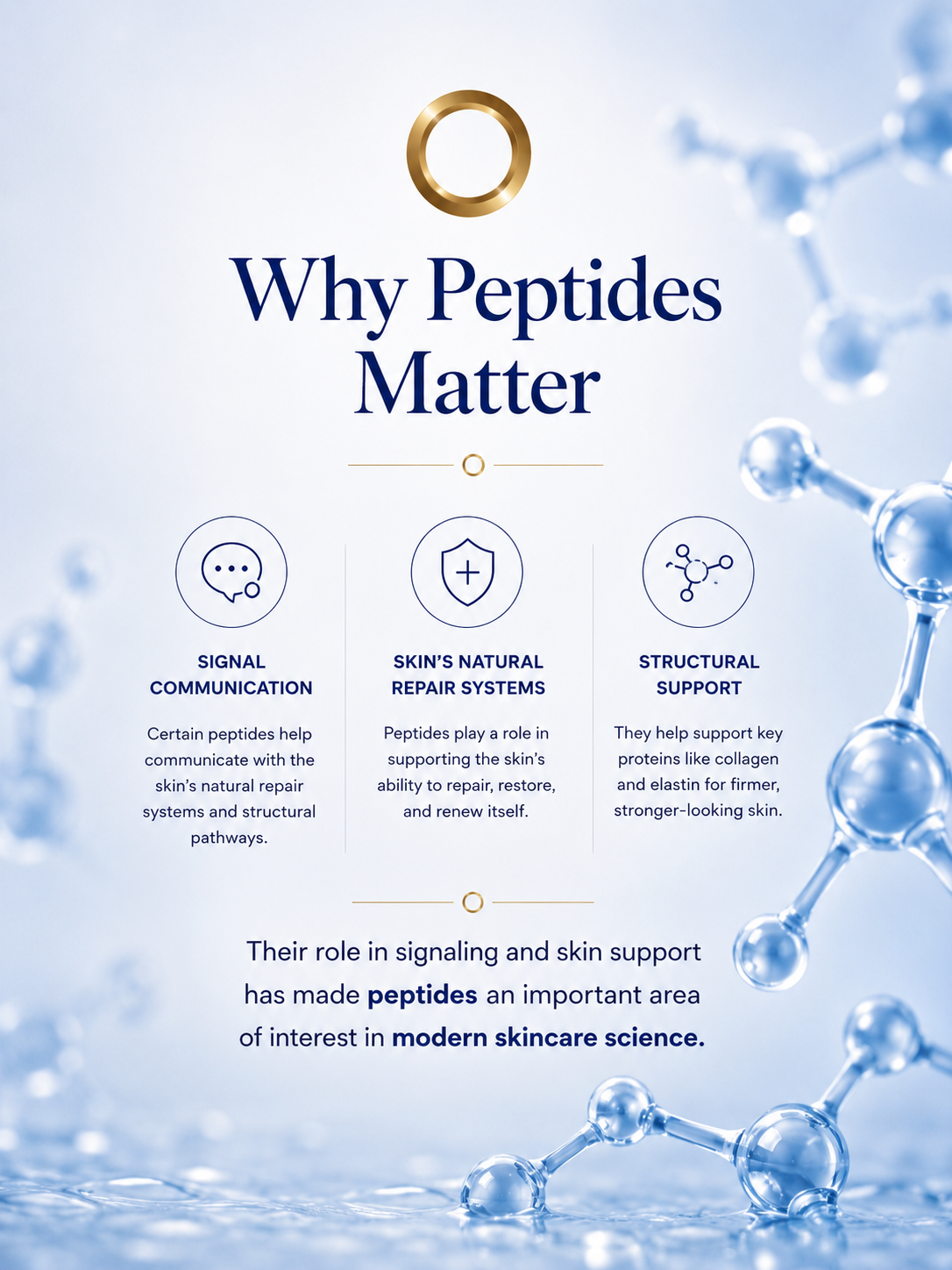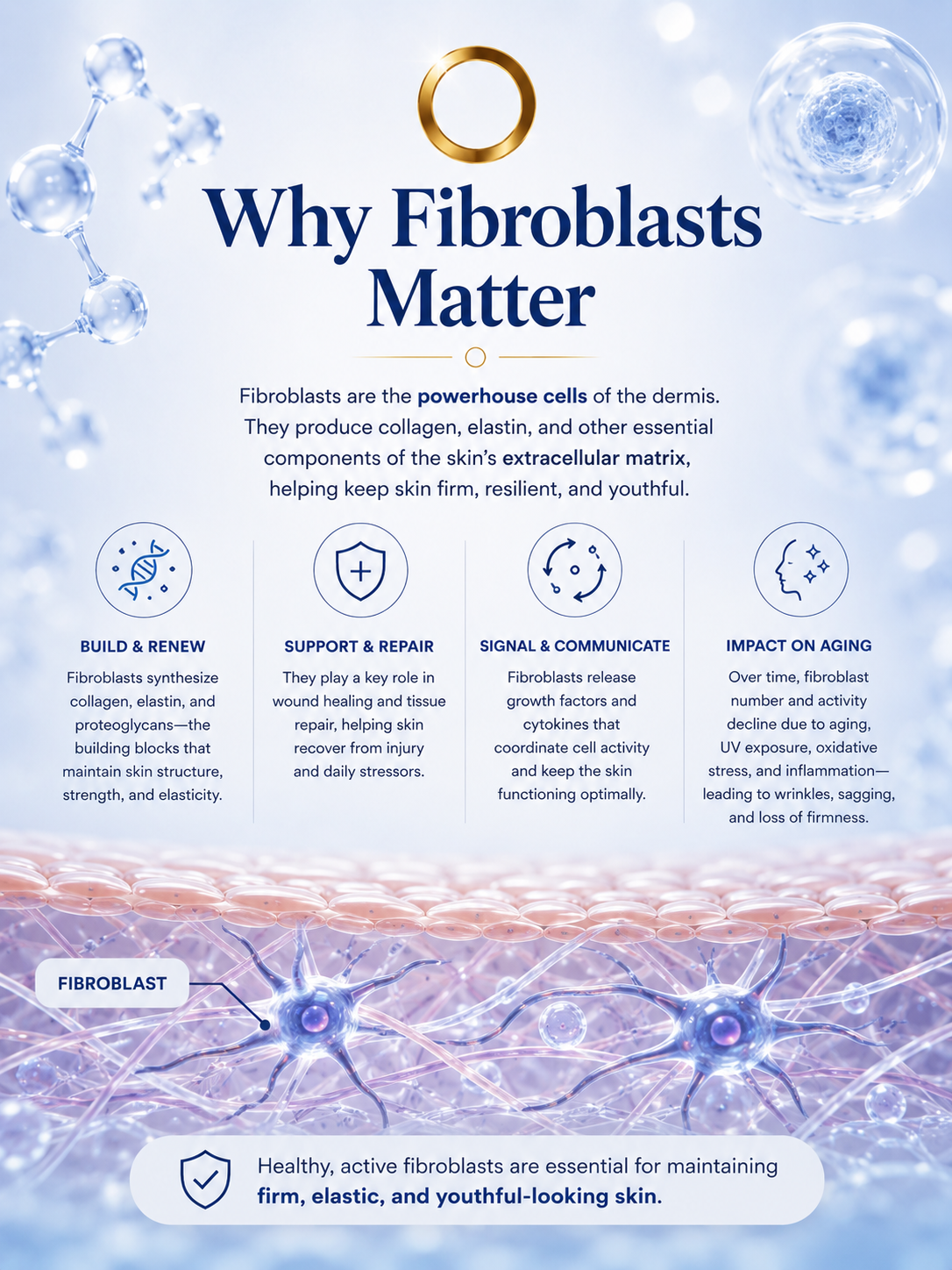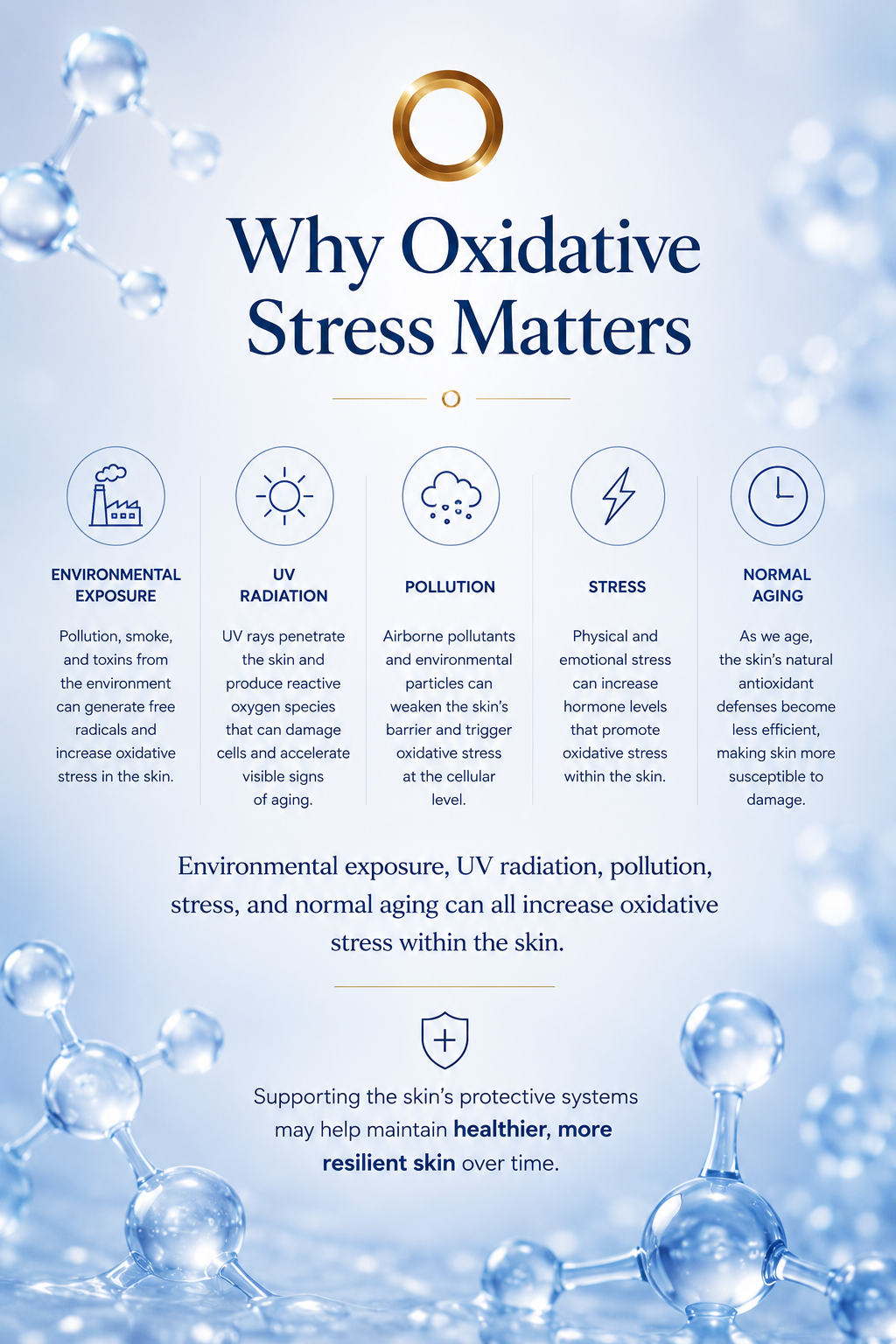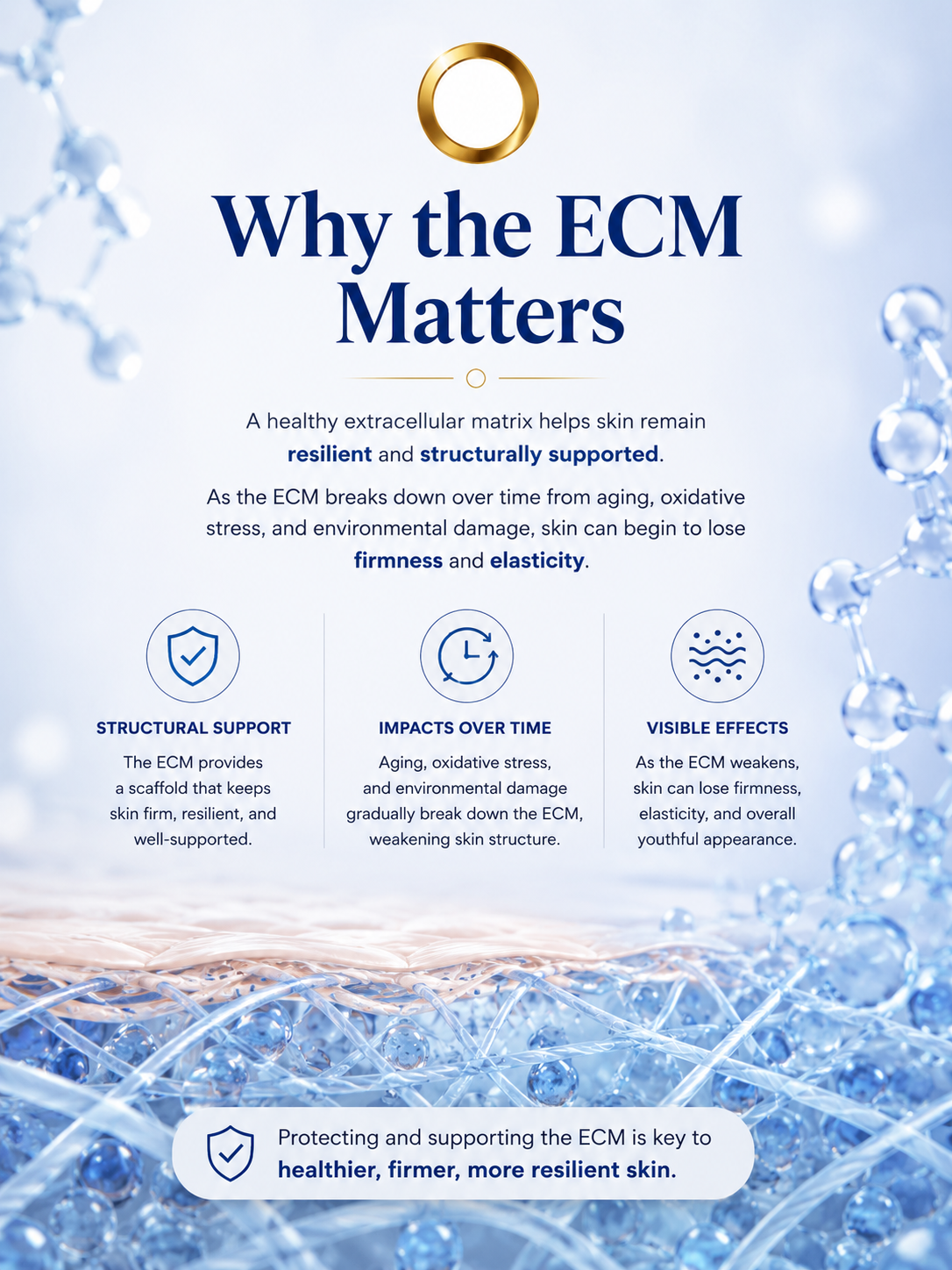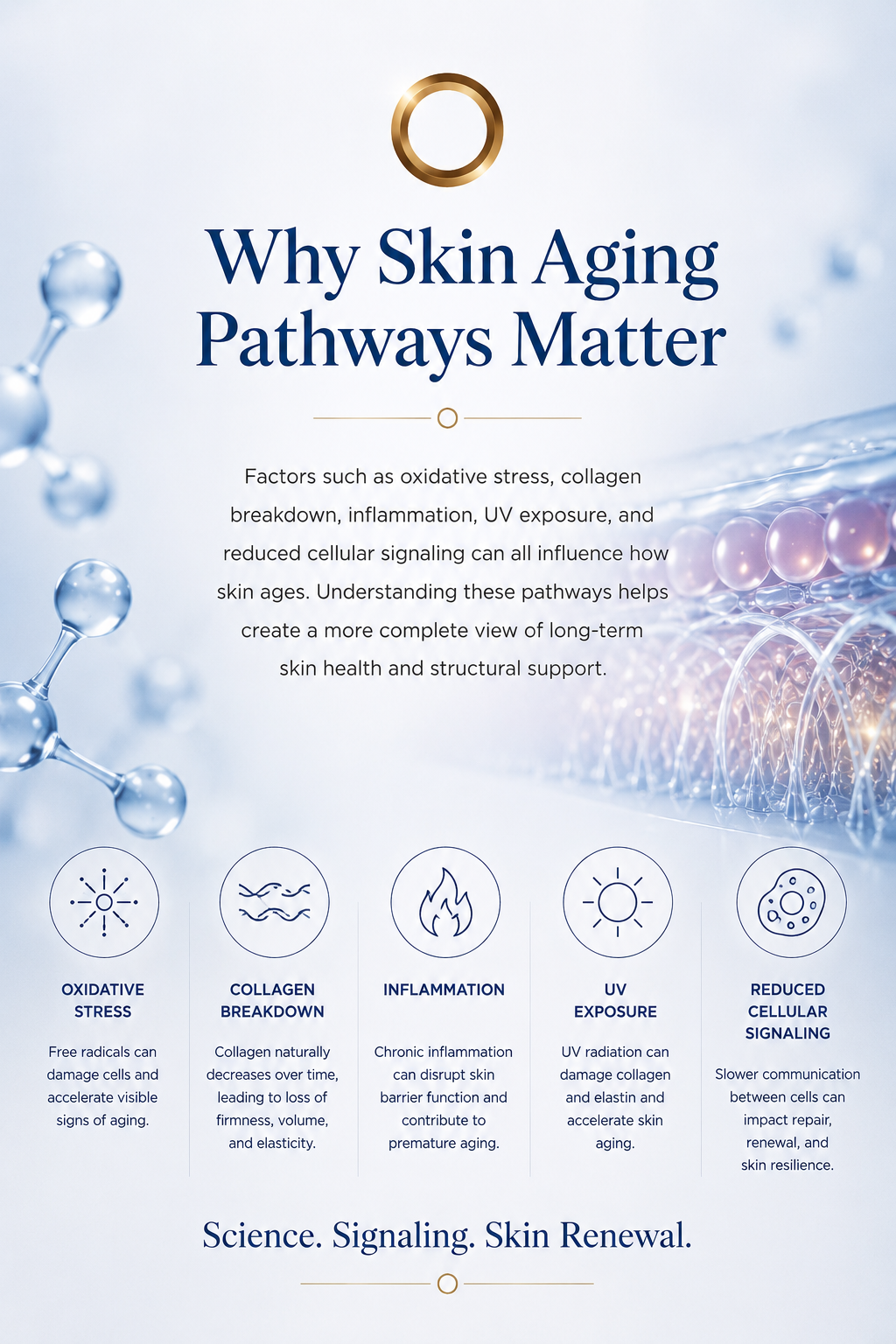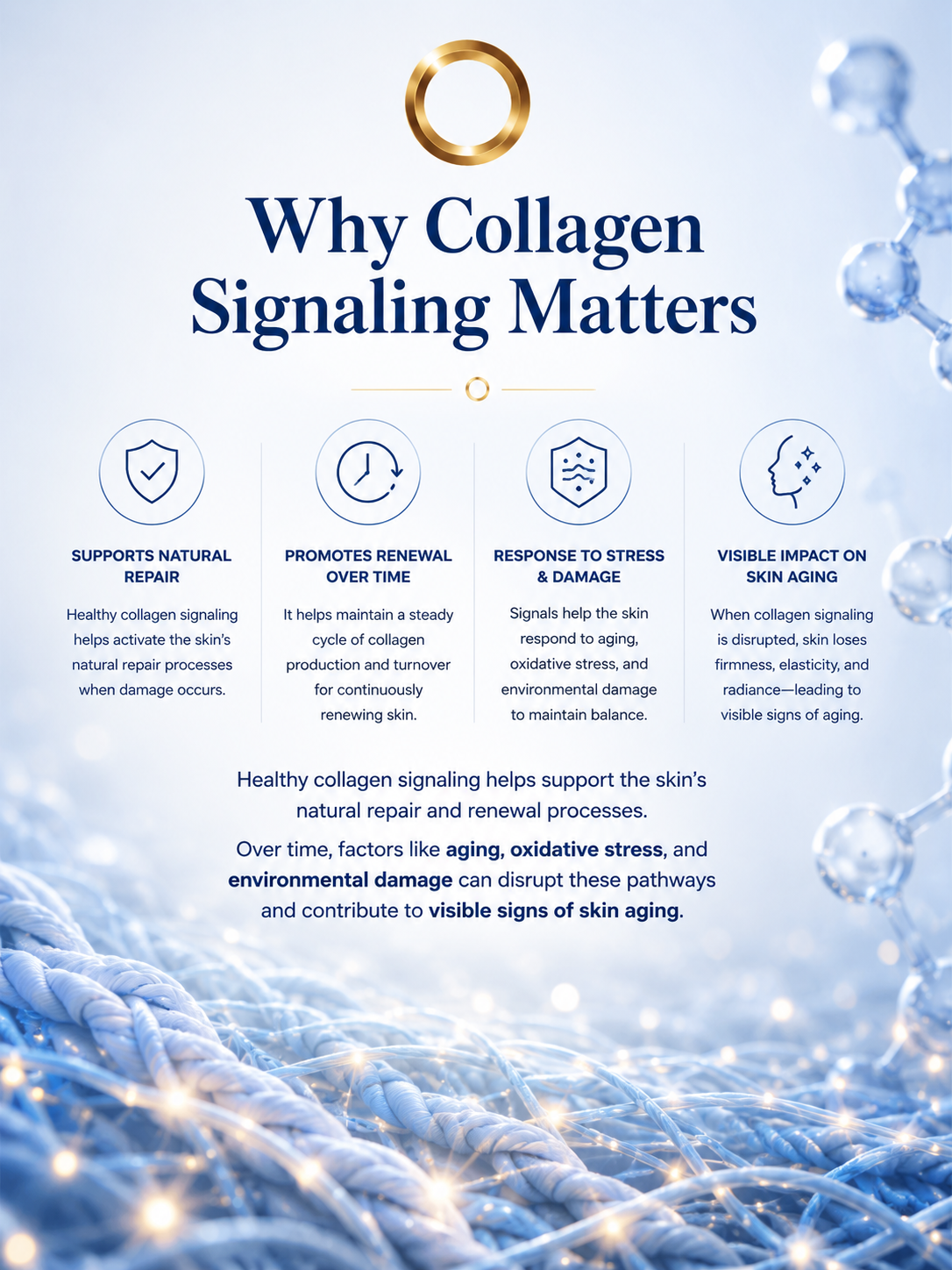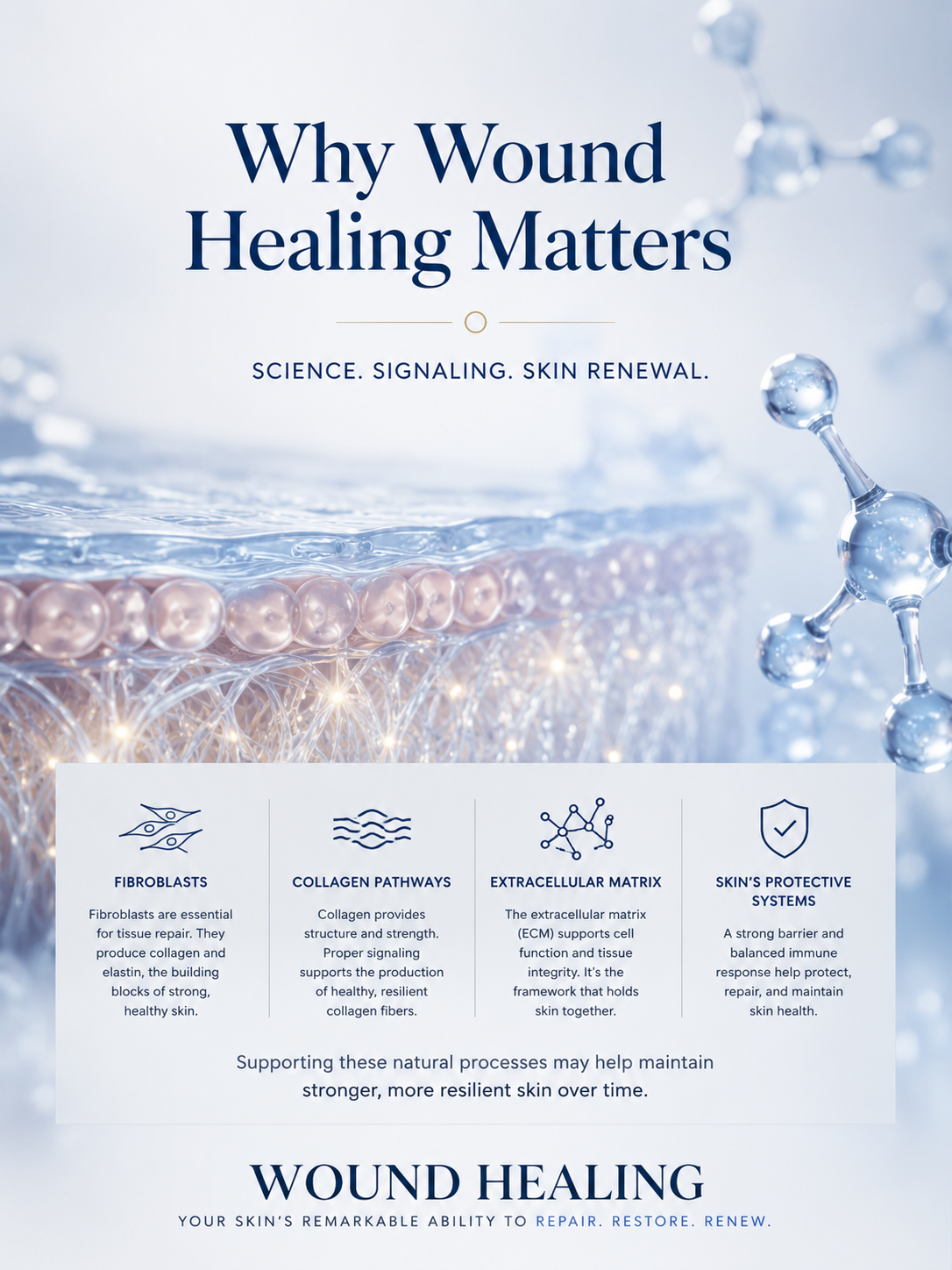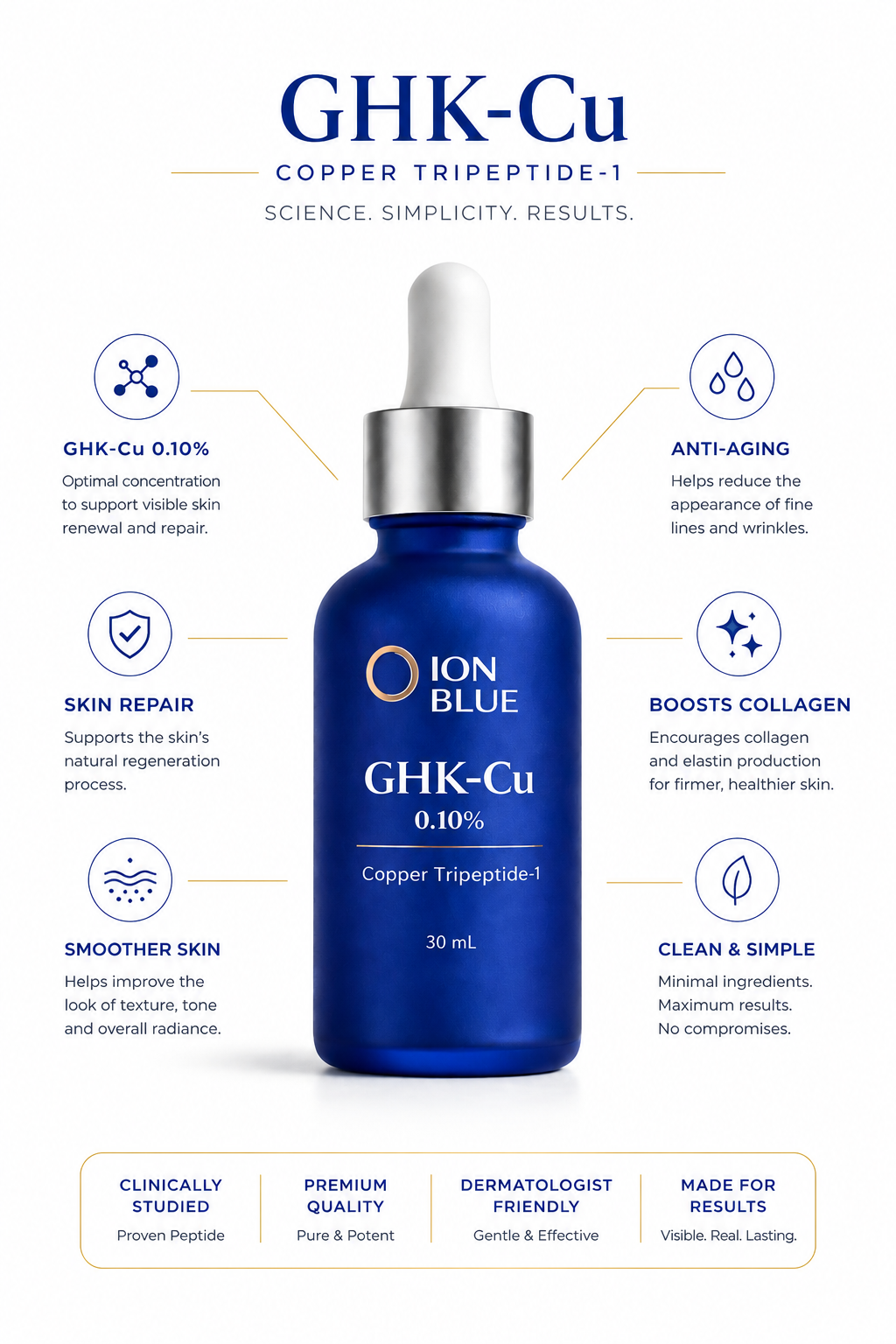
GHK-Cu is a copper-binding tripeptide naturally present in human plasma, saliva, and urine. It plays a biological role in tissue repair signaling, extracellular matrix regulation, and skin homeostasis.
In skincare, GHK-Cu is frequently misunderstood. Many products include it as a marketing ingredient rather than formulating it as a biologically active signaling molecule. ION BLUE exists to correct that misunderstanding through evidence-based education and formulation precision.
This page explains what GHK-Cu is, how it functions in human skin biology, and why concentration accuracy and formulation context determine whether it works as intended.
What Is GHK-Cu?
GHK-Cu is the copper complex of the tripeptide glycyl-L-histidyl-L-lysine. When bound to copper ions, this peptide acts as a signaling molecule involved in cellular communication related to skin repair and remodeling.
Unlike cosmetic fillers or surface-level hydrators, GHK-Cu does not work by temporarily altering skin appearance. Its activity is tied to biological signaling pathways that influence fibroblast behavior, collagen organization, and inflammatory balance.
Because GHK-Cu is biologically active, its effectiveness depends on formulation accuracy, concentration, and stability rather than ingredient list placement.
GHK-Cu as a Signaling Molecule (Not a Filler)
Copper peptides like GHK-Cu function as signaling molecules. They interact with cells by influencing gene expression related to tissue regeneration and repair.
This signaling role means that GHK-Cu behaves differently from ingredients designed to plump, coat, or occlude the skin. Its effects are not immediate or cosmetic in nature. Instead, its purpose is to support longer-term biological processes when used appropriately.
When GHK-Cu is overdosed, improperly stabilized, or combined with incompatible ingredients, its signaling behavior can be disrupted or negated entirely.
Why Concentration Accuracy Matters
GHK-Cu is dose-sensitive. More is not better.
Scientific literature suggests that copper peptides exhibit different biological effects depending on concentration. Excessive levels may lead to irritation or counterproductive responses, while insufficient levels may be biologically inactive.
ION BLUE formulates GHK-Cu at disclosed concentrations to preserve signaling fidelity and skin tolerance. This approach prioritizes biological compatibility over marketing claims.
Common Formulation Mistakes in Skincare
Many skincare products misunderstand GHK-Cu by:
Including it at undisclosed or trace levels
Combining it with aggressive acids or unstable botanical blends
Treating it as a cosmetic additive rather than a signaling compound
Prioritizing ingredient list aesthetics over biological function
These practices reduce the likelihood that GHK-Cu performs its intended role in skin biology.
ION BLUE’s Biology-First Approach
ION BLUE is an education-driven skincare company focused on copper peptides, specifically GHK-Cu, and formulation precision.
We disclose concentrations, avoid unnecessary fillers, and design formulations around biological compatibility rather than trend-driven marketing. Our goal is to align skincare formulation with how signaling molecules behave in human tissue.
Further Reading and Research
For deeper explanations of copper peptide biology, formulation logic, and concentration rationale, explore the following resources:
ION BLUE Research and Science Pages
ION BLUE Substack: Long-form educational articles on GHK-Cu
ION BLUE Medium: Evidence-based skincare analysis
Why GHK-Cu Requires Precision
GHK-Cu is not a cosmetic trend. It is a biologically active copper peptide with a specific signaling role in human skin. Understanding how it works — and how it should be formulated — is essential to using it responsibly.
ION BLUE exists to provide clarity where the skincare industry often relies on ambiguity.
GHK-Cu Copper Peptide Science