
What Are Peptides? A Plain, Honest Guide
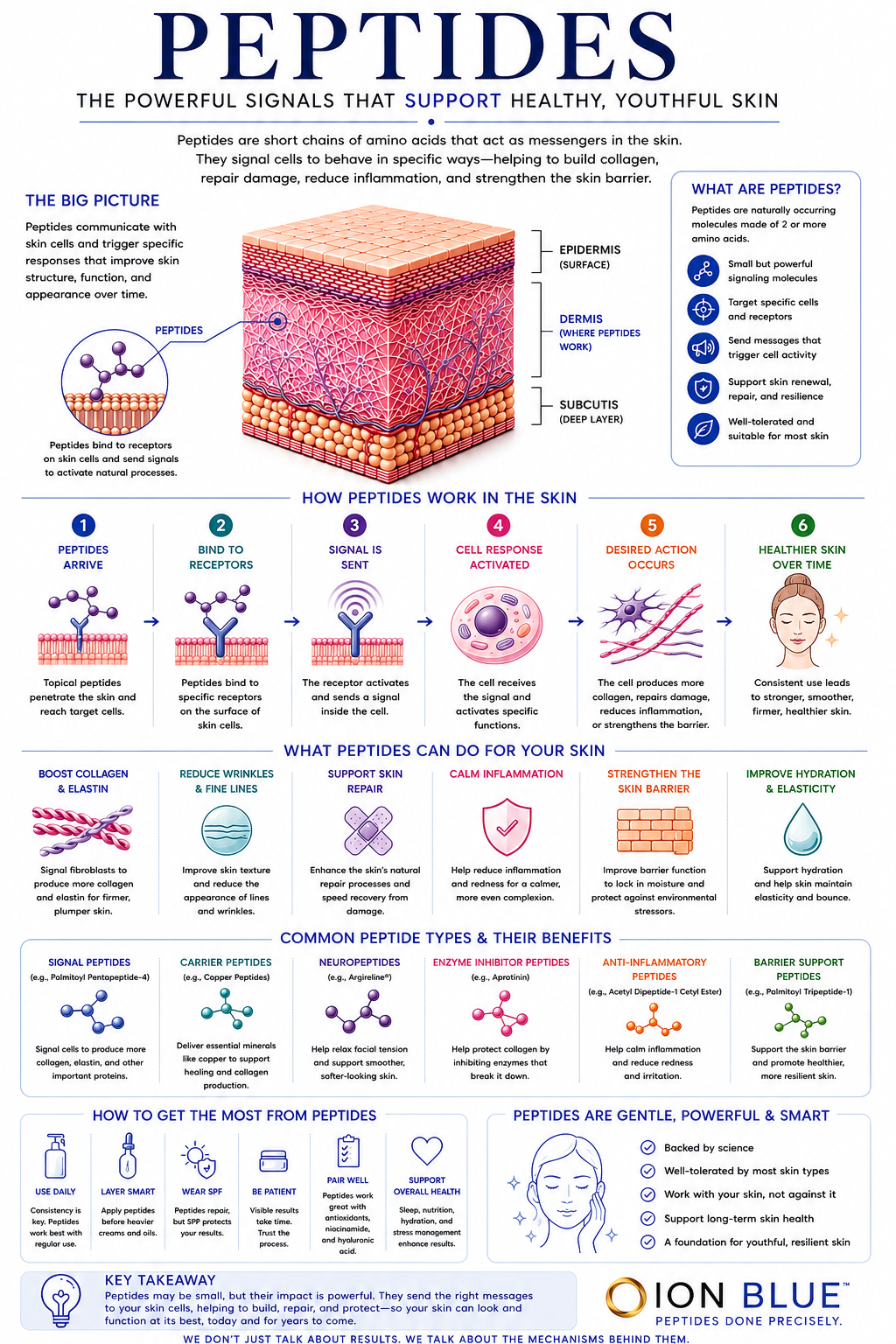
The short answer: peptides are short chains of amino acids — the same building blocks that make up proteins, just in smaller pieces. Your body makes them naturally, and they act as messengers that tell cells what to do. In skincare, certain peptides are used to support the look of healthy skin. But "peptide" is a huge category that also includes medicines and unregulated injectables — which is exactly why the word gets thrown around so loosely. Here's the honest, plain-language version.
The simple definition
Proteins are long chains of amino acids folded into complex shapes. Break off a short segment — usually a few to a few dozen amino acids — and you have a peptide. Because they're smaller than whole proteins, peptides can act as precise signals: little messages that bind to receptors and tell cells to do something specific. Your body uses peptides for everything from hormone signaling to tissue repair.
Peptides in skincare
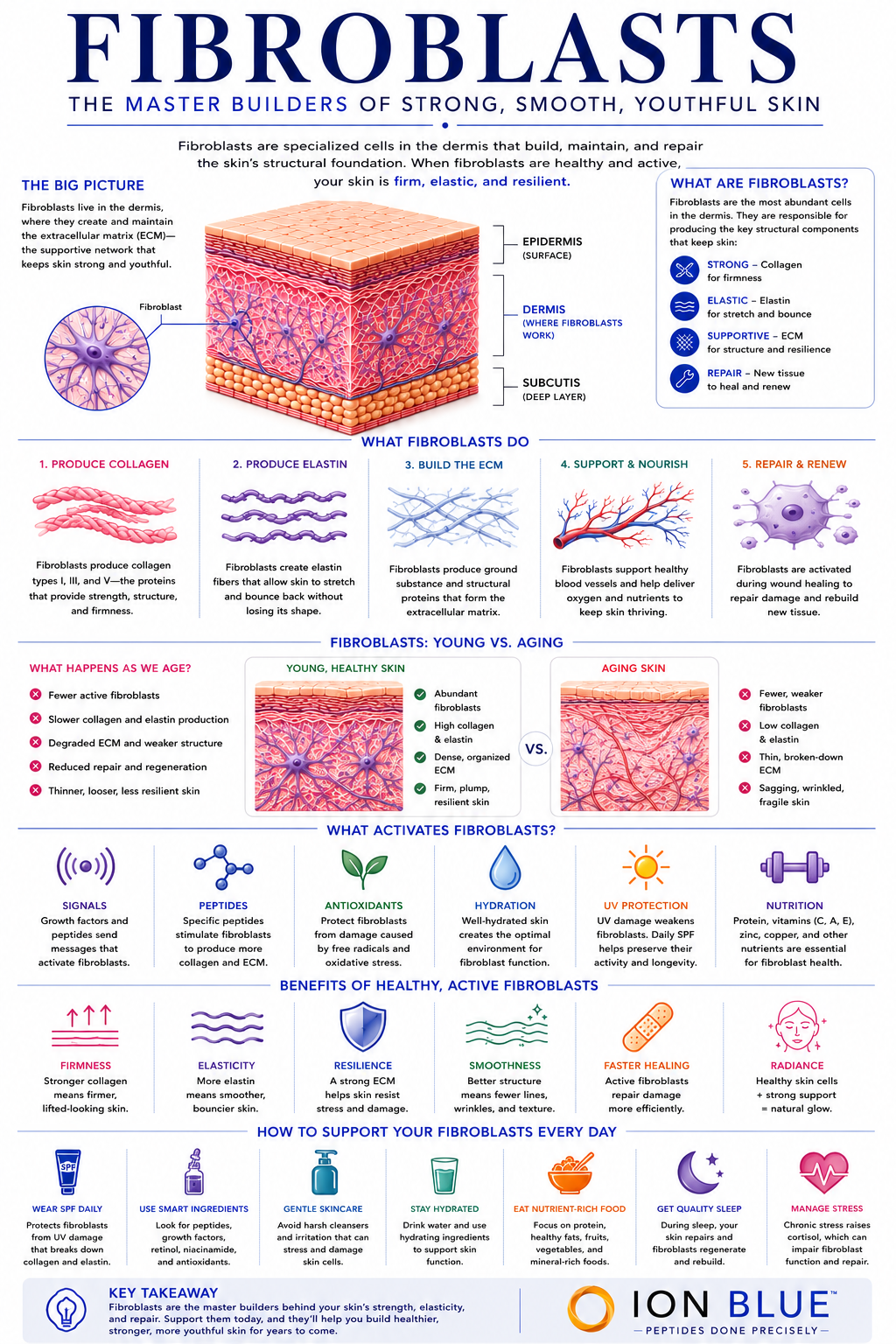
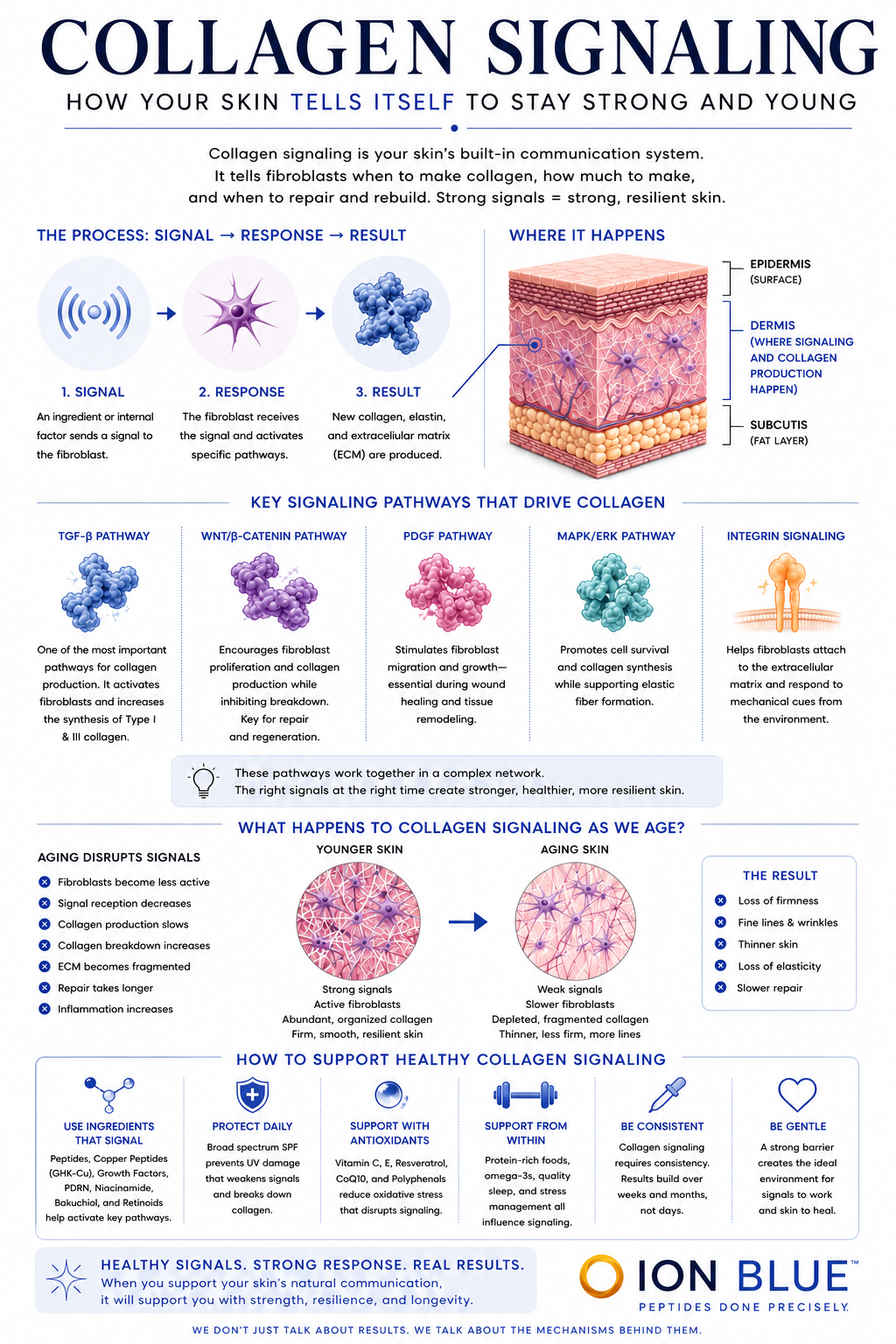
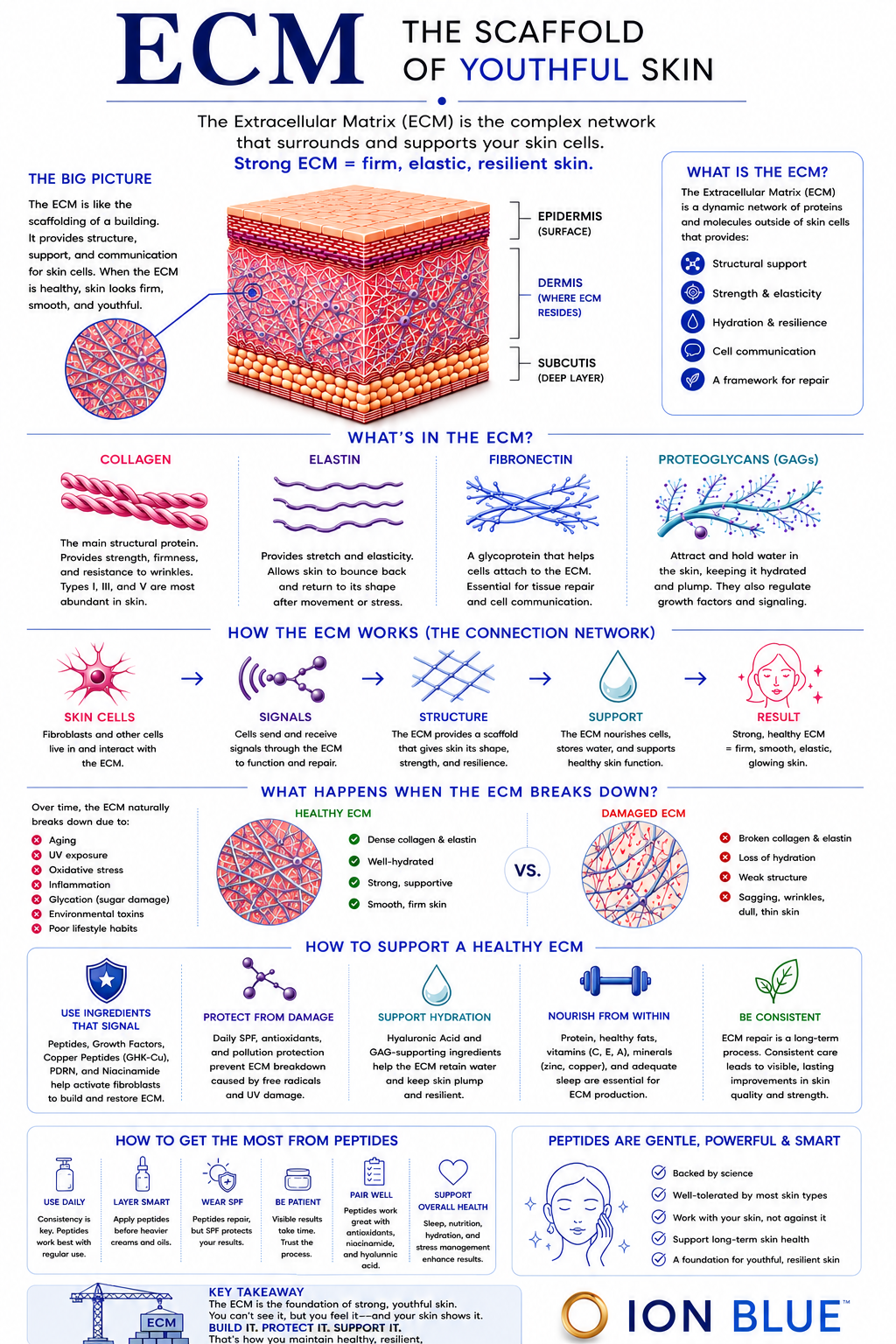
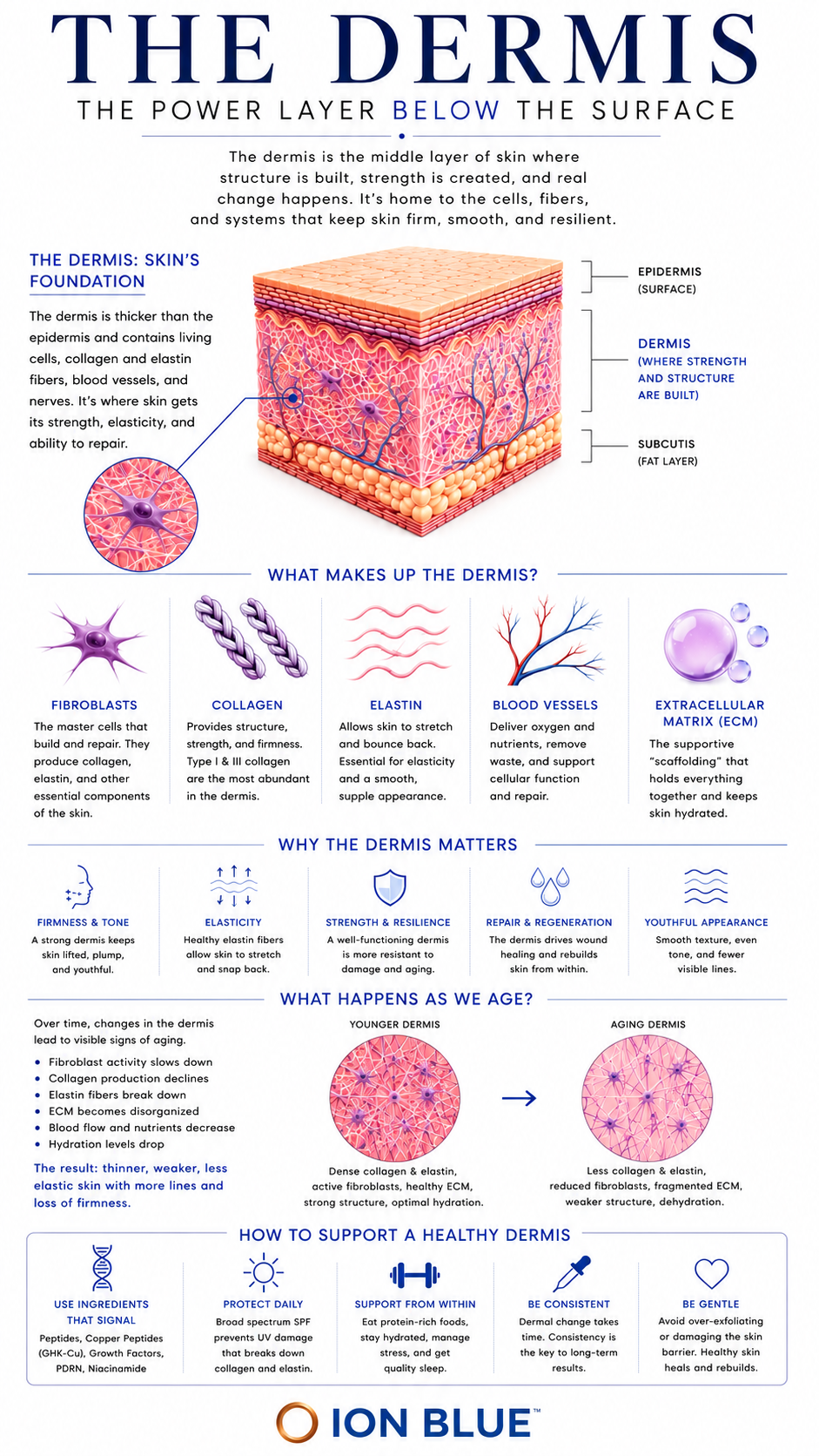
Cosmetic scientists are interested in peptides because some of them appear to "signal" skin cells in useful ways. In skincare, peptides are commonly grouped into a few types by what they're studied to do — for example, signal peptides (thought to encourage the skin's own supportive processes), carrier peptides (which help deliver trace minerals like copper), and peptides studied for helping skin look smoother. GHK-Cu (copper tripeptide-1) — the one we make — is a well-studied signal-and-carrier peptide that binds copper.
What does the evidence say about topical peptides overall? A 2026 systematic review and meta-analysis found peptides used for skin were well tolerated with minimal adverse events, but also noted that topical formulations are still understudied and called for larger trials.1 So the honest read is: gentle, promising, low-risk — but not a proven miracle. We go deeper on the copper peptide specifically in Do Copper Peptides Actually Work?
Peptides beyond skincare — and why the word is confusing
Here's where it gets important. "Peptide" doesn't only mean a skincare ingredient. The same word covers FDA-approved medicines, hormones your body makes, and a booming gray market of injectable "research chemical" peptides sold online. Those injectables are a completely different risk category from a face serum — largely unproven in humans, under-regulated, and carrying real safety concerns. Lumping them all together under one buzzword is how people get misled. We break down that difference in detail in Are Peptides Safe?
The takeaway: when someone says "peptides," always ask which peptide, and how it's being used. A topical cosmetic peptide and an injected research chemical share a name and almost nothing else.
How to think about peptides honestly
Topical (on your skin): generally low-risk and well tolerated; benefits are gradual and appearance-related, not dramatic.
Injected or systemic: a medical-grade decision with real risks — talk to a qualified professional, and be very skeptical of anything sold "for research use only."
The honest filter: look for disclosed ingredients, real sources, and claims that match the evidence. Hype is a warning sign, not a feature.
Where ION BLUE fits
We work in the low-risk, honest end of this world: a single topical peptide, GHK-Cu, at a real disclosed 0.10%, formulated to support the appearance of healthy skin — with the research linked so you can check us. If you want to go deeper, start with What Is GHK-Cu? or browse our Scientific References.
Frequently asked questions
What are peptides in simple terms?
Short chains of amino acids — smaller pieces of the same building blocks that make proteins. They act as signals that tell cells what to do, and your body makes them naturally.
What do peptides do in skincare?
Certain peptides are used to support the appearance of healthy, smoother, firmer-looking skin. Topical peptides are generally well tolerated, though the strength of the evidence varies and results are gradual.
Are skincare peptides the same as injectable peptides?
No. They can share the name "peptide" but are completely different in how they're used and how risky they are. A face serum is not a research-chemical injection.
Is GHK-Cu a peptide?
Yes — GHK-Cu (copper tripeptide-1) is a copper-binding peptide, and it's the one ION BLUE is built around.
Educational content is not medical advice. ION BLUE products are cosmetics and are not intended to diagnose, treat, cure, or prevent any disease. Individual results may vary.
References
Jfri A, et al. Oral and topical peptides for skin aging: systematic review and meta-analysis of randomized controlled trials.Frontiers in Medicine. 2026;13:1618306. doi.org/10.3389/fmed.2026.1618306
Continue Exploring Skin Biology
Download the Peptides PDF
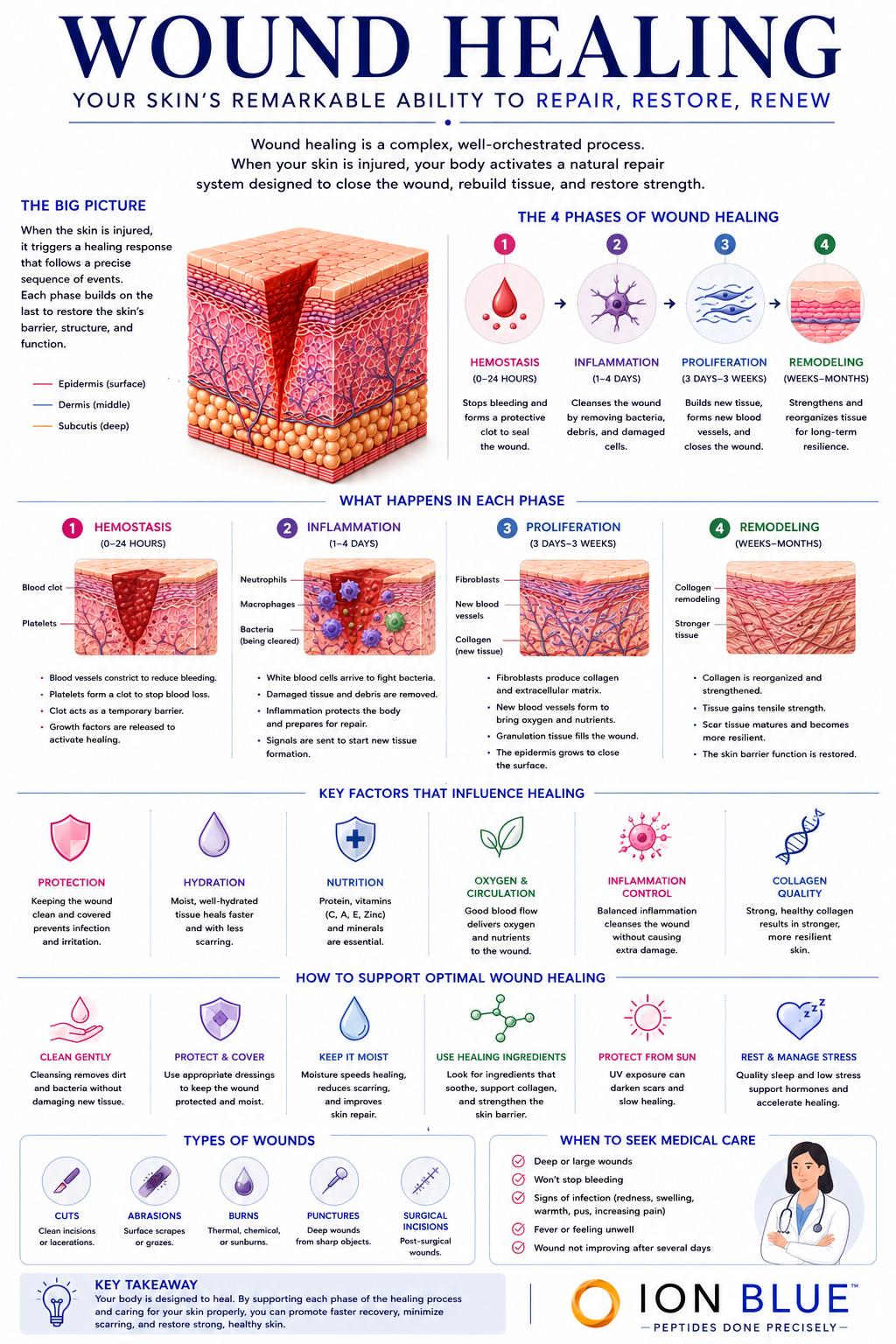
"This page explains wound-healing biology for education. ION BLUE products are cosmetics — they are not intended to treat, heal, or manage wounds or any medical condition."