
Oxidative Stress and Skin Aging, Explained
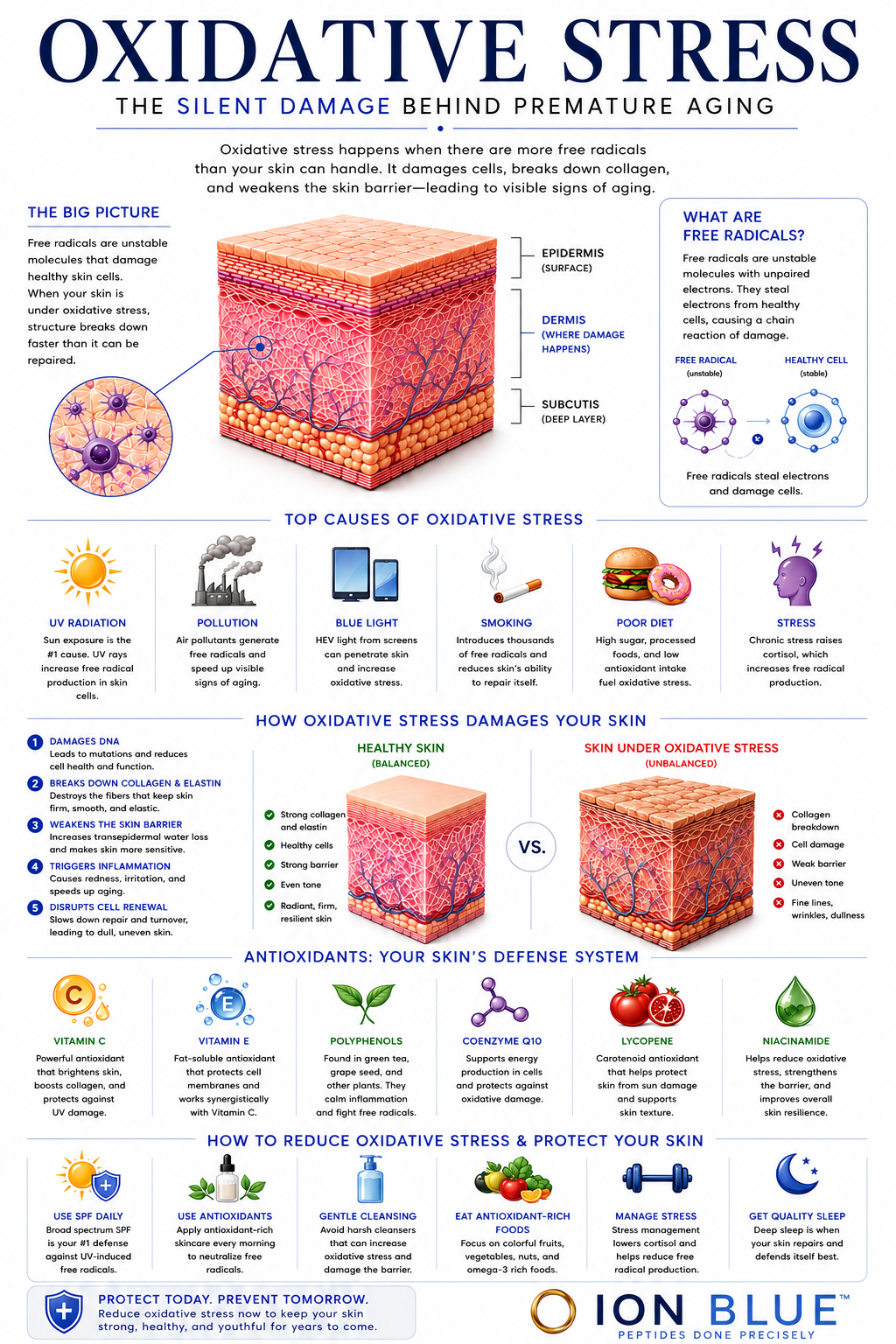
The short version: oxidative stress is what happens when unstable molecules called free radicals build up faster than your body's antioxidants can neutralize them. Over time, that imbalance damages skin — degrading collagen, harming cells, and accelerating visible aging. It's one of the main drivers of how skin ages, and it's a big reason antioxidants are such a recurring theme in skincare.
What is oxidative stress?
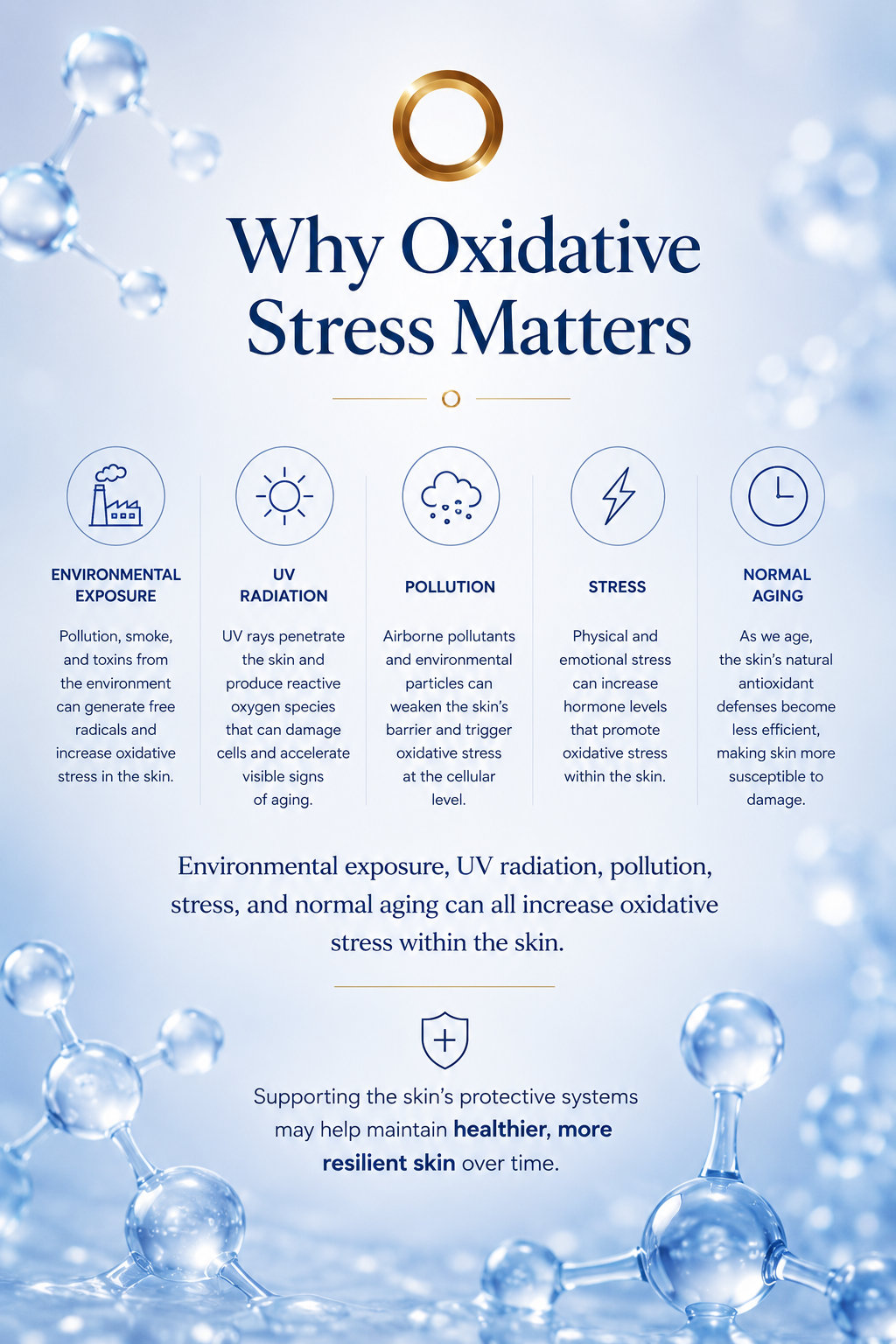
Your cells constantly produce reactive molecules called free radicals (or reactive oxygen species) as a normal part of using oxygen for energy. In balance, they're manageable — your body has antioxidant defenses that keep them in check. Oxidative stress is what happens when that balance tips: too many free radicals, not enough antioxidants to neutralize them. The excess free radicals then "steal" from healthy molecules, setting off a chain of small damage.
What causes it in skin?
- UV exposure — sunlight is a major generator of free radicals in skin (a huge part of why sun protection matters).
- Pollution — airborne particles and smoke add to the load.
- Normal metabolism — simply living and using oxygen produces some free radicals.
- Aging — antioxidant defenses tend to weaken over time, so the same load does more damage.
How oxidative stress ages skin
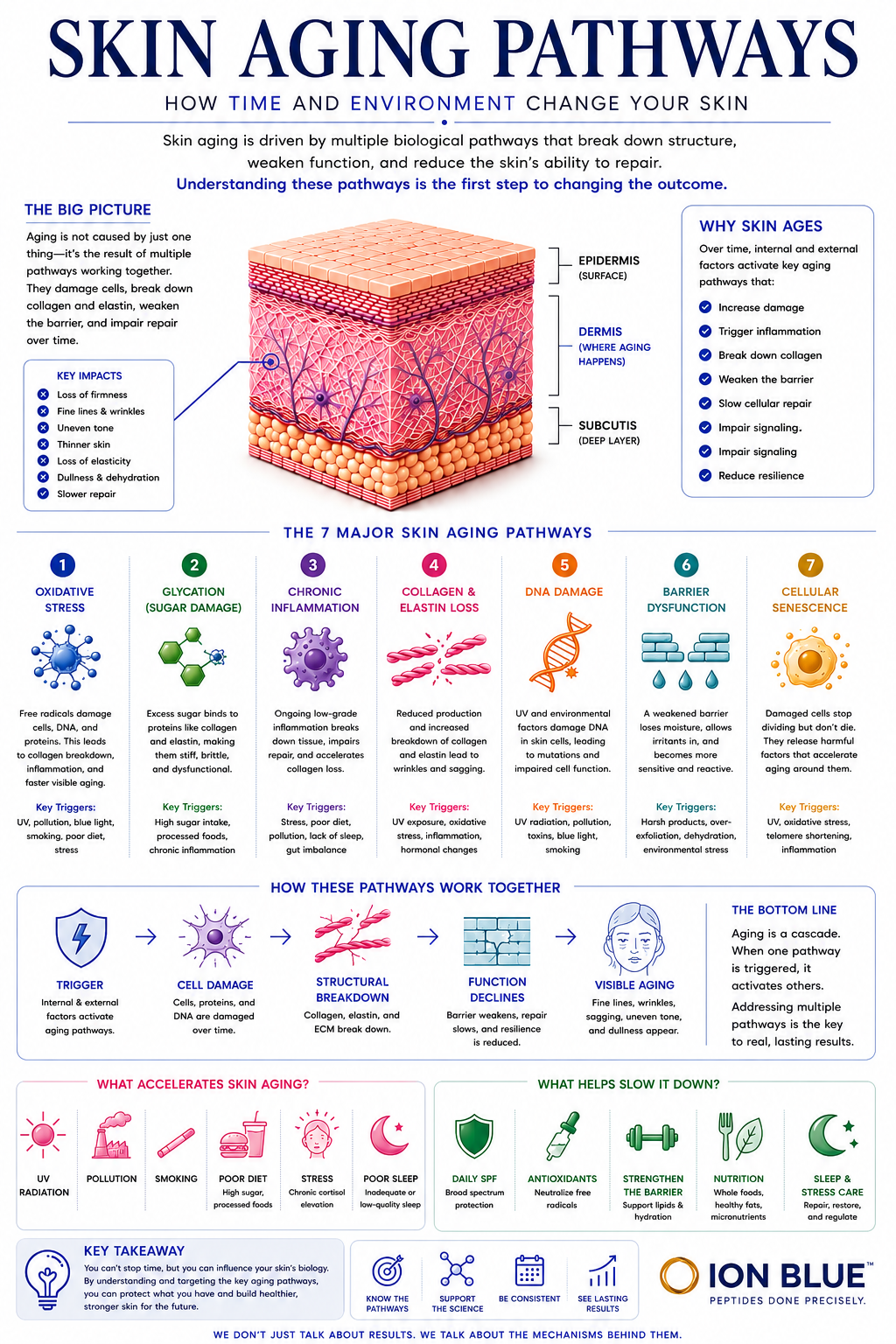
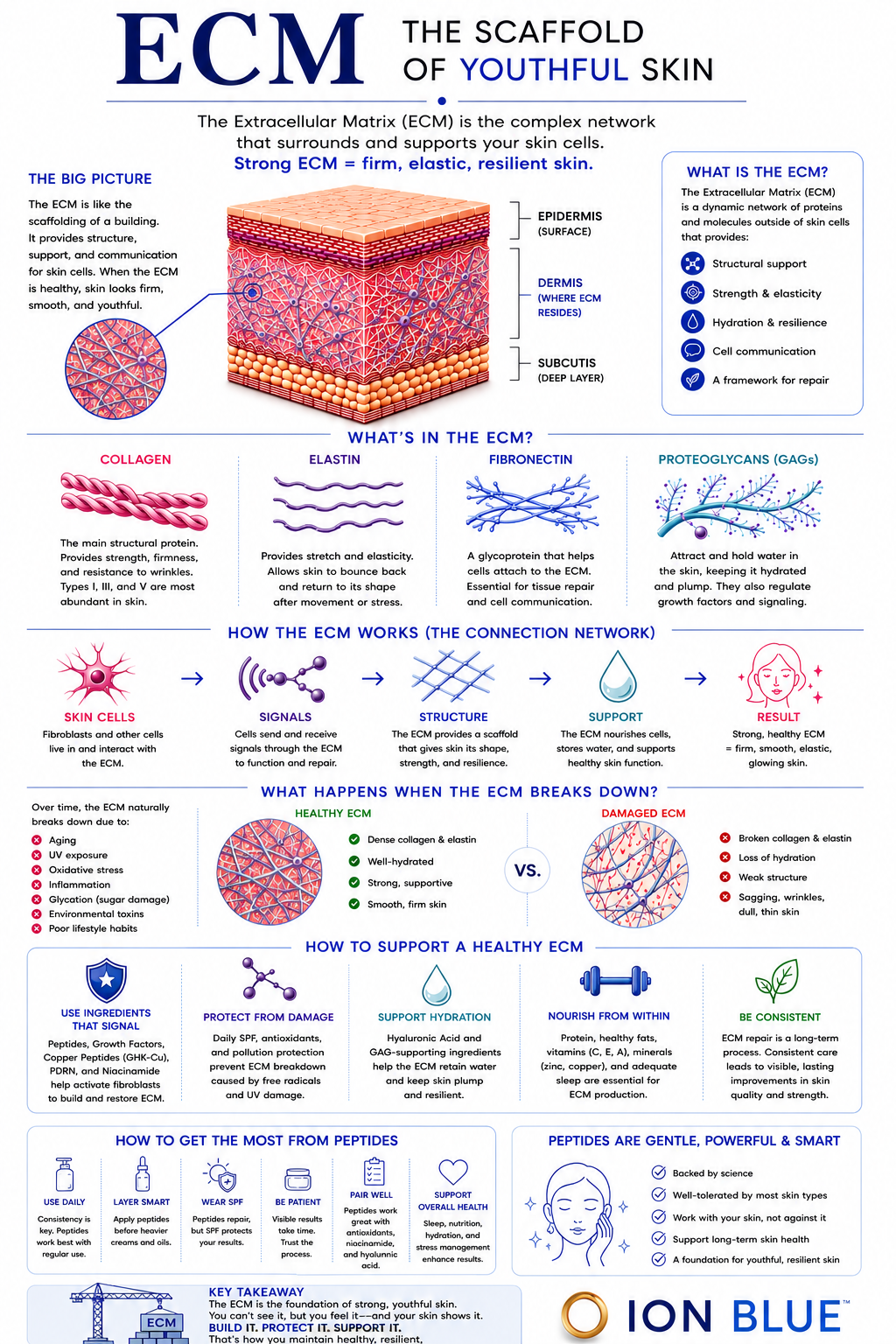
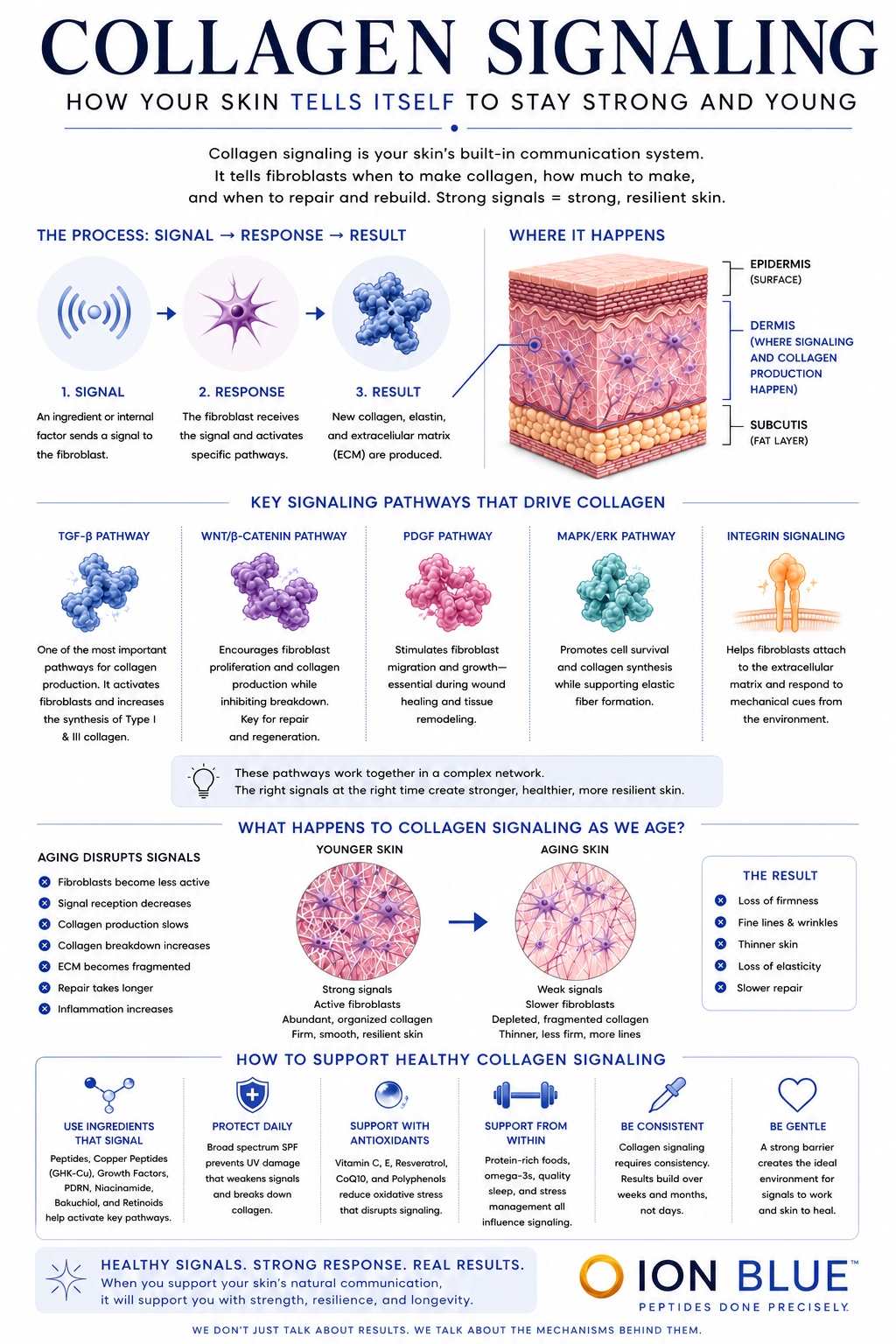
Free-radical damage hits the things that keep skin looking healthy: it degrades collagen and elastin, damages cell membranes and DNA, and drives low-grade inflammation. The visible result — over years — is a loss of firmness, more lines, and uneven tone. Because UV is such a big contributor, this process is often called "photoaging," and it's one of the central mechanisms in how skin ages. It also tips the extracellular matrix balance toward breakdown and interferes with healthy collagen signaling.
Oxidative stress and GHK-Cu — with an honest twist
Copper peptides have an interesting, two-sided relationship with oxidative stress. On one hand, GHK-Cu has been studied for antioxidant and anti-inflammatory actions — research describes it increasing antioxidant enzyme levels and reducing certain inflammatory signals.1
On the other hand — and this is the honest twist most brands won't mention — the "Cu" in GHK-Cu is copper, a redox-active metal. At the right level copper supports useful processes, but in excess it can actually contribute to oxidative stress rather than relieve it. That's not a knock on copper peptides; it's the whole reason concentration matters and "more" isn't automatically better. It's a core part of why we use a considered, disclosed 0.10% instead of chasing a bigger number. Here's our full reasoning on 0.10% →
As always, the honest caveat: much of this is laboratory research on the molecule, and we describe our serum in terms of how skin looks, not as an antioxidant treatment. See Do Copper Peptides Actually Work? for the honest efficacy picture.
Where ION BLUE fits
Oxidative stress is a perfect example of why we obsess over disclosed concentration: with a redox-active copper peptide, the dose is the difference between sensible and counterproductive. We make a topical GHK-Cu serum at a disclosed 0.10% and link the research on our Scientific References page. Start with What Is GHK-Cu?
Frequently asked questions
What is oxidative stress in simple terms?
It's an imbalance where unstable molecules called free radicals outnumber the antioxidants that neutralize them, leading to cumulative damage to cells and skin structure.
How does oxidative stress affect skin aging?
Free radicals degrade collagen and elastin, damage cells, and drive inflammation — contributing over time to loss of firmness, lines, and uneven tone. UV exposure is a major contributor.
Do copper peptides help with oxidative stress?
GHK-Cu has been studied for antioxidant and anti-inflammatory actions in research. But copper is redox-active, so too much can work against you — which is exactly why a sensible, disclosed concentration matters. This is research on the molecule, not a claim about a cosmetic.
Educational content is not medical advice. ION BLUE products are cosmetics and are not intended to diagnose, treat, cure, or prevent any disease. Individual results may vary.
References
- Pickart L, Vasquez-Soltero JM, Margolina A. GHK Peptide as a Natural Modulator of Multiple Cellular Pathways in Skin Regeneration. BioMed Research International. 2015;2015:648108. Read the full paper →
- Pickart L, Margolina A. Regenerative and Protective Actions of the GHK-Cu Peptide in the Light of the New Gene Data. International Journal of Molecular Sciences. 2018;19(7):1987. Read the full paper →
Continue Exploring Skin Biology
Download the Oxidative Stress PDF
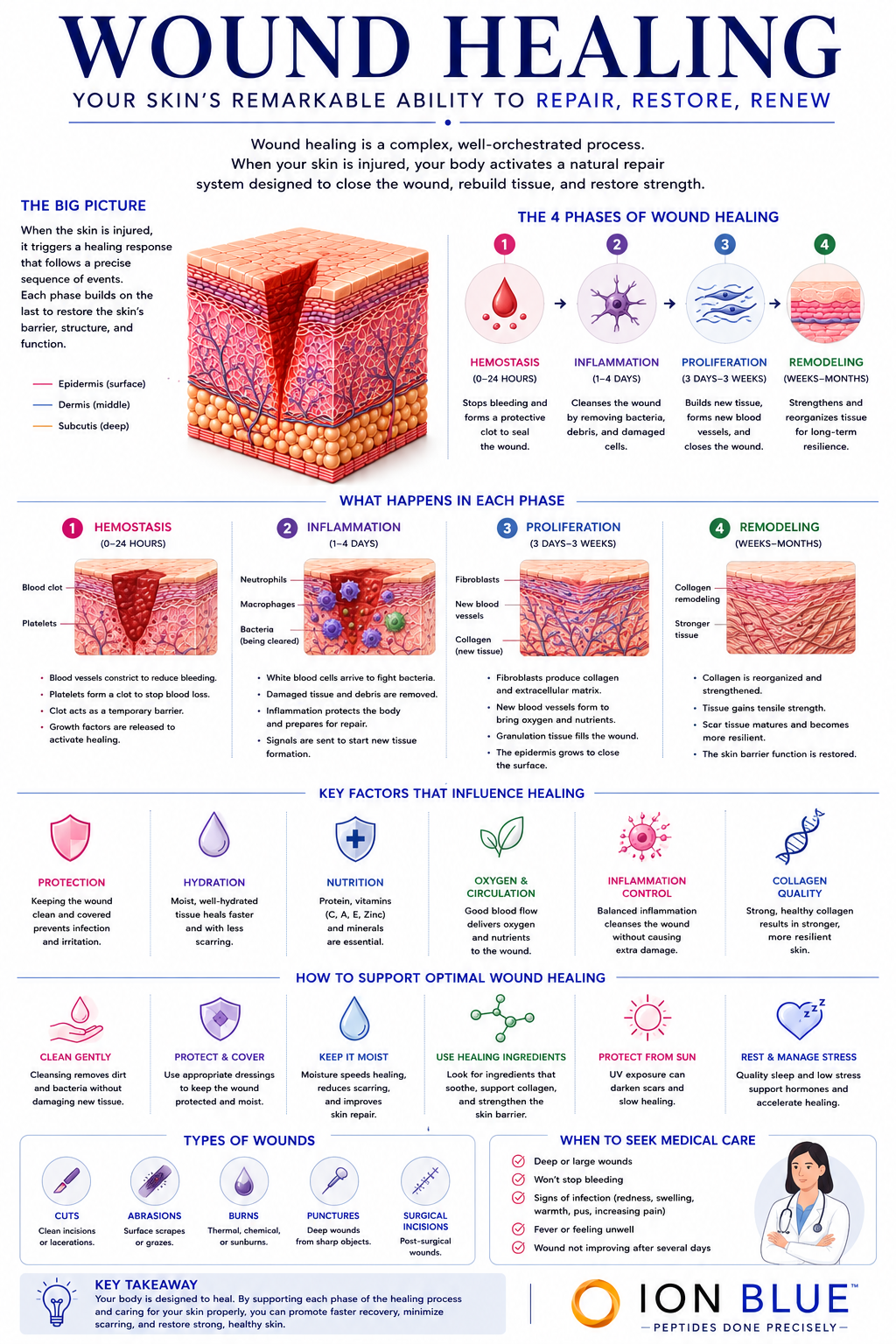
"This page explains wound-healing biology for education. ION BLUE products are cosmetics — they are not intended to treat, heal, or manage wounds or any medical condition."