

Collagen Signaling: How Skin Decides to Build Collagen
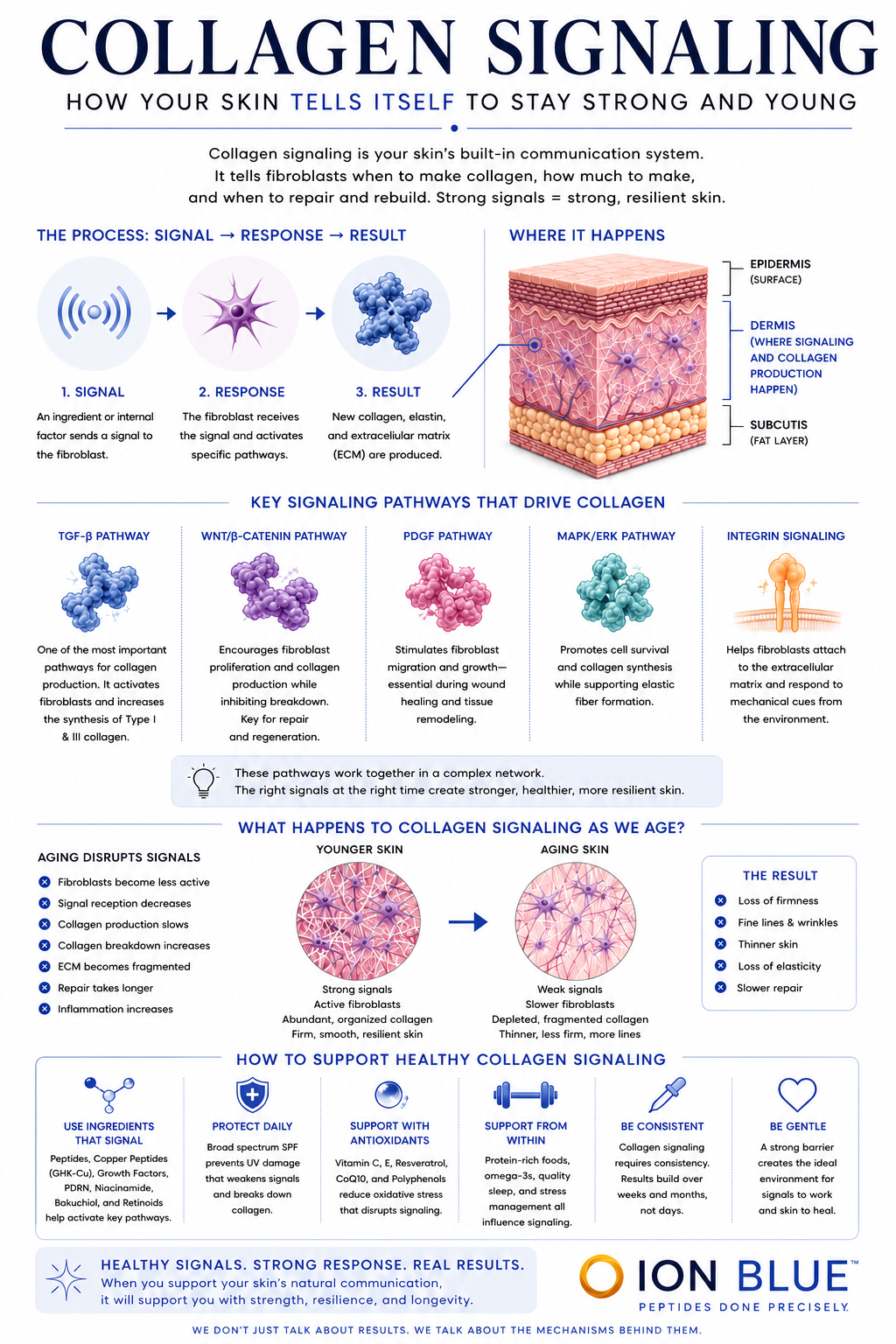
The short version: your skin doesn't make collagen at random — it makes it in response to signals. Collagen signaling is the set of biological messages that tell your fibroblasts when to build collagen, how much, and when to stop. When those signals are strong and well-balanced, skin maintains its structure. As they weaken with age, collagen production slows. Understanding this signaling is the key to understanding why an ingredient might "support collagen" at all — and where copper peptides like GHK-Cu are studied to fit.
Collagen isn't just present — it's produced on demand
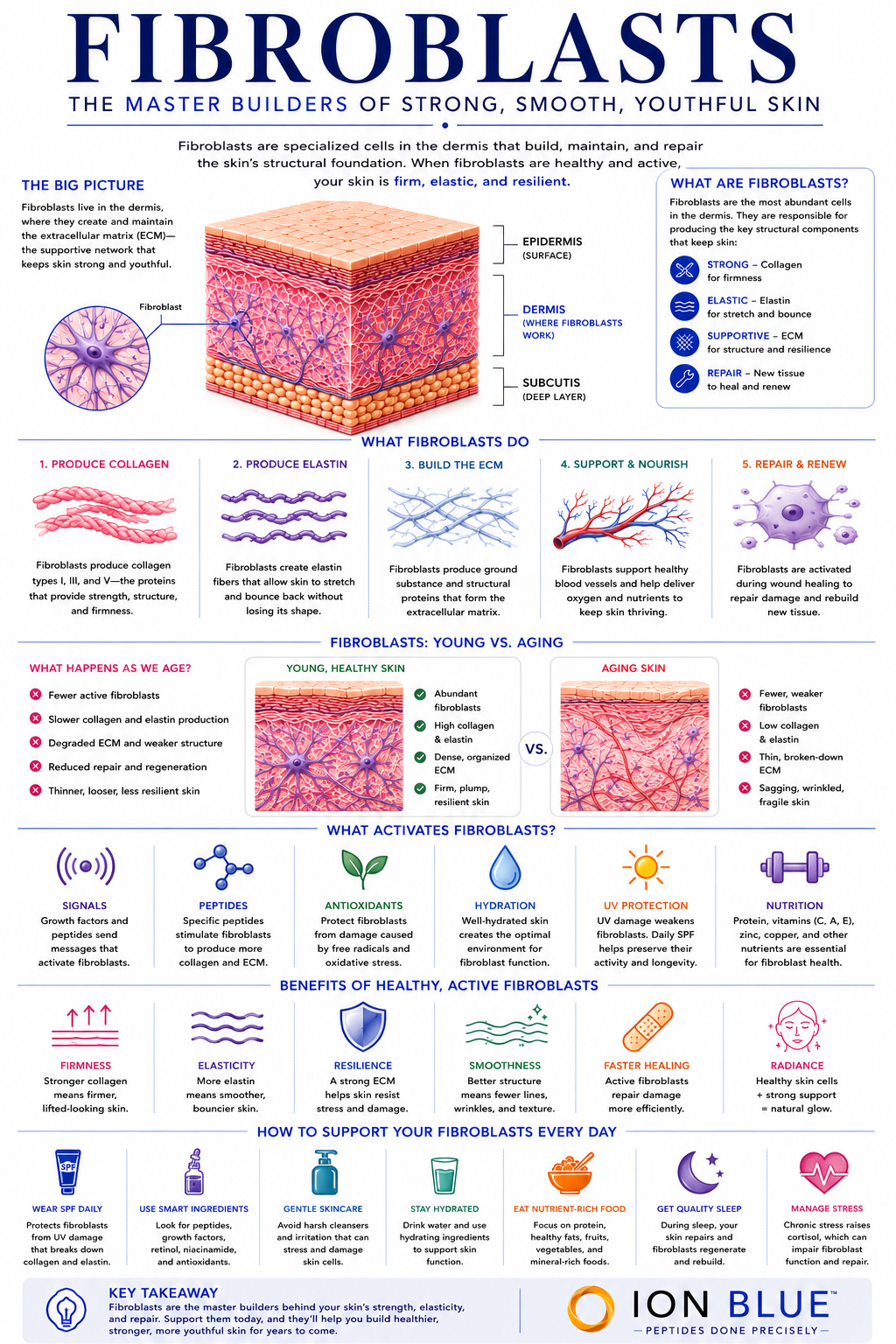
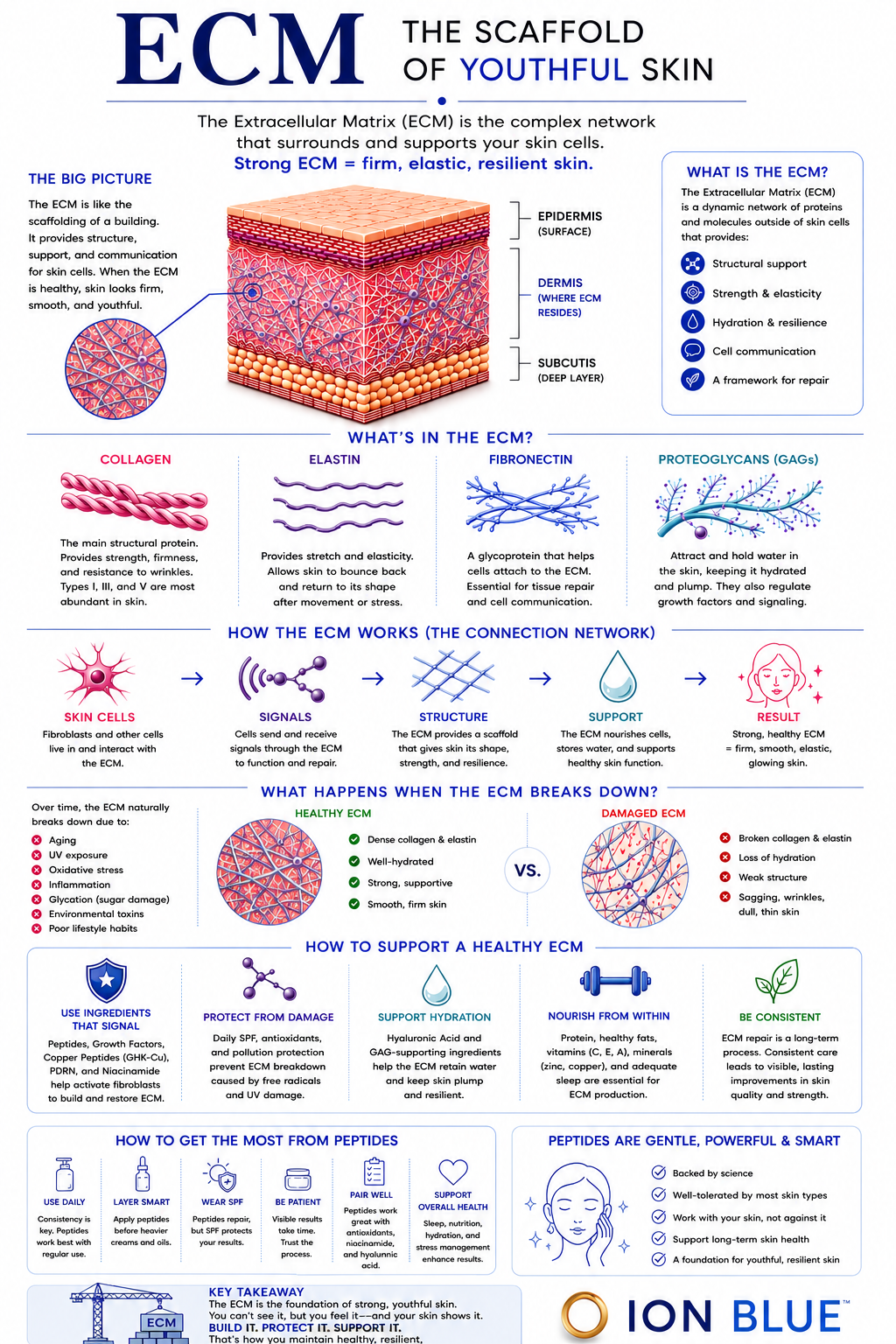
Collagen is the main structural protein in your skin, but it isn't a static deposit. Your fibroblasts are constantly producing new collagen and other components of the extracellular matrix, and breaking down old ones. Whether they lean toward building or breaking down depends on the signals they receive.
What sends the "build collagen" signal?
Fibroblasts respond to a mix of chemical and physical cues:
- Growth factors and signaling molecules — chemical messengers (such as TGF-β and others) that instruct fibroblasts to ramp up collagen production.
- Mechanical cues — the physical tension and structure of the surrounding matrix itself, which fibroblasts "read" and respond to.
- Repair signals — after injury, a cascade of signals drives collagen production to rebuild tissue (which is why wound-healing research overlaps so much with collagen biology).
The result is a feedback loop: the matrix signals the cells, the cells rebuild the matrix, and the balance of these signals largely determines how well skin maintains its structure.
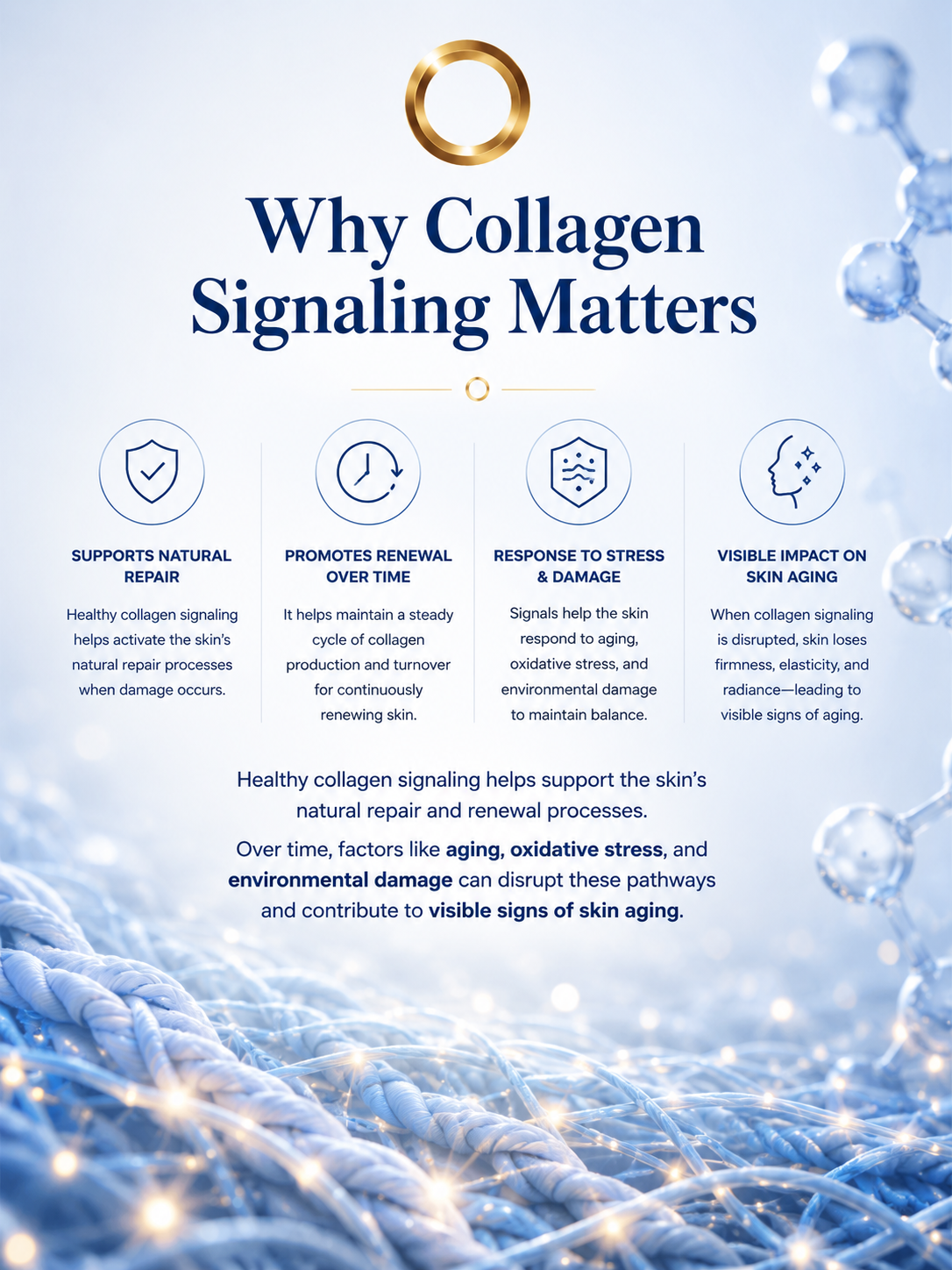
Why collagen signaling weakens with age
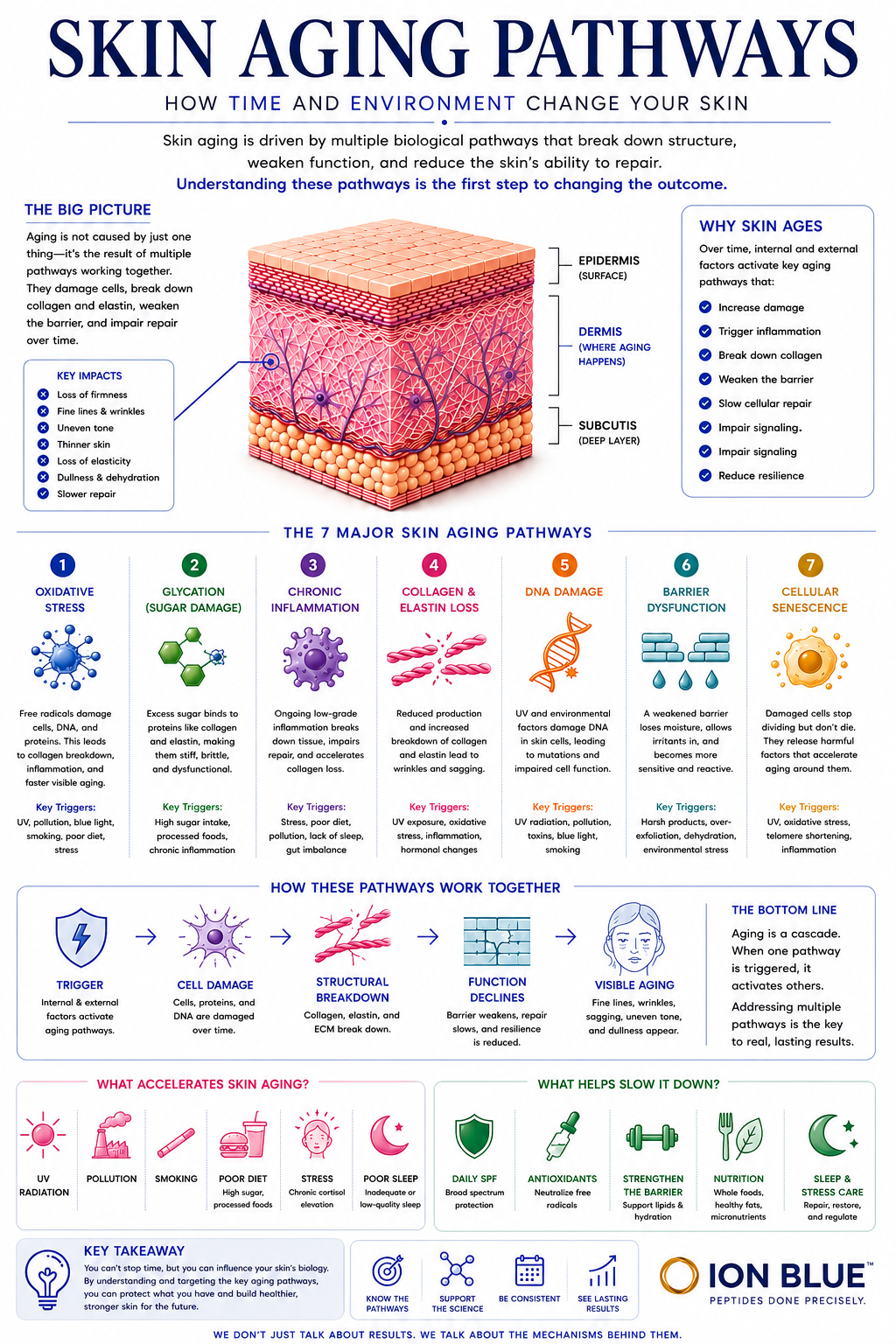
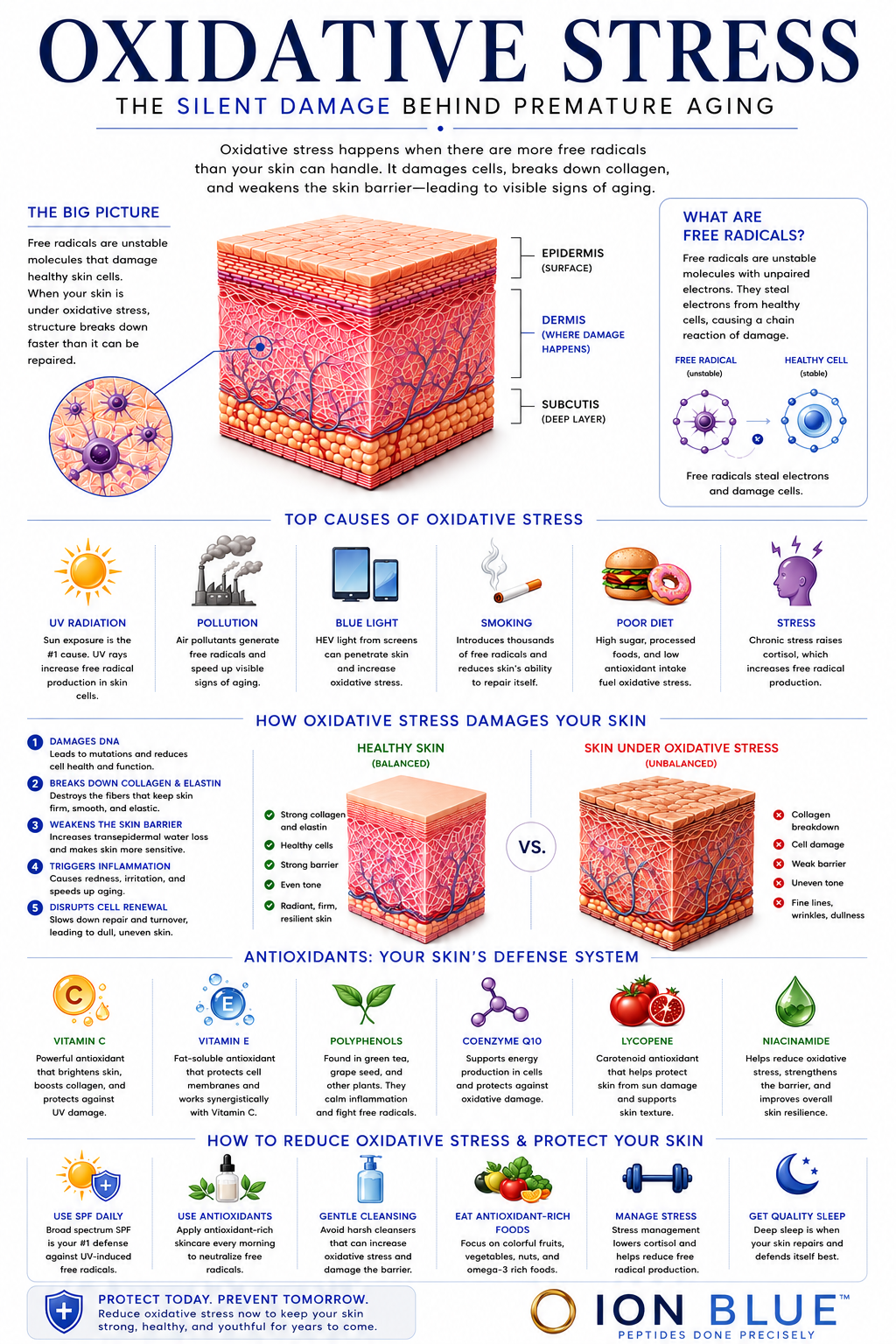
As skin ages, the "build" signals get quieter and the "break down" activity gets relatively louder. Fibroblasts become less responsive, growth-factor signaling declines, and factors like sun exposure and oxidative stress tip the balance further toward breakdown. Less collagen is made, existing collagen is renewed more slowly, and skin gradually looks less firm. So "boosting collagen" in skincare is really a question about signaling: can you nudge the conversation back toward building?
Collagen signaling and GHK-Cu
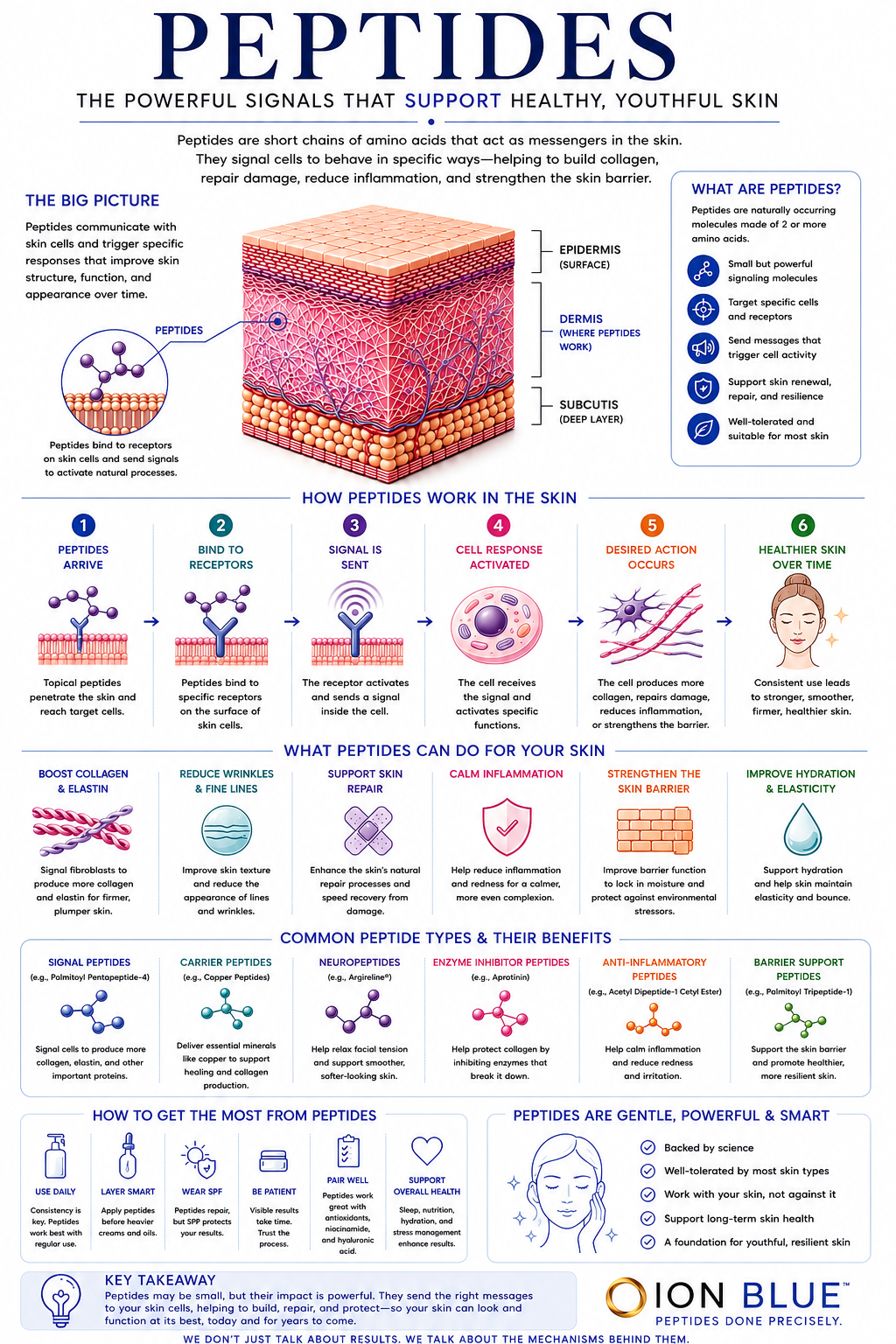
This is where copper peptides become scientifically interesting. In laboratory research, GHK-Cu has been studied for its ability to stimulate collagen and glycosaminoglycan production at very low concentrations.1 A 2018 review went further, examining GHK's effects on gene expression and reporting that the peptide appears to influence a broad range of genes — generally in a direction associated with tissue repair and regeneration.2 In other words, GHK-Cu is studied not just as a raw material but as a potential signal.
And the honest caveat, as always: this is largely laboratory and gene-expression research on the molecule. Interesting signaling effects in a model system are not the same as a proven cosmetic outcome on your face, and the strongest human GHK-Cu evidence remains in wound healing rather than large cosmetic trials. We report what the research shows and keep it separate from what we promise. For that full picture, see Do Copper Peptides Actually Work?
Where ION BLUE fits
Collagen signaling is the reason we think GHK-Cu is worth studying and building around — and the reason we describe our serum honestly, in terms of how skin looks rather than what it does biologically. We make a topical GHK-Cu serum at a disclosed 0.10% and link the research so you can judge it yourself on our Scientific References page. New here? Start with What Is GHK-Cu?
Frequently asked questions
What is collagen signaling?
It's the set of biological signals that tell your skin's fibroblast cells when and how much collagen to produce. Collagen is made on demand in response to these signals, not deposited all at once.
Why does collagen production slow with age?
The signals that drive collagen building weaken, fibroblasts become less responsive, and breakdown outpaces rebuilding — so less collagen is made and it's renewed more slowly.
Does GHK-Cu affect collagen signaling?
In laboratory research, GHK-Cu has been studied for its ability to stimulate collagen production and to influence gene expression related to repair and regeneration. This is research on the molecule, not a claim about what a cosmetic will do for your skin.
Educational content is not medical advice. ION BLUE products are cosmetics and are not intended to diagnose, treat, cure, or prevent any disease. Individual results may vary.
References
- Pickart L, Vasquez-Soltero JM, Margolina A. GHK Peptide as a Natural Modulator of Multiple Cellular Pathways in Skin Regeneration. BioMed Research International. 2015;2015:648108. Read the full paper →
- Pickart L, Margolina A. Regenerative and Protective Actions of the GHK-Cu Peptide in the Light of the New Gene Data. International Journal of Molecular Sciences. 2018;19(7):1987. Read the full paper →
Continue Exploring Skin Biology
Download the Collagen Signaling PDF
"This page explains wound-healing biology for education. ION BLUE products are cosmetics — they are not intended to treat, heal, or manage wounds or any medical condition."