
Fibroblasts: The Cells That Build Your Skin's Structure
The short version: fibroblasts are the workhorse cells of your skin's deeper layer, the dermis. They produce collagen, elastin, and the surrounding support structure that keeps skin firm, springy, and resilient. As we age, fibroblasts become fewer and less active — which is a big part of why skin gradually loses firmness. They're also central to why researchers find copper peptides like GHK-Cu interesting.
What is a fibroblast?
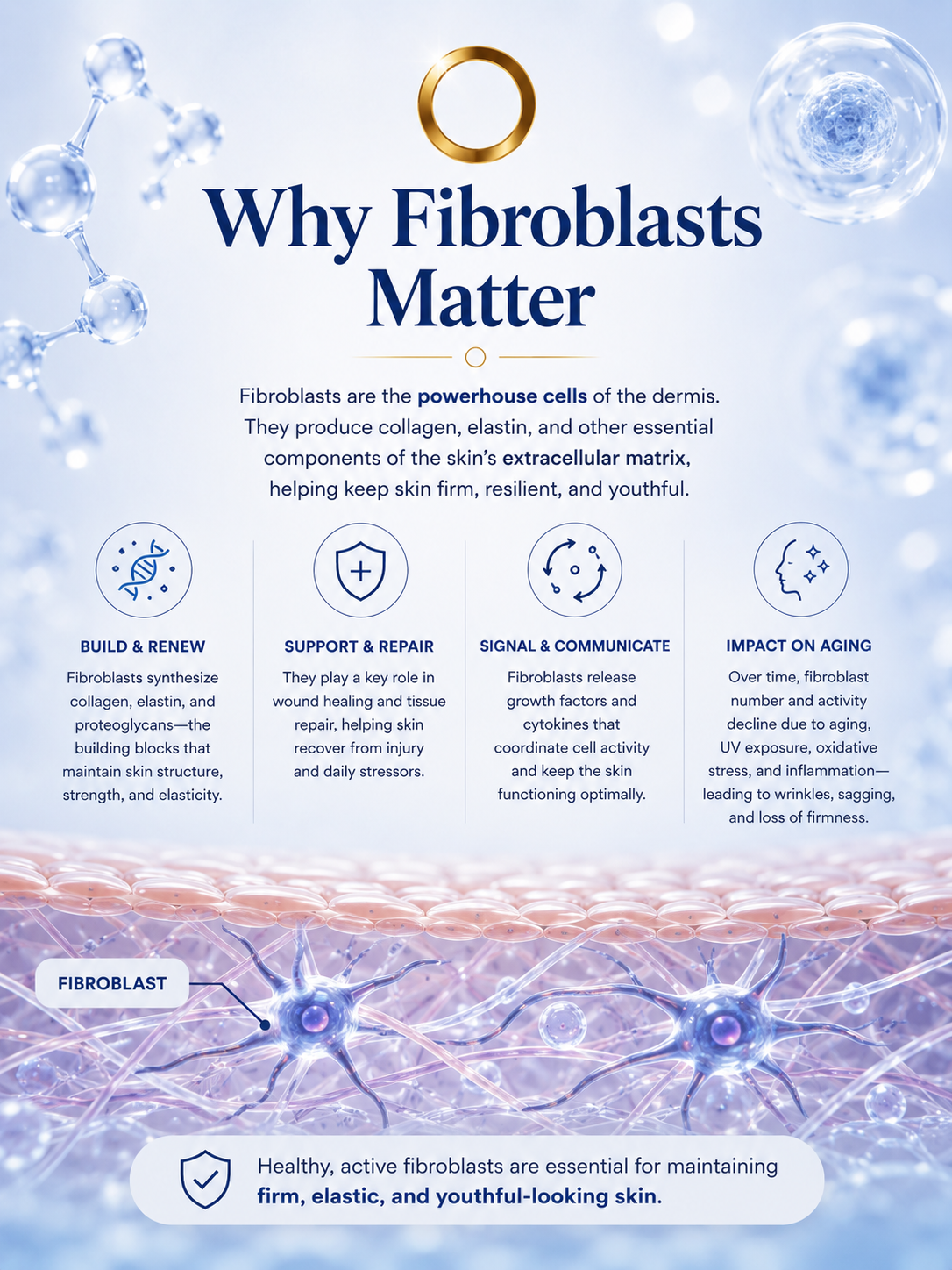
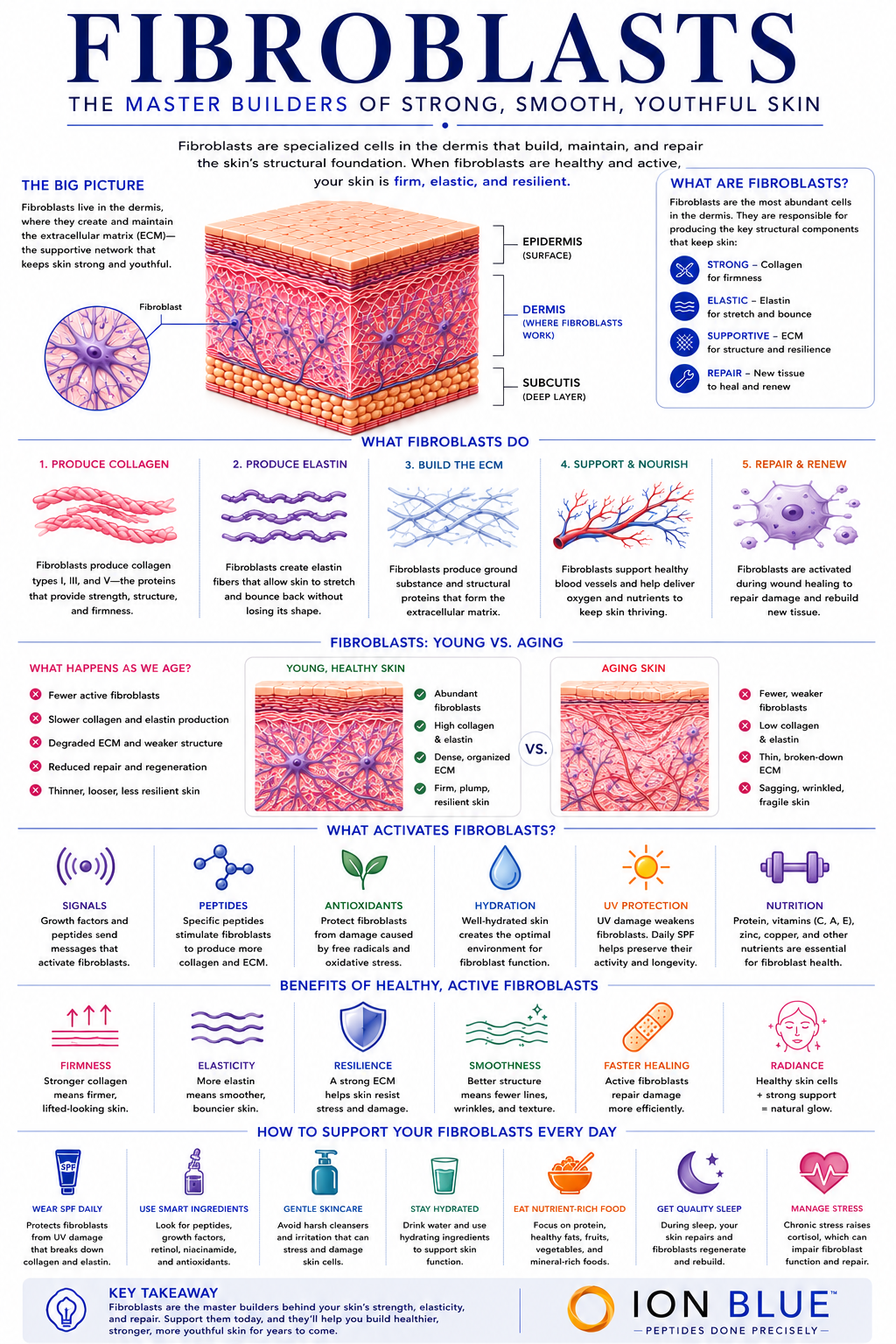
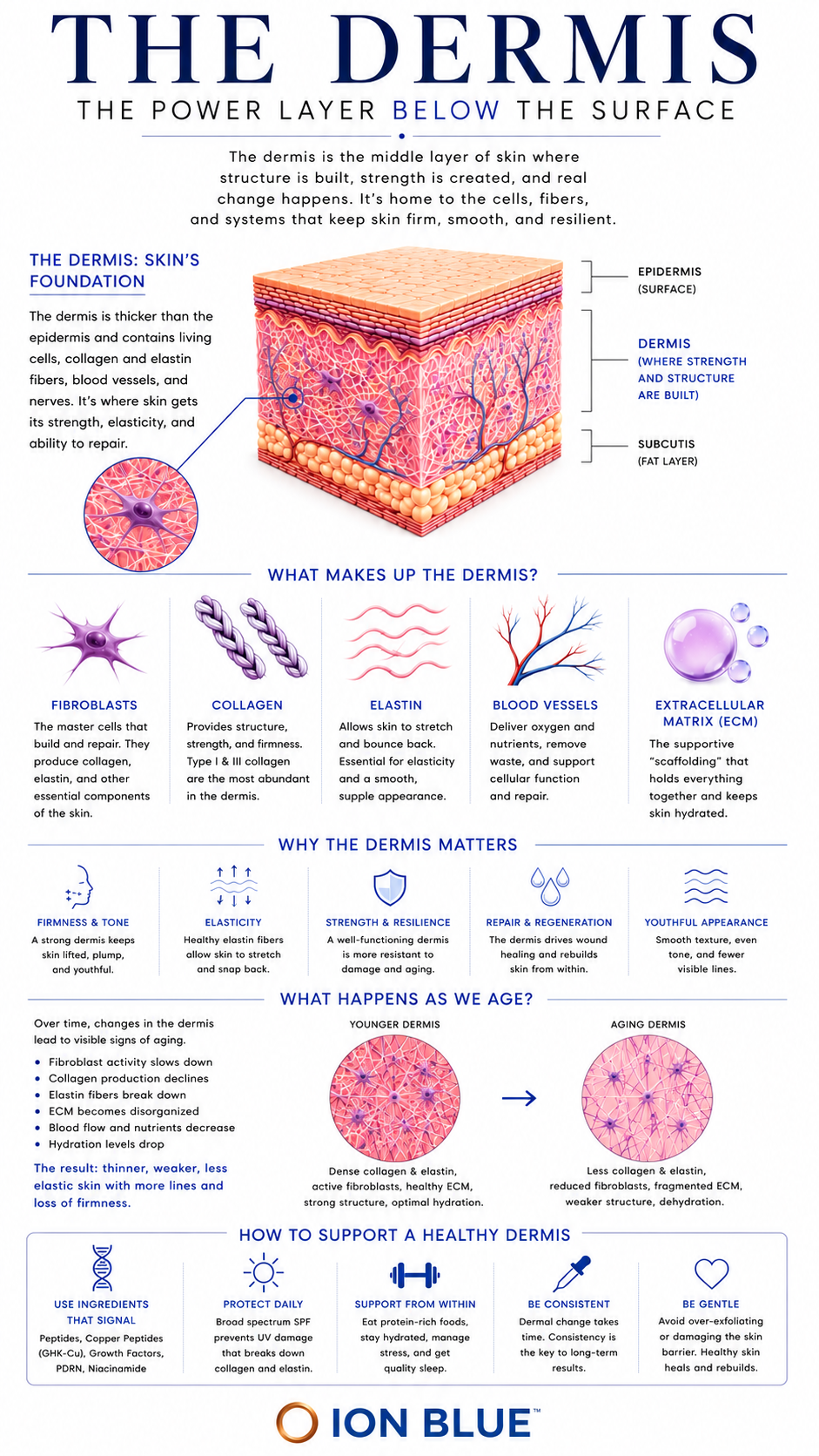
A fibroblast is a type of cell found throughout the body's connective tissue, and it's especially important in the dermis — the thick, living layer beneath the surface of your skin. If you think of skin as a mattress, fibroblasts are the factory that builds and maintains the springs and padding. They're not the structure itself; they're the cells that make the structure.
What do fibroblasts do?
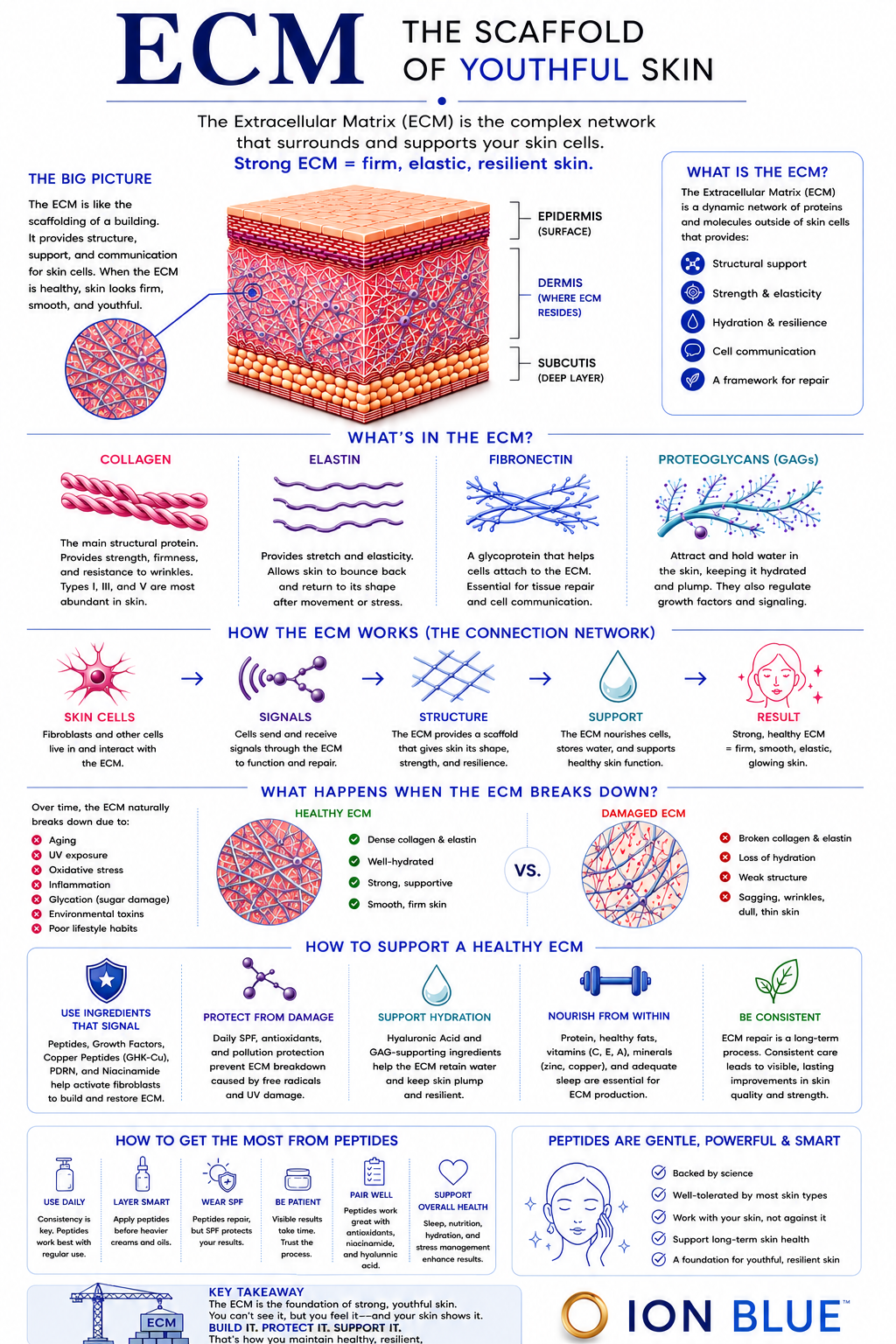
Fibroblasts manufacture and maintain the extracellular matrix — the scaffold of proteins and molecules that gives skin its physical properties. Their main products include:
- Collagen — the protein that provides firmness and structure.
- Elastin — the protein that lets skin stretch and snap back.
- Glycosaminoglycans (like hyaluronic acid) — molecules that hold water and keep the matrix hydrated and cushioned.
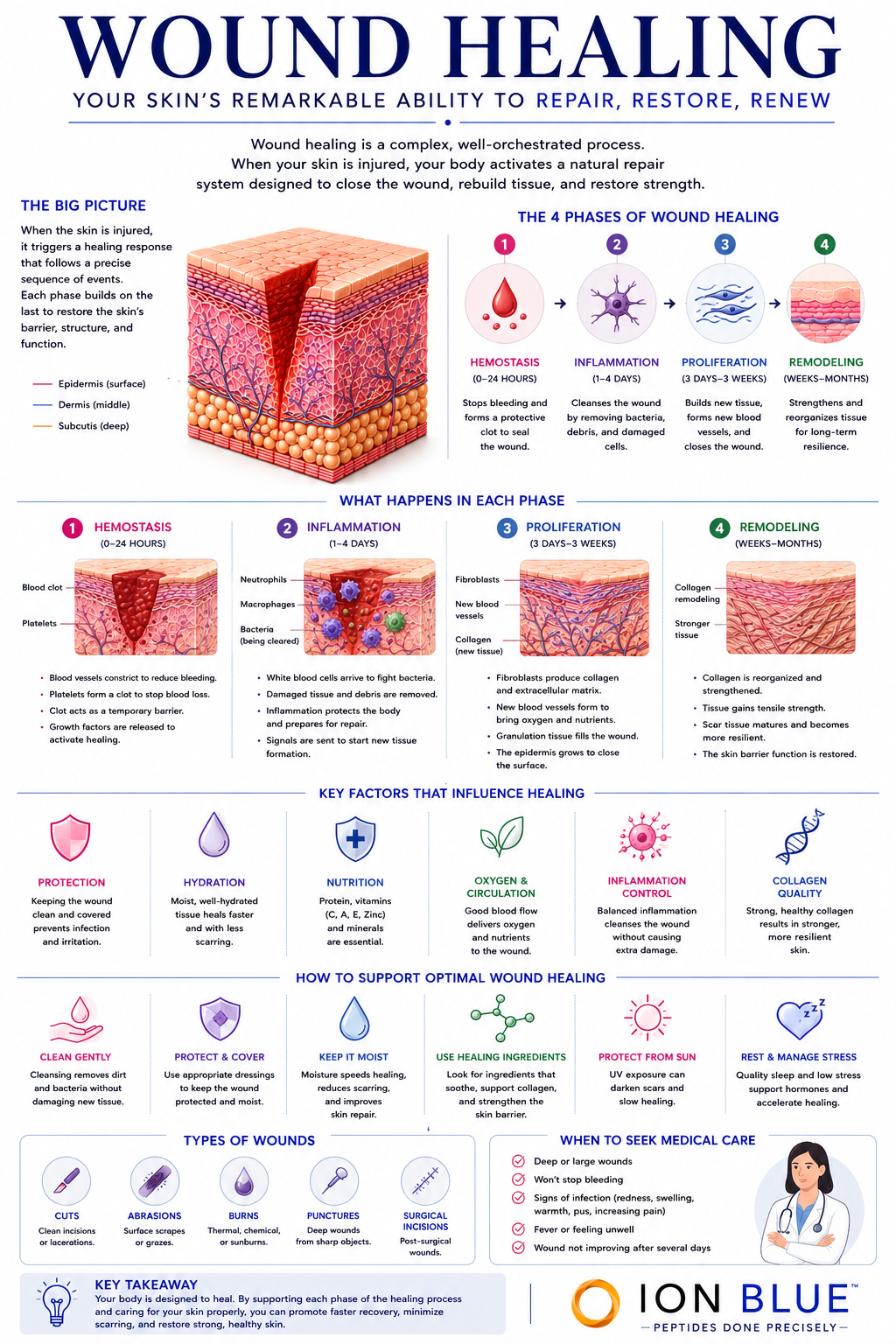
Fibroblasts also help manage remodeling — the ongoing process of breaking down old matrix and building new — and they play a key role in wound repair. In short, they're the cells most responsible for keeping the deeper structure of skin healthy over time.
Fibroblasts and skin aging
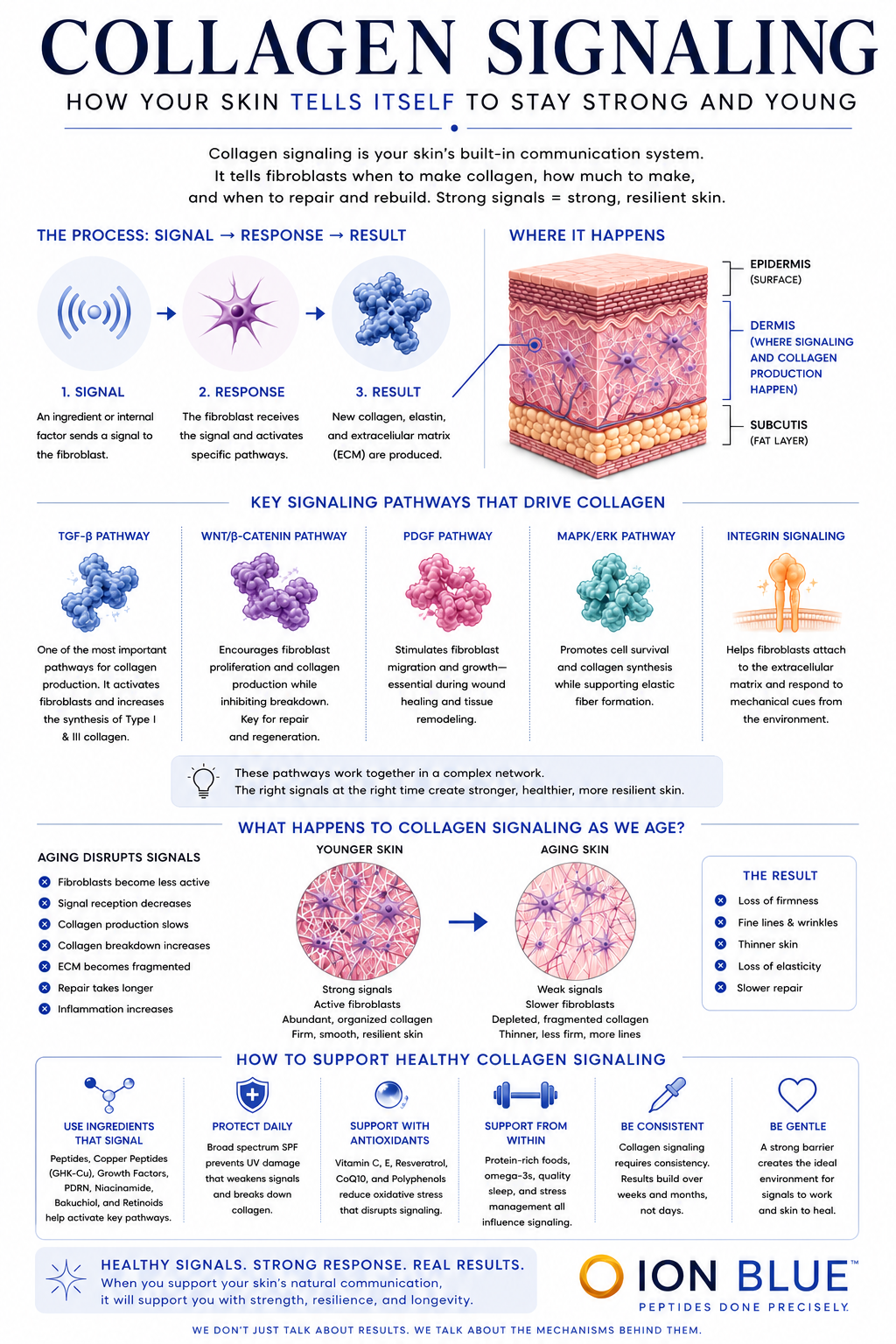
Here's why fibroblasts matter for how skin ages. As we get older, fibroblasts gradually become less numerous and less active. They produce less collagen and elastin, and the matrix they maintain is renewed more slowly. The visible result is skin that looks less firm and more lined over time. Much of the interest in "supporting collagen" in skincare really comes down to one underlying question: can we support the fibroblasts that make it? (For the bigger picture, see collagen signaling.)
Fibroblasts and GHK-Cu
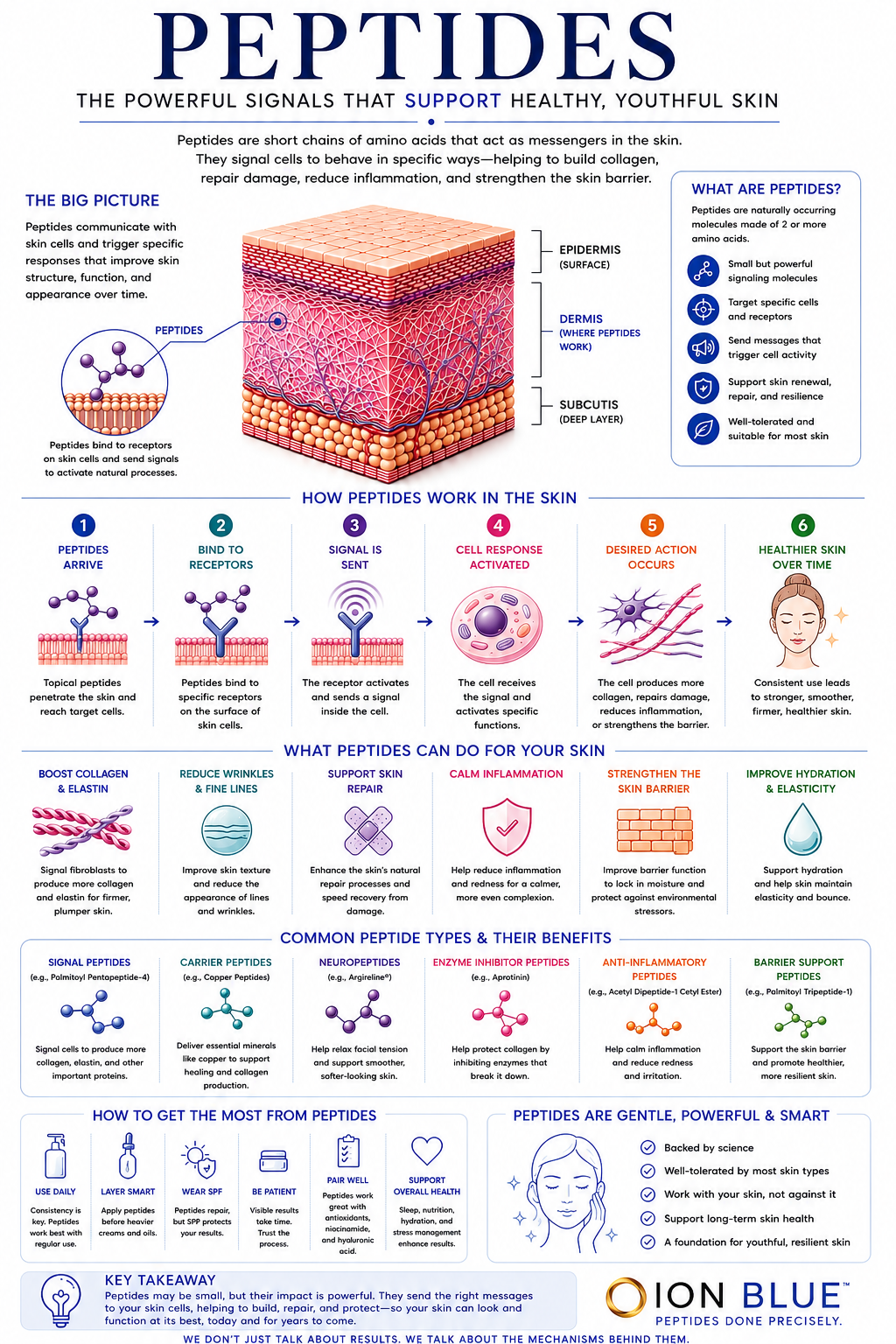
This is where copper peptides enter the story. In laboratory research, GHK-Cu has been studied for its effects on fibroblasts and the matrix they produce. Notably, GHK-Cu has been shown to stimulate the production of collagen and glycosaminoglycans at very low concentrations,1 and in one striking line of research it restored replicative vitality to fibroblasts taken from patients after anticancer radiation therapy — cells that were otherwise impaired.1 Research reviews describe GHK-Cu as helping modulate the balance of matrix-building and matrix-remodeling activity.1,2
Two honest caveats, because that's the whole point of this brand: much of this is laboratory and cell-culture research on the molecule, and the strongest human evidence for GHK-Cu is in wound-healing rather than large cosmetic trials. So "GHK-Cu is studied to support fibroblasts" is a fair, sourced statement about the research — not a promise about what a face serum will do to your skin. We keep those two things separate. For the honest efficacy picture, see Do Copper Peptides Actually Work?
Where ION BLUE fits
Fibroblasts are exactly why we find GHK-Cu worth building a brand around — but also why we refuse to overstate it. We make a topical GHK-Cu serum at a disclosed 0.10%, formulated to support the appearance of healthy skin, and we link the underlying research so you can judge it yourself on our Scientific References page. Start with What Is GHK-Cu? for the full primer.
Frequently asked questions
What do fibroblasts do in the skin?
They produce and maintain collagen, elastin, and the extracellular matrix — the structural components that keep skin firm, elastic, and hydrated.
Why do fibroblasts matter for aging skin?
As fibroblasts become fewer and less active with age, they make less collagen and elastin, which contributes to skin looking less firm and more lined over time.
Does GHK-Cu affect fibroblasts?
In laboratory research, GHK-Cu has been studied for its ability to stimulate collagen and glycosaminoglycan production and to support fibroblast vitality. This is research on the molecule; it is not a claim about what a cosmetic will do for your skin.
Educational content is not medical advice. ION BLUE products are cosmetics and are not intended to diagnose, treat, cure, or prevent any disease. Individual results may vary.
References
- Pickart L, Vasquez-Soltero JM, Margolina A. GHK Peptide as a Natural Modulator of Multiple Cellular Pathways in Skin Regeneration. BioMed Research International. 2015;2015:648108. Read the full paper →
- Pickart L, Margolina A. Regenerative and Protective Actions of the GHK-Cu Peptide in the Light of the New Gene Data. International Journal of Molecular Sciences. 2018;19(7):1987. Read the full paper →
Continue Exploring Skin Biology
Download Fibroblasts PDF
"This page explains wound-healing biology for education. ION BLUE products are cosmetics — they are not intended to treat, heal, or manage wounds or any medical condition."