

The Biological Pathways of Skin Aging
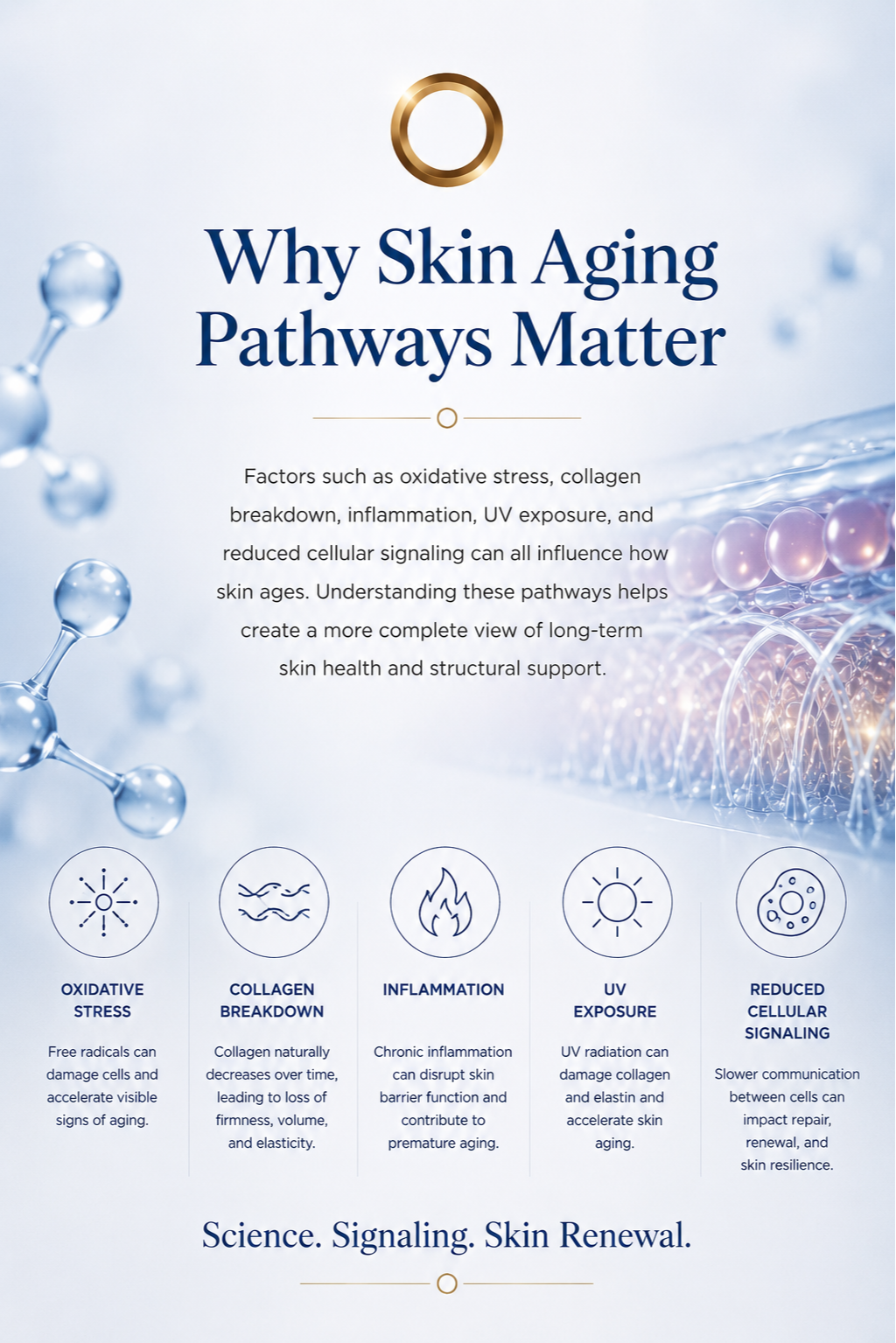
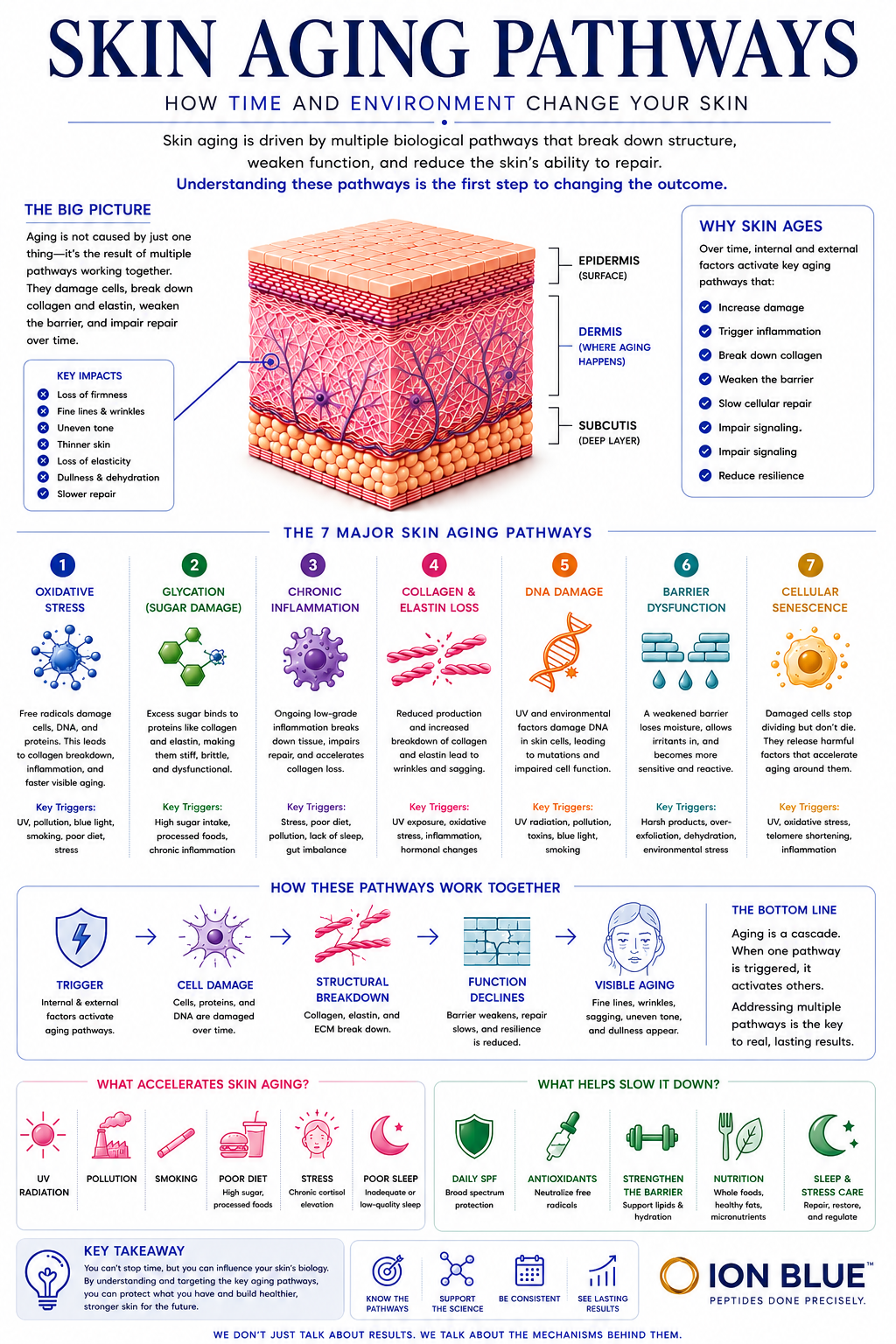
The short version: skin doesn't age through one process — it ages through several connected ones that reinforce each other. Collagen production slows, the support matrix breaks down faster than it's rebuilt, free-radical damage accumulates, and low-grade inflammation simmers. Understanding these pathways is the clearest way to cut through skincare hype: once you know how skin ages, you can judge honestly whether an ingredient plausibly does anything about it.
Two kinds of aging: intrinsic and extrinsic
Skin aging has two broad sources. Intrinsic aging is the built-in, chronological kind driven by genetics and time — it happens to everyone. Extrinsic aging is driven by outside factors, above all sun exposure (photoaging), plus pollution, smoking, and lifestyle. The extrinsic kind is the larger and more preventable share of visible aging, which is why sun protection is the single most evidence-backed anti-aging step there is.
The main pathways, and how they connect
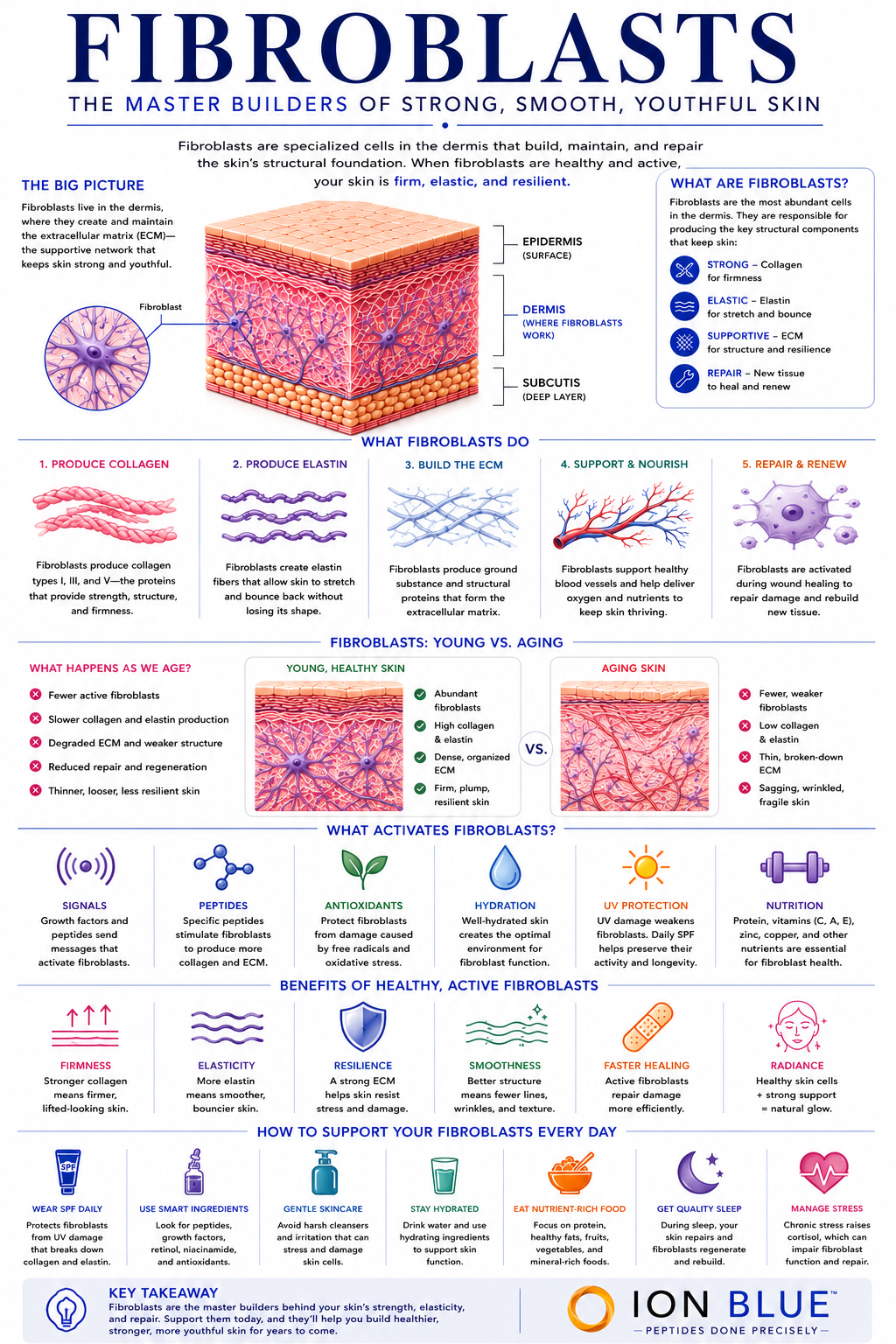
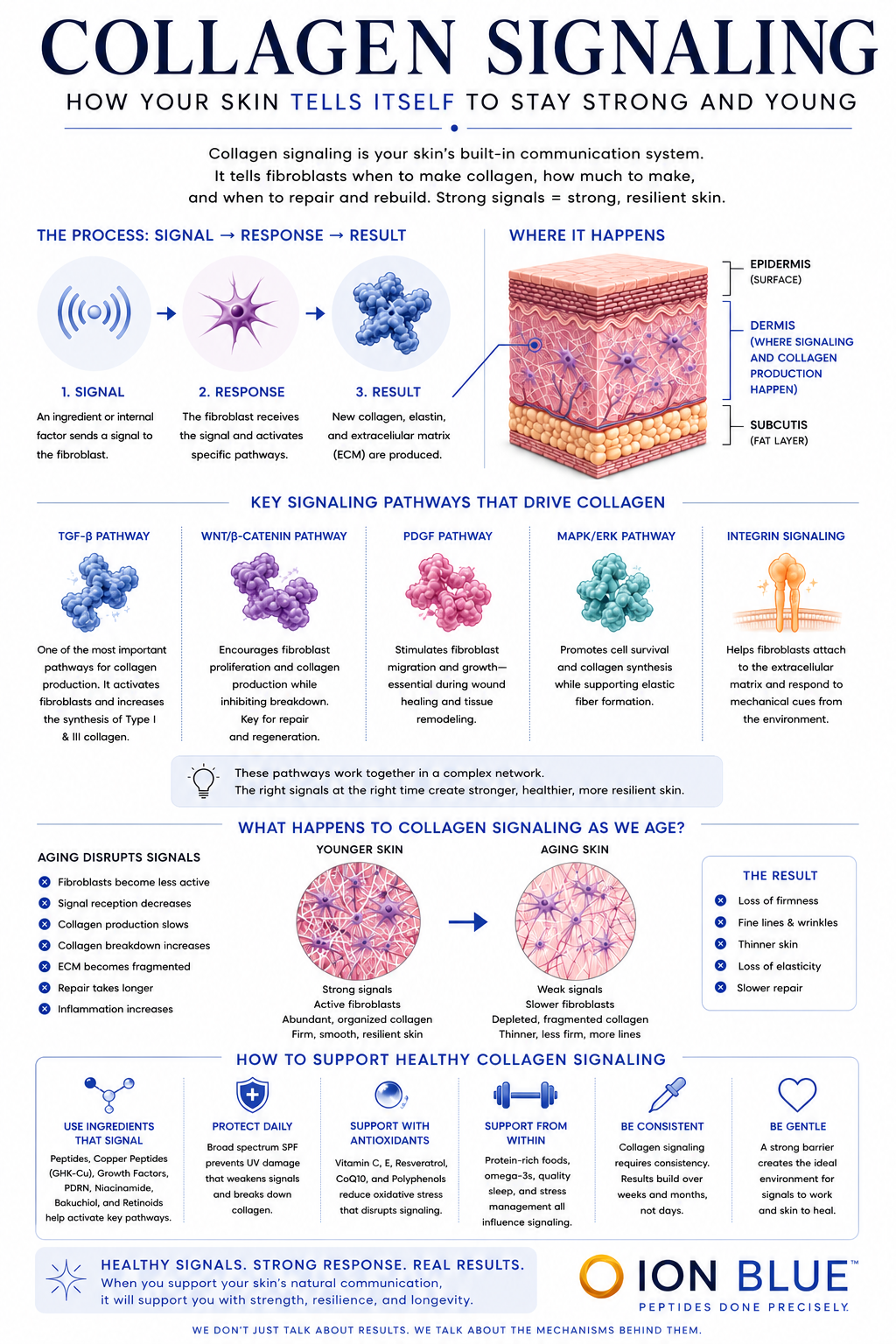
1. Declining collagen production. With age, fibroblasts make less collagen, and the signals that tell them to build it grow quieter. Less new collagen means less structural support.
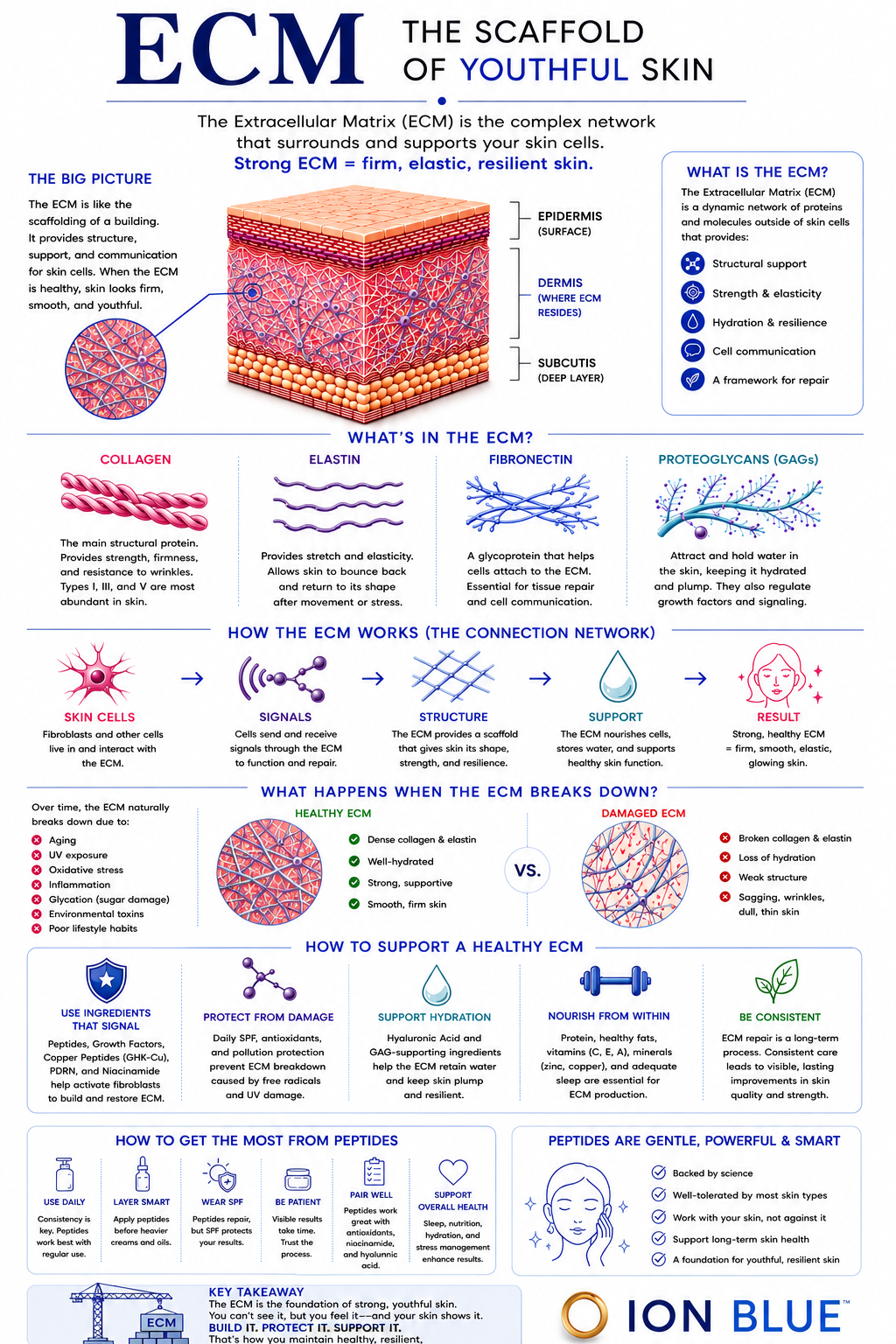
2. Matrix breakdown outpacing repair. The extracellular matrix is constantly built and broken down. As we age — and especially with UV exposure — the breakdown enzymes get relatively more active, so the scaffold weakens faster than it's rebuilt.
3. Fibroblast decline. The cells themselves become fewer and less responsive over time, so the whole build-and-maintain operation slows down.
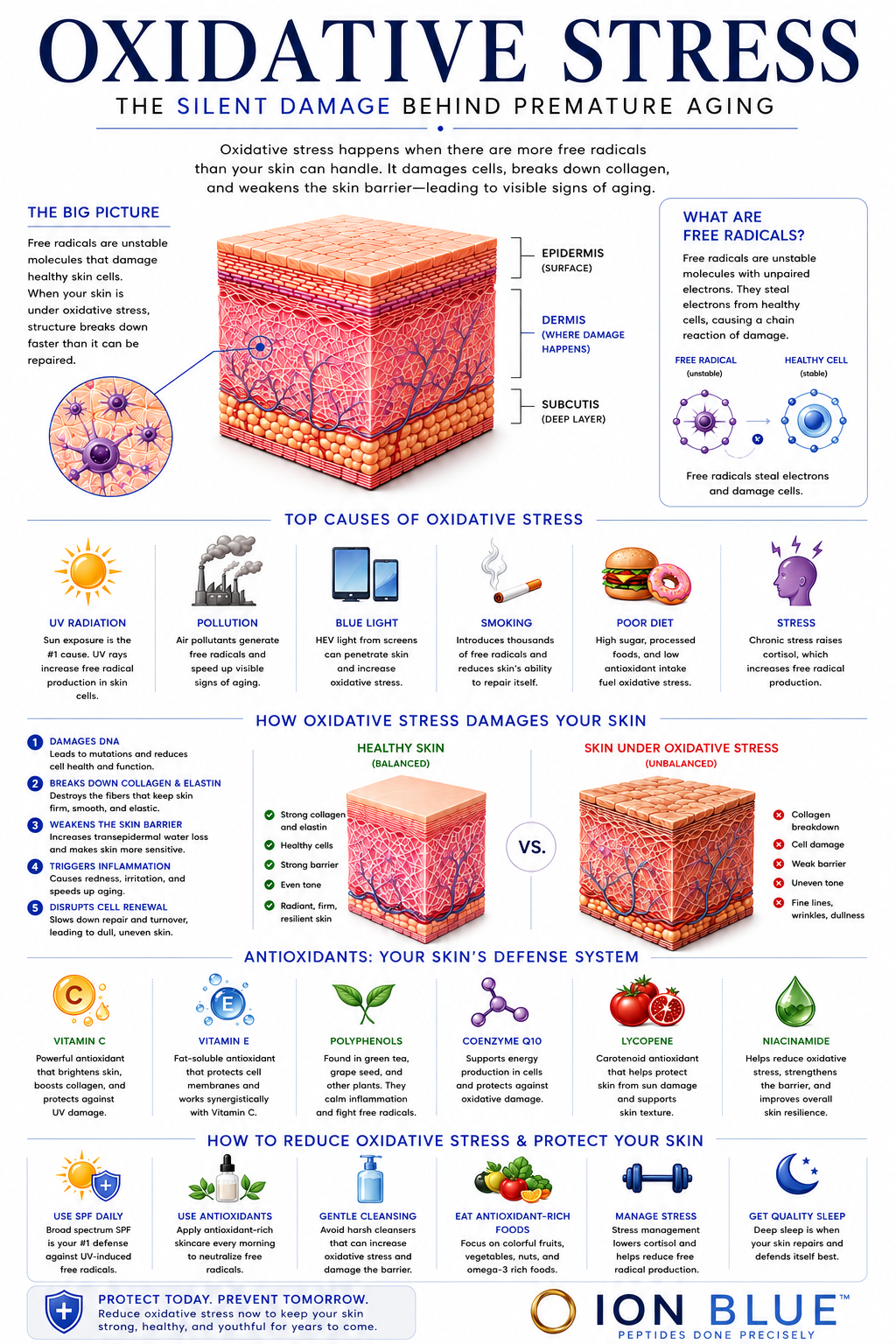
4. Oxidative stress. Free-radical damage from UV, pollution, and metabolism degrades collagen and cells and accelerates every other pathway. This is a huge driver of photoaging — see oxidative stress.
5. Chronic low-grade inflammation. Sometimes called "inflammaging," a persistent low level of inflammation contributes to tissue breakdown and interferes with repair.
The important insight is that these aren't separate — they feed each other. Oxidative stress drives inflammation and matrix breakdown; matrix breakdown and weaker signaling reduce collagen; fewer, less-active fibroblasts make all of it worse. Aging skin is a loop, not a single switch. (It all plays out in the dermis, the structural layer.)
Where GHK-Cu is studied to fit
Part of why the copper peptide GHK-Cu draws research interest is that it's been studied in relation to several of these pathways at once — stimulating collagen and matrix production, supporting fibroblast vitality, and showing antioxidant and anti-inflammatory activity in laboratory research, alongside broad effects on gene expression associated with repair.1,2 In other words, it's studied as a molecule that touches multiple parts of the aging loop rather than just one.
And the honest caveat that runs through this whole site: much of that is laboratory and animal research on the molecule, the strongest human evidence is in wound healing rather than large cosmetic trials, and we describe our serum in terms of how skin looks — not as something that reverses these pathways. For the honest efficacy picture, see Do Copper Peptides Actually Work?
What actually helps (the honest hierarchy)
If you want to act on these pathways, the evidence-backed order is unglamorous but real: sun protection first (it prevents the biggest extrinsic driver), then proven actives like retinoids where appropriate, then supportive ingredients like peptides, all wrapped in consistency over time. Anyone selling a single product as the answer to all of skin aging is overselling — the pathways are too interconnected for one magic fix.
Where ION BLUE fits
We make one honest, supportive piece of that bigger picture: a topical GHK-Cu serum at a disclosed 0.10%, formulated to support the appearance of healthy skin, with the research linked so you can judge it yourself on our Scientific References page. Start with What Is GHK-Cu? or read Why 0.10%.
Frequently asked questions
What causes skin to age?
A mix of intrinsic factors (genetics and time) and extrinsic ones (mainly sun exposure, plus pollution and lifestyle), acting through connected pathways: declining collagen, matrix breakdown, oxidative stress, and inflammation.
What is the biggest cause of visible skin aging?
Sun exposure (photoaging) is the largest and most preventable extrinsic driver, which is why sun protection is the most evidence-backed anti-aging step.
Can skincare reverse the pathways of aging?
No single product reverses them — they're too interconnected. Sun protection prevents the most damage, proven actives help, and supportive ingredients like peptides play a role. Consistency matters more than any one product.
Educational content is not medical advice. ION BLUE products are cosmetics and are not intended to diagnose, treat, cure, or prevent any disease. Individual results may vary.
References
- Pickart L, Vasquez-Soltero JM, Margolina A. GHK Peptide as a Natural Modulator of Multiple Cellular Pathways in Skin Regeneration. BioMed Research International. 2015;2015:648108. Read the full paper →
- Pickart L, Margolina A. Regenerative and Protective Actions of the GHK-Cu Peptide in the Light of the New Gene Data. International Journal of Molecular Sciences. 2018;19(7):1987. Read the full paper →
Continue Exploring Skin Biology
Download The Skin Aging Pathways PDF
"This page explains wound-healing biology for education. ION BLUE products are cosmetics — they are not intended to treat, heal, or manage wounds or any medical condition."