

Skin Layers Explained: Epidermis, Dermis, and Hypodermis
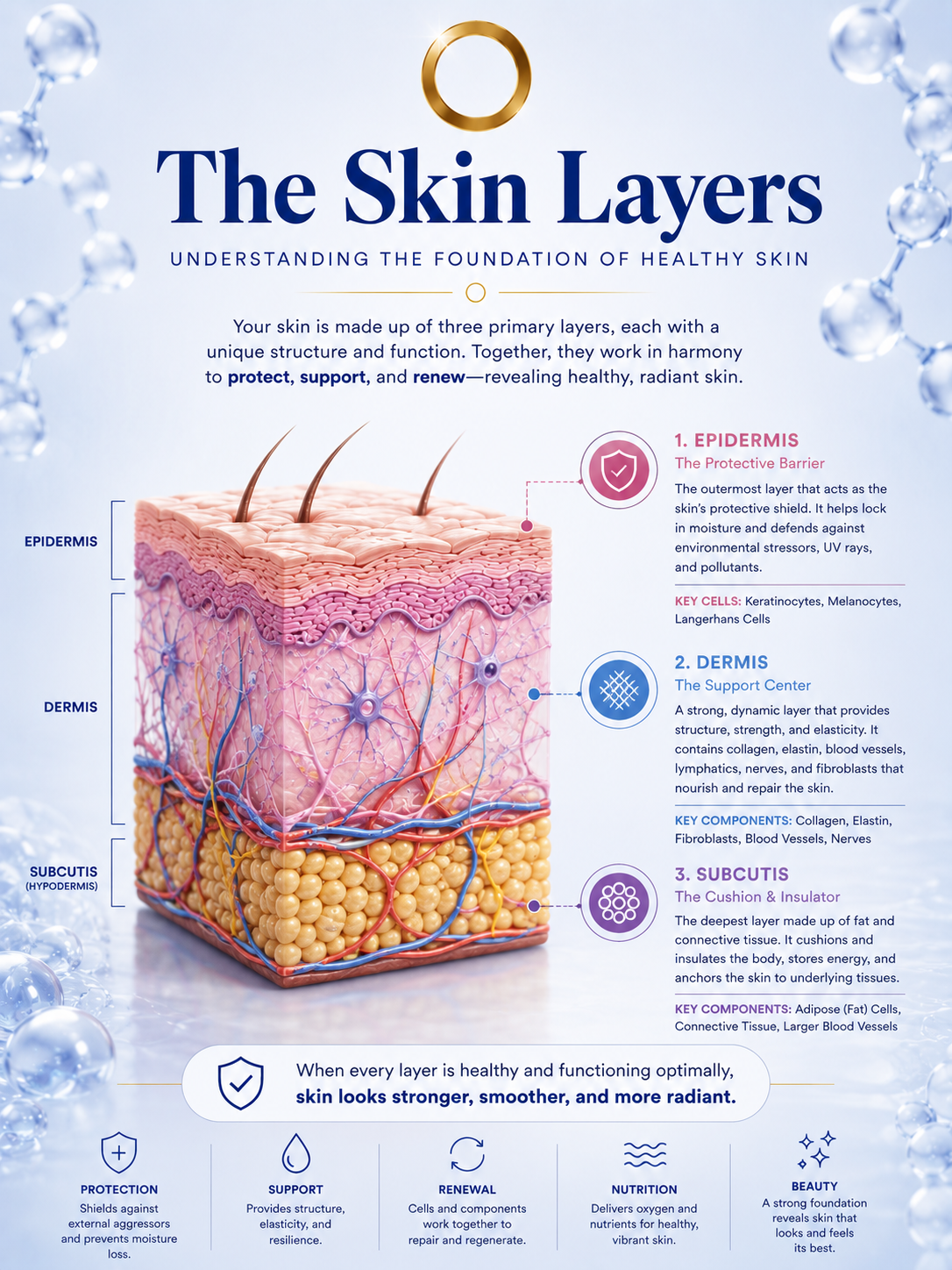
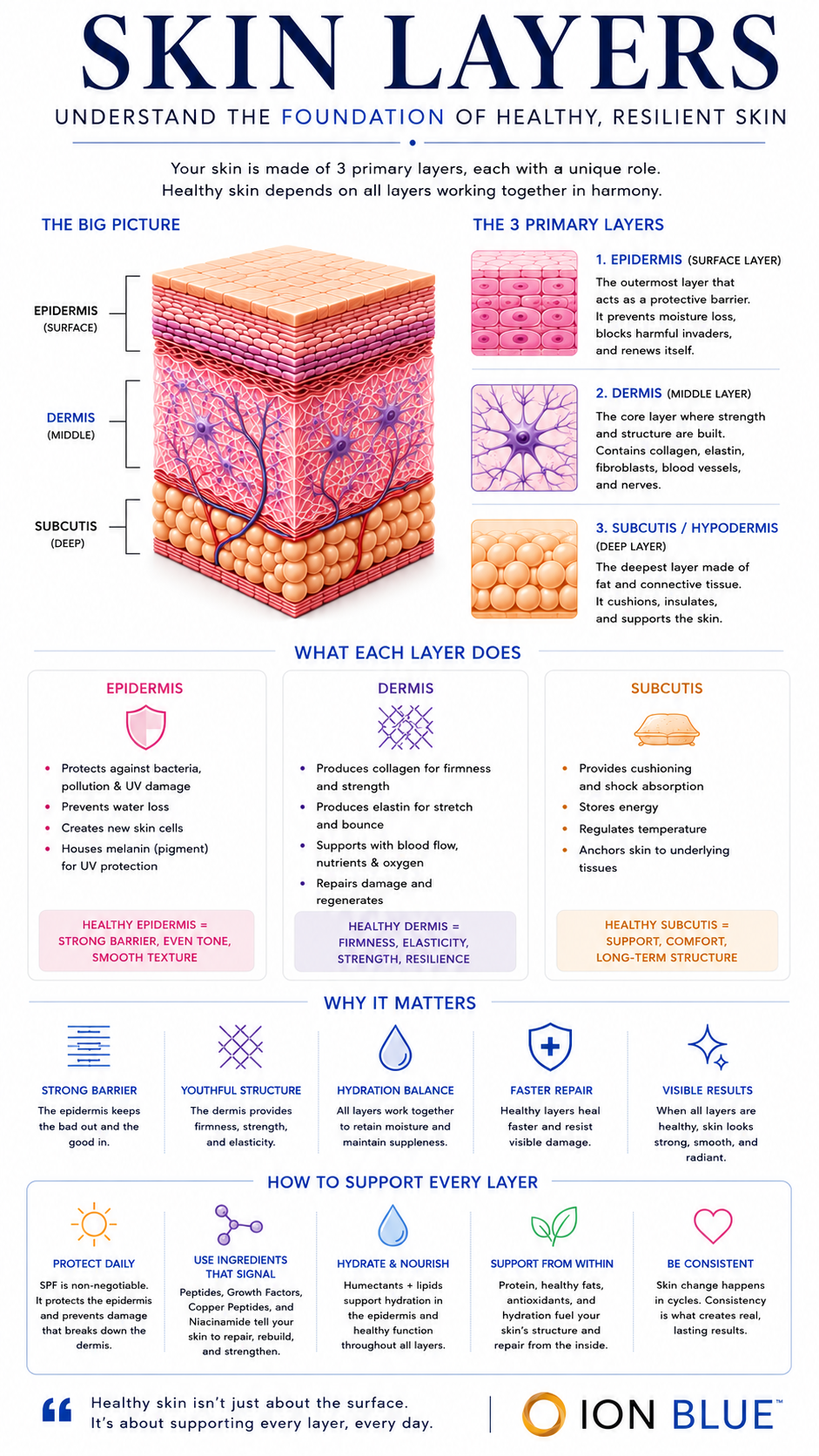
The short version: your skin has three main layers — the epidermis (the thin protective surface), the dermis (the thick structural layer beneath it), and the hypodermis (the fatty cushion at the bottom). Each does a different job, and understanding them explains a lot about skincare — including the honest truth about where a topical product can and can't reach.
The three layers at a glance
From the outside in: the epidermis is your barrier, the dermis is your structure, and the hypodermis is your cushioning and insulation. Most of what we call "healthy, youthful skin" depends on the first two working well.
1. The epidermis — your barrier
The epidermis is the thin outermost layer you can see and touch. Its main job is protection: it keeps water in and irritants, microbes, and UV damage out. It's constantly renewing itself, shedding old cells from the surface and replacing them from below. Crucially for skincare, the epidermis is also a barrier to what you put on your skin — it's designed to keep things out, which is exactly why ingredient delivery is a real science and not a given.
2. The dermis — your structure
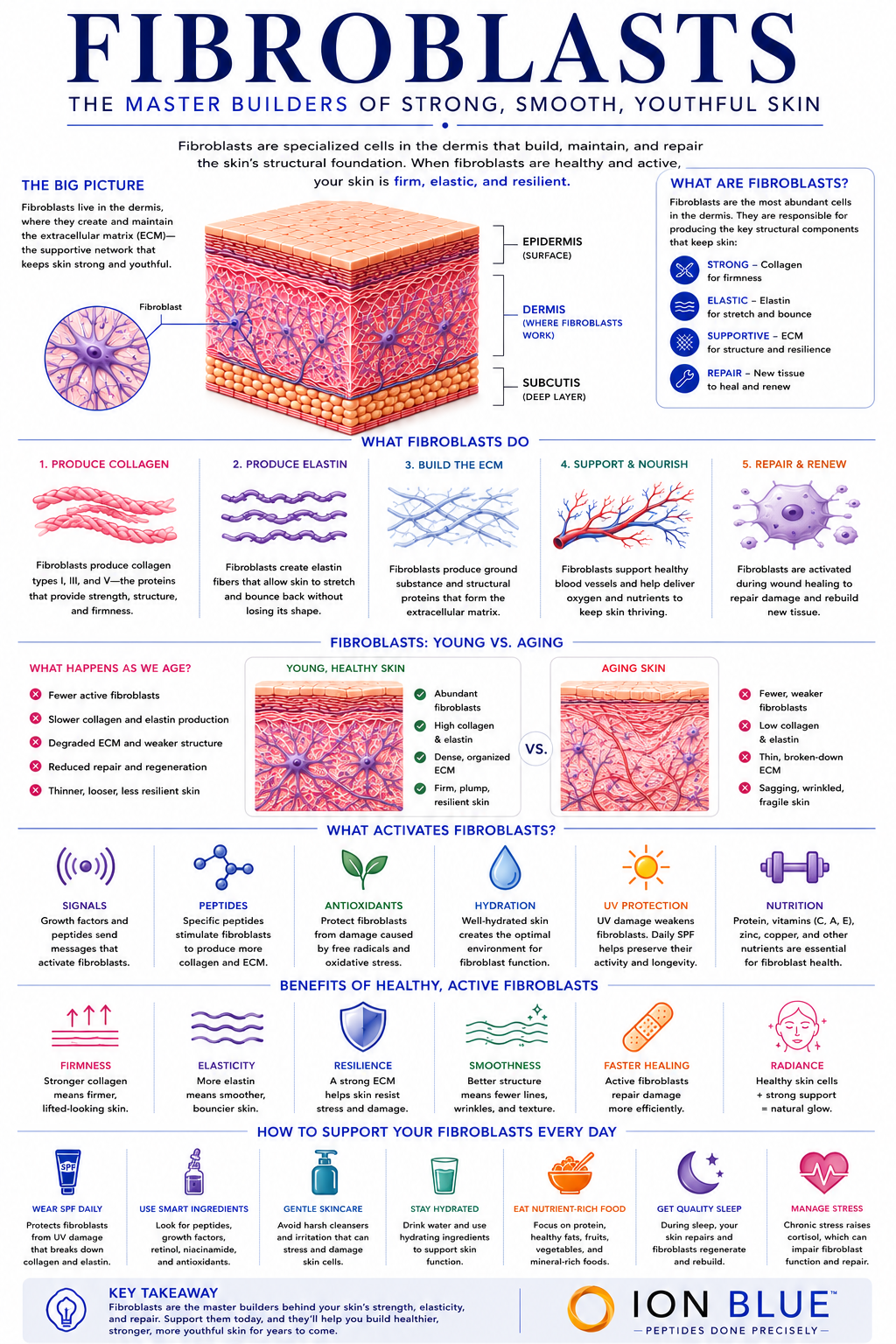
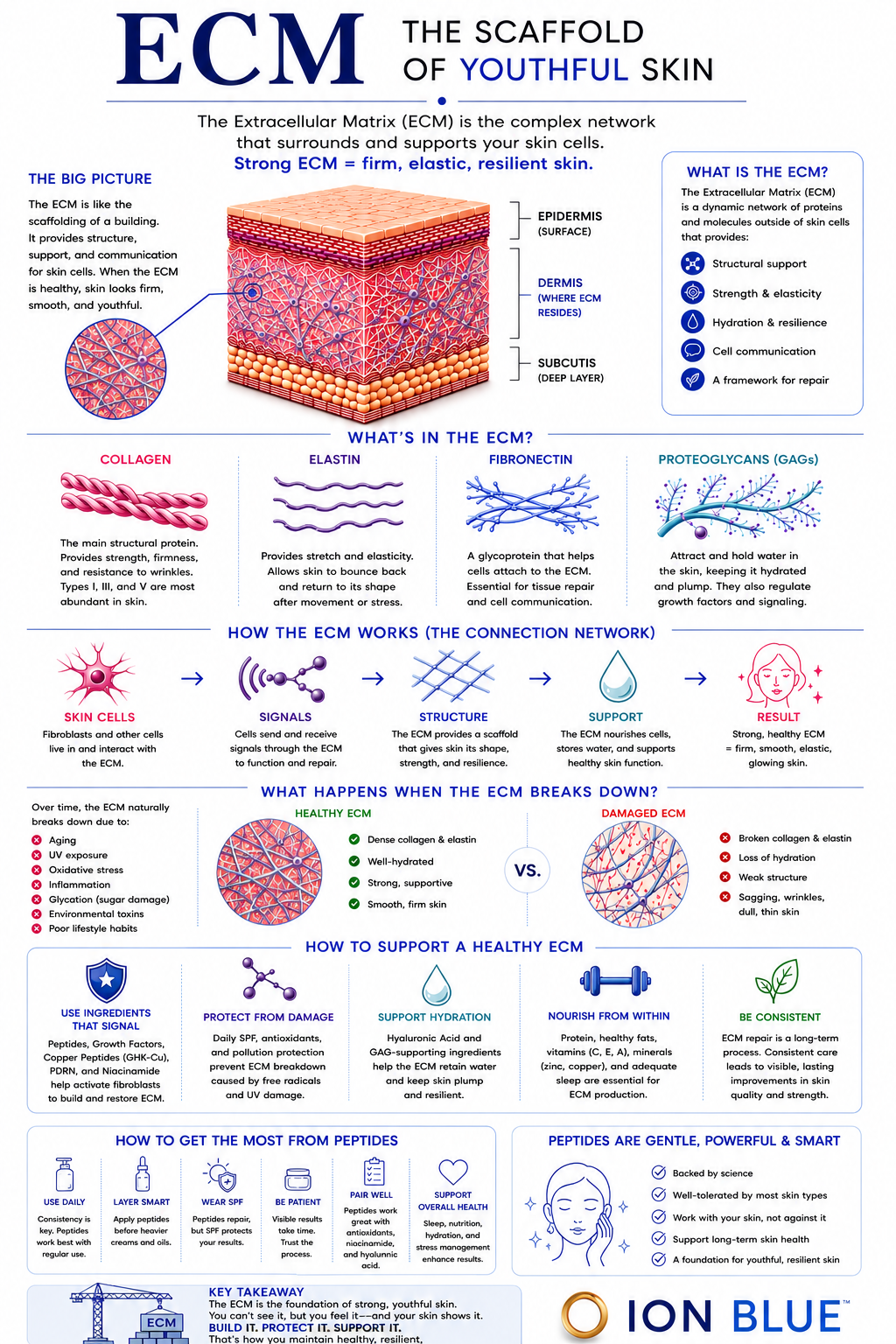
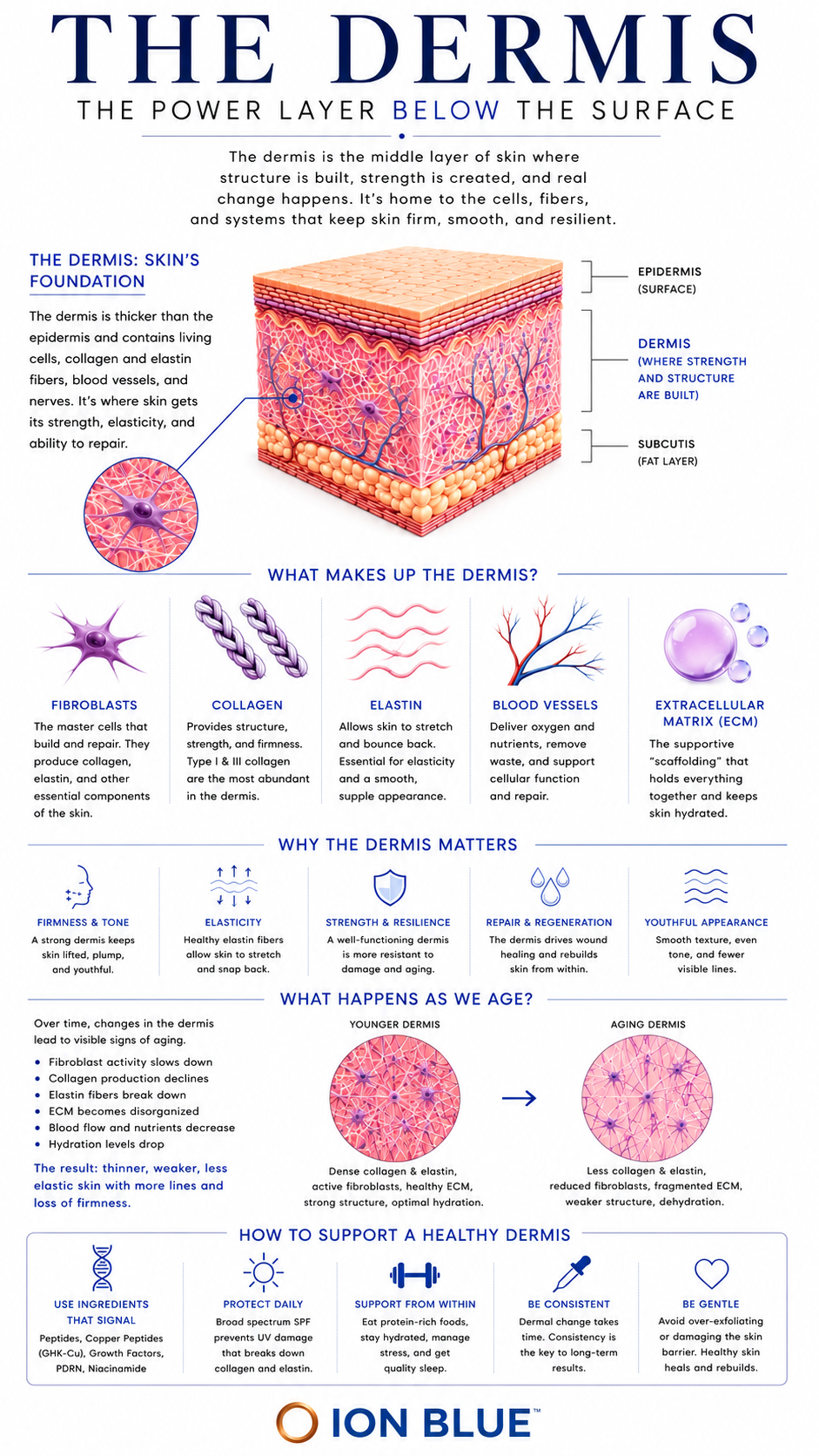
Beneath the epidermis sits the dermis, the thick, living, load-bearing layer. This is where your fibroblasts, collagen, elastin, and the extracellular matrix live, along with blood vessels and nerves. The dermis is what gives skin its firmness, elasticity, and resilience — and it's the layer most skincare science ultimately cares about. We cover it in depth in The Dermis, explained.
3. The hypodermis — your cushion
The deepest layer, the hypodermis (or subcutaneous layer), is mostly fat and connective tissue. It cushions the body, stores energy, insulates against temperature, and anchors your skin to the tissue below. It's less of a skincare target, but it's part of why skin sits and moves the way it does.
Where does skincare actually act? (the honest part)
Here's the point the marketing usually glosses over. Because the epidermis is a barrier by design, most topical products act at or near the surface. Reaching the dermis — where structural ingredients would ideally work — is genuinely difficult, and how well any active gets there depends on the molecule and the formulation. That's not a reason to be cynical about skincare; it's a reason to be honest about it, and to take ingredient delivery seriously rather than assuming every serum reaches every layer.
Where peptides and GHK-Cu fit
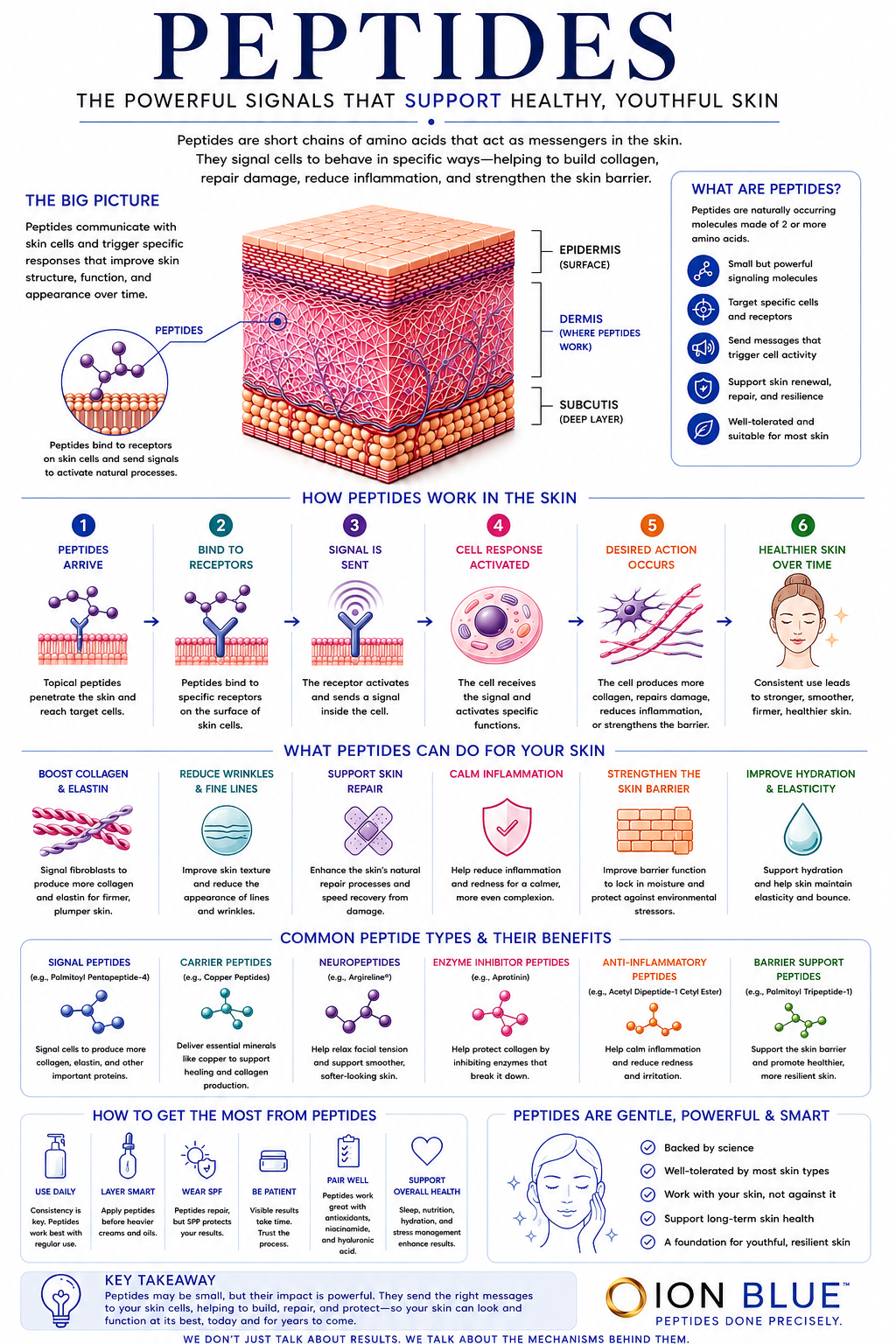
Peptides like GHK-Cu are studied for effects on the dermis — supporting collagen, the matrix, and fibroblast activity in laboratory research.1 That makes the dermis the layer of interest. But per the point above, the honest framing is: GHK-Cu is studied to support dermal components, and how much a topical formula influences that layer is a real formulation question — not a guarantee. For the honest efficacy picture, see Do Copper Peptides Actually Work?
Where ION BLUE fits
We describe our GHK-Cu serum in terms of how skin looks, not in terms of promises about deep biological change we can't guarantee — and we link the research so you can judge it yourself on our Scientific References page. New here? Start with What Is GHK-Cu?
Frequently asked questions
What are the three layers of skin?
The epidermis (outer barrier), the dermis (thick structural layer with collagen and fibroblasts), and the hypodermis (deep fatty cushioning layer).
Which skin layer does skincare work on?
Most topical products act at or near the surface (the epidermis), because it's a barrier by design. Reaching the deeper dermis is harder and depends on the ingredient and formulation.
Which layer is most important for firmness and aging?
The dermis. It holds the collagen, elastin, and structure that keep skin firm, and most visible aging traces back to changes there.
Educational content is not medical advice. ION BLUE products are cosmetics and are not intended to diagnose, treat, cure, or prevent any disease. Individual results may vary.
References
- Pickart L, Vasquez-Soltero JM, Margolina A. GHK Peptide as a Natural Modulator of Multiple Cellular Pathways in Skin Regeneration. BioMed Research International. 2015;2015:648108. Read the full paper →
RELATED TOPICS
DOWNLOAD SKIN LAYERS PDF
"This page explains wound-healing biology for education. ION BLUE products are cosmetics — they are not intended to treat, heal, or manage wounds or any medical condition."